
 Siti Muinah
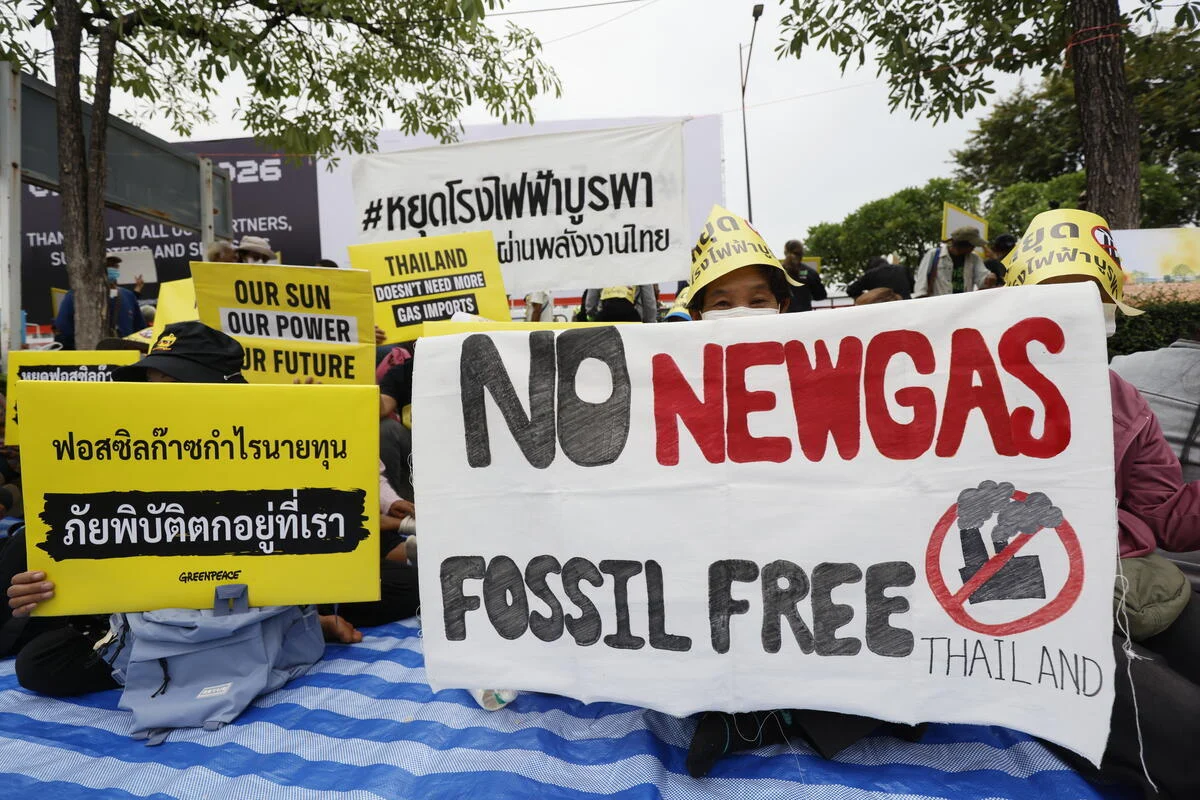
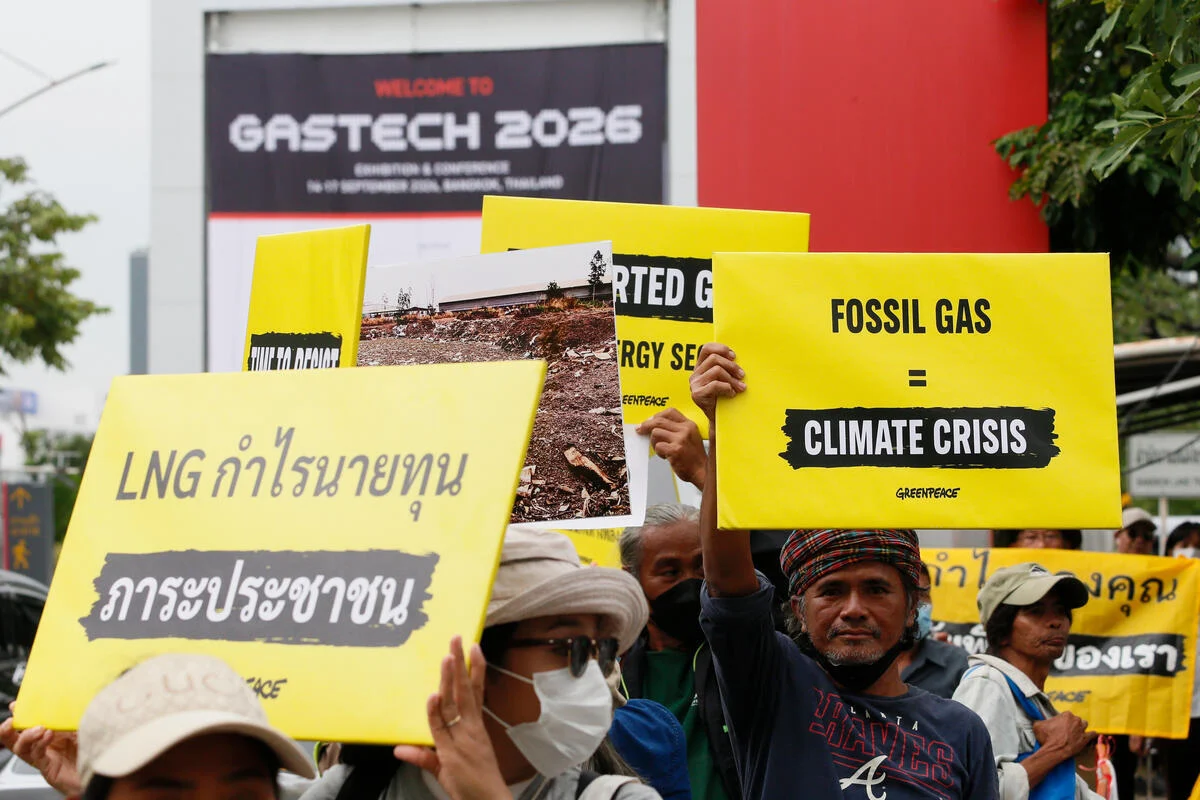
BANGKOK, THAILAND (15 September 2026) – Greenpeace East Asia today issued a stern rebuke of Japan’s continued reliance on fossil fuels, particularly natural gas and internal combustion engine (ICE) vehicles, to bolster its energy security and drive regional economic growth. The environmental advocacy group’s condemnation follows addresses delivered by Japanese government officials, including Tetsuya Azuma, Director at Japan’s Ministry of Economy, Trade and Industry (METI), at the Japan Energy Summit held concurrently with Gastech 2026 in Bangkok.
Greenpeace argues that Japan’s strategy, exemplified by Prime Minister Sanae Takaichi’s "POWERR Asia" (Partnership on Wide Energy and Resources Resilience Asia) initiative and the ongoing subsidization of polluting ICE vehicles, represents a significant climate risk. The organization warns that this approach directly contravenes global decarbonization objectives and jeopardizes commitments made under the Paris Agreement, potentially trapping nations in a cycle of fossil fuel dependence.
Acknowledged Vulnerabilities, Questionable Solutions
During the Gastech summit, Japanese officials openly acknowledged the nation’s acute energy vulnerabilities. A stark admission highlighted Japan’s extreme 93% reliance on crude oil transiting the Strait of Hormuz, a critical chokepoint for global energy supplies. Furthermore, officials detailed significant market disruptions impacting downstream products such as naphtha, a key component in the petrochemical industry, and the necessity of subsidizing transport costs to circumvent Middle Eastern supply bottlenecks.
Despite these acknowledged fragilities and the clear global momentum towards renewable energy and electric vehicles (EVs), the Japanese government, through its "POWERR Asia" initiative, reaffirmed its commitment to expanding overseas oil stockpiles and investing in fossil gas infrastructure. This stance appears to run counter to the burgeoning global EV surge, a trend acknowledged by Japanese officials themselves, which is rapidly gaining traction in major markets like China, Southeast Asia, and Europe. Instead of accelerating its own transition to zero-emission mobility, Japan’s government continues to defend its support for high-emitting combustion engines domestically and in the U.S., while also promoting biofuels as a purported climate solution, a claim widely disputed by environmental scientists.
Political Imperatives Over Environmental Realities
Greenpeace East Asia asserts that Japan’s current energy strategy is largely driven by political considerations and vested industrial interests rather than by environmental science or sound economic principles. The organization contends that Japan is actively choosing to export its reliance on fossil fuels and delay the crucial decarbonization of its automotive sector by propping up outdated, high-emission vehicle technology. This approach, Greenpeace warns, risks exacerbating global emissions, creating stranded asset risks for developing economies, and hindering the worldwide transition away from fossil fuels.
Japan’s Role as a Major Fossil Fuel Financier
The environmental group pointed to substantial financial commitments by Japan to fossil fuel projects as a key indicator of its policy direction. Between 2013 and 2024, Japan emerged as one of the world’s largest public financiers of fossil fuels, channeling an estimated US$93 billion into overseas oil and gas projects. This figure dwarfs the US$24.5 billion directed towards clean energy initiatives during the same period. Notably, gas-only projects accounted for a significant 60% of this fossil fuel financing.
Public financial institutions, such as the Japan Bank for International Cooperation (JBIC), play a pivotal role in this financing. Reports indicate that emissions attributable to JBIC’s financing activities exceed 400 million metric tons of carbon dioxide equivalent annually, a figure comparable to the national emissions of countries like the United Kingdom or France. This substantial financial backing for fossil fuels raises serious questions about Japan’s commitment to its climate pledges.
Domestic Economic Vulnerabilities Exposed
Domestically, Japan’s profound dependence on imported fossil fuels exposes its economy to significant vulnerabilities. As the world’s fifth-largest energy market and the second-largest importer of Liquefied Natural Gas (LNG), Japan’s energy security is intrinsically linked to volatile global markets. In 2025, the country imported nearly 65 million tonnes of LNG.
The geopolitical landscape further amplifies these risks. Approximately 90-95% of Japan’s crude oil originates from the Middle East, with a substantial 70-93% of these shipments traversing the Strait of Hormuz. This heavy reliance on a single, geopolitically sensitive transit route leaves Japan’s economy hyper-exposed to supply shocks, currency depreciation, and imported inflation. Attempts to mitigate these risks through regional oil stockpiling and downstream subsidies, while presented as resilience-building measures, are viewed by Greenpeace as insufficient and ultimately counterproductive.
Expert Voices on the Perils of Fossil Fuel Dependence
Kazue Suzuki, Climate & Energy Campaigner at Greenpeace Japan, expressed deep concern over METI’s proposed strategy. "METI’s vision locks Japan and the entire Asia region into expensive, imported gas at the exact wrong time," Suzuki stated. "With supply routes through the Middle East becoming increasingly unstable, the plan raises energy bills and multiplies risk for households and businesses. Gas is not a bridge to growth but a financial trap. Nuclear power is costly and unsafe, and technologies like ammonia co-firing and CCUS are distractions. Japan needs to stop financing fossil gas overseas and put its money into solar and wind that actually deliver energy independence. Ultimately, the country needs a swift, decisive phaseout of all fossil fuels, starting with coal."
Echoing these sentiments, Manun Wongmasoh, Climate and Energy Campaigner at Greenpeace Thailand, highlighted the detrimental impact on Southeast Asia. "Southeast Asia does not need more fossil gas or Japanese financing for new gas infrastructure," Wongmasoh asserted. "Thailand and Japan should end their LNG cooperation MOU and avoid locking the region into decades of fossil fuel dependence. Our region has abundant renewable energy potential. What we need is investment in renewables, not new pipelines and LNG terminals that lock countries into volatile fossil fuel prices and risk becoming stranded assets. Doubling down on gas and nuclear, including Small Modular Reactors (SMRs) in the name of ‘energy security’ is reckless. It makes energy more expensive and leaves countries exposed to global market shocks, and leaves people across Southeast Asia to pay the price."
A Call for a Just and Renewable Transition
Greenpeace East Asia is urging the Japanese government and its financial institutions to enact immediate and decisive policy changes. The organization calls for an end to all public financing for overseas fossil gas and oil infrastructure, a phased withdrawal of support for internal combustion engines, and a firm commitment to a just energy transition globally, one that is unequivocally led by renewable energy sources and widespread adoption of electric vehicles.
The broader implications of Japan’s current trajectory extend beyond its national borders. By continuing to invest in and promote fossil fuel infrastructure and technologies, Japan risks not only undermining global climate efforts but also perpetuating economic vulnerability for itself and its trading partners. The rapid advancements in renewable energy technologies and the escalating demand for EVs present a clear opportunity for leadership and innovation. However, by clinging to outdated fossil fuel strategies, Japan appears poised to miss this crucial window, potentially isolating itself from the global clean energy revolution and exacerbating the climate crisis. The Gastech 2026 summit, intended to showcase energy solutions, has instead highlighted a significant divergence between Japan’s stated energy goals and the urgent demands of a climate-conscious world.

 Suro Senen

 Evan Lee Salim