Reynand Wu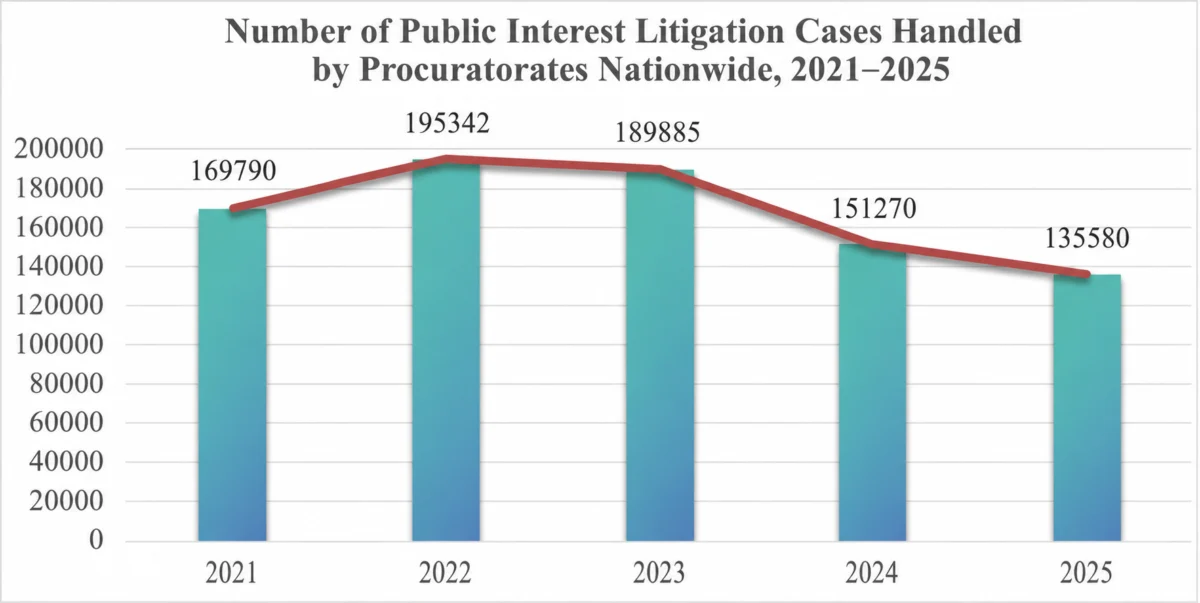
The Standing Committee of the National People’s Congress has recently released the second reading draft of the Procuratorate Public Interest Litigation Law, marking a significant milestone in the formalization of China’s unique judicial oversight mechanism. This legislative development represents the culmination of a decade-long evolution in how the Chinese state addresses systemic harms to the public interest, ranging from environmental degradation to data privacy. As the draft moves toward finalization, legal experts and international observers are scrutinizing the text, particularly provisions that may extend the reach of Chinese prosecutors to foreign entities and individuals.
The Procuratorate Public Interest Litigation (PPIL) system serves as a specialized legal framework designed to provide effective court remedies for mass harms. Historically, the Chinese public expressed growing frustration with recurring scandals in sensitive sectors such as food safety and industrial pollution. While existing laws technically permitted mass-action lawsuits, the barriers to entry for private citizens and non-governmental organizations were often insurmountable. The new law aims to bridge this gap by empowering the People’s Procuratorate—a body that functions as both a prosecution office and a legal supervisor—to act as the primary guardian of the public interest.
The Evolution of Public Interest Litigation in China
The trajectory of PPIL in China is rooted in a series of judicial reforms that began in the mid-2010s. Prior to the formal introduction of the system, the burden of initiating public interest cases fell largely on civil society groups. However, these organizations faced significant hurdles, including a lack of resources, limited access to evidence, and a cautious political environment that discouraged organized citizen movements.

In 2015, the National People’s Congress authorized a two-year pilot program for the procuratorate to initiate public interest litigation in select provinces. The success of this pilot led to amendments in the Civil Procedure Law and the Administrative Procedure Law in 2017, which provided the first statutory basis for PPIL. The system’s importance was further elevated following the 2018 institutional reforms. During this period, the procuratorate lost its authority to investigate corruption cases to the newly formed National Supervision Commission. To maintain its institutional relevance, the Supreme People’s Procuratorate (SPP) pivoted toward "four core work areas": criminal case handling, civil supervision, administrative supervision, and public interest litigation.
By 2021, PPIL had become a foundational pillar of the Chinese legal system. The current draft law seeks to consolidate various judicial interpretations and experimental policies into a single, comprehensive statute that defines the scope, procedures, and jurisdictional limits of these cases.
Statistical Overview and Procedural Mechanics
Data from the year 2025 reveals the sheer scale of the PPIL system’s operations. According to official reports, the procuratorate handled 135,580 public interest cases within a single calendar year. However, a closer analysis of these figures shows that "litigation" in the traditional sense of a courtroom trial is the exception rather than the rule. Of the total cases handled, lawsuits were filed in only 7,305 instances, representing roughly 5% of the total caseload.
This discrepancy is explained by the two-tiered structure of the PPIL system: Administrative Public Interest Litigation and Civil Public Interest Litigation. Administrative cases constitute approximately 91% of all PPIL activity. These cases are an extension of the procuratorate’s "legal supervision" authority, allowing it to oversee whether administrative agencies are correctly implementing the law. Under this framework, the procuratorate is required to issue "pre-litigation recommendations" to government departments found to be in dereliction of their duties. Because most agencies prefer to rectify their behavior rather than face a public lawsuit from another state organ, the vast majority of administrative cases are resolved during this consultation phase.

Civil PPIL cases, while less frequent, are significantly more likely to result in actual court proceedings. These are typically brought against private enterprises or individuals for torts that infringe upon the "national interest or societal public interest."
Expanding the Scope of Legal Protection
Article 3 of the second reading draft outlines the specific domains where the procuratorate is authorized to intervene. The law creates a complex web of jurisdictions, some of which overlap between administrative and civil spheres.
Key areas of focus include:
- Environmental Protection and Resource Conservation: The historical core of PPIL, covering air, water, and soil pollution.
- Food and Drug Safety: Addressing systemic risks in the supply chain.
- Work Safety: Pursuing accountability for industrial accidents and safety violations.
- Protection of Vulnerable Groups: Including the rights of minors, the elderly, and the disabled.
- National Defense and Military Interests: Protecting the rights of soldiers and the integrity of defense facilities.
- Cultural Heritage and Ethnic Unity: A newer addition to the law, aiming to protect historical sites and prevent conduct that undermines social harmony between ethnic groups.
The draft also delineates areas exclusive to either civil or administrative litigation. For instance, cases involving the loss of state-owned assets or state land-use rights are strictly administrative. Conversely, monopolistic conduct, large-scale labor rights violations, personal information protection, and the protection of the reputation of "heroes and martyrs" fall primarily within the civil domain.

Article 51 and the Question of Extraterritoriality
One of the most debated aspects of the second reading draft is Article 51, located within the supplemental provisions. The article states: “The people’s procuratorates may lawfully initiate public interest litigation against foreign organizations and individuals that carry out unlawful conduct that infringes on our nation’s lawful interests or societal public interest.”
This provision has sparked concern among international legal analysts and foreign business chambers. Critics argue that the language is broad enough to be used as a geopolitical tool or a means of singling out foreign firms. Some interpretations suggest that Article 51 could act as an independent "catch-all" clause, potentially allowing the state to sue foreign defendants even for conduct that does not strictly fit into the categories listed in Article 3.
However, many legal scholars, including Jeremy Daum of Yale Law School’s Paul Tsai China Center, suggest a more restrained reading. It is likely that Article 51 is intended to confirm that foreign entities are not immune to the procedural requirements of the PPIL law, rather than creating a separate, less-restricted legal standard for them. Under this view, the rest of the law—including the requirement for specific harm to the public interest and the categorized scope of Article 3—would still apply to foreign defendants.
The standard of "harm to the national interest and societal public interest" remains the core threshold for any PPIL case. While these terms are inherently vague, the Supreme People’s Procuratorate has issued guiding cases to clarify that the interest must be "public" in nature, affecting an indeterminate group of people rather than a specific private party.

Implications for Global Entities and Domestic Governance
The finalization of the Procuratorate Public Interest Litigation Law will have profound implications for both domestic governance and international business operations in China. For domestic administrative agencies, the law codifies a system of internal checks and balances, forcing government departments to be more proactive in their enforcement duties to avoid procuratorial scrutiny.
For foreign organizations, the risks are twofold. First, there is the direct risk of being named as a defendant in a civil public interest lawsuit, particularly in high-stakes areas like data privacy (Personal Information Protection Law) and environmental compliance. Second, the "Ethnic Unity" and "Heroes and Martyrs" provisions introduce a layer of political risk, as conduct perceived as culturally or historically insensitive could theoretically be framed as a harm to the "societal public interest."
Despite these concerns, some analysts point out that China already possesses more direct administrative and regulatory tools to punish foreign firms. Public interest litigation, which requires the proving of specific harms and the calculation of compensatory damages, may be a less efficient tool for the state compared to direct fines or market access restrictions.
As the legislative process moves toward a third reading and eventual passage, the international community will be watching for any further refinements to the "extraterritorial" language. For now, the draft signals China’s intent to maintain a robust, state-led mechanism for social and administrative correction, reinforcing the procuratorate’s role as a central actor in the nation’s legal landscape. The transition from a pilot program to a formal law suggests that PPIL is no longer an experiment, but a permanent feature of the Chinese judiciary’s efforts to manage the complexities of a modern, industrial, and digital society.


 Asep Darmawan
 Nana Wu