Rifan Muazin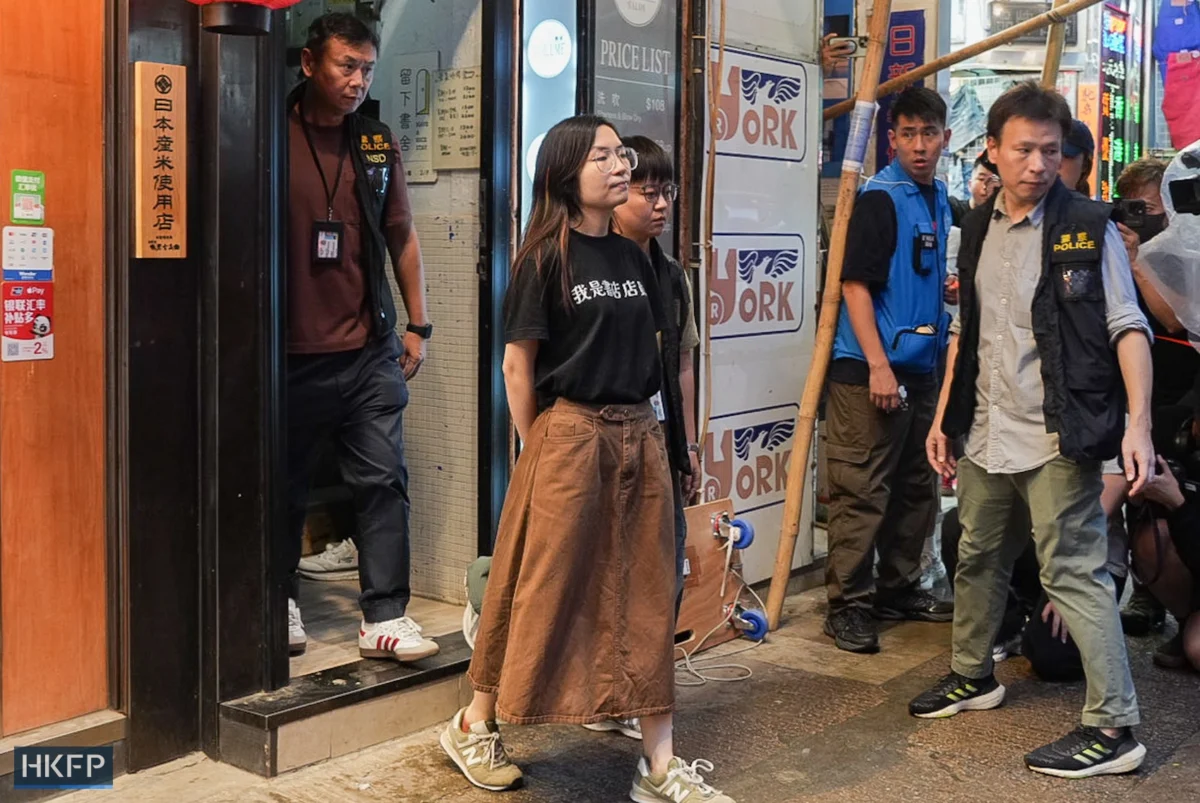
Andrew Kan, the outgoing head of Hong Kong’s national security department, has characterized questions regarding a definitive list of banned books or precise boundaries for seditious content as a form of "soft resistance." This assertion comes as Kan prepares to step down from his position as Deputy Commissioner of Police (National Security), marking a significant transition in the city’s security apparatus. His remarks, made in an interview with select media outlets shortly before his departure, directly address ongoing concerns about the application of national security legislation and its impact on freedom of expression and the publishing industry in Hong Kong.
Kan’s comments were made in the context of recent raids on independent bookstores and the arrests of their staff, incidents that have amplified anxieties within the community about the nebulous nature of "red lines" under the National Security Law (NSL). He maintained that these enforcement actions were not an abuse of power and asserted that the national security legislation itself provides clarity on what constitutes illegal acts. This stance, however, continues to be met with skepticism by many who argue that the lack of explicit guidance creates an environment of fear and self-censorship.

The concept of "soft resistance" was notably introduced in 2021 by Luo Huining, then the director of Beijing’s liaison office in Hong Kong. Since then, Hong Kong officials have repeatedly invoked this term as a threat to national security, though a clear, universally understood definition remains elusive. This vagueness has been a central point of contention, with critics arguing it allows for broad interpretation and application, thereby chilling legitimate discourse. The recent designation of "soft resistance" as the "most malicious" threat to national security by Security Chief Chris Tang further underscores the government’s focus on this broad and ill-defined category of perceived dissent.
Chronology of Escalating Concerns
The tension surrounding book bans and seditious content has been building for several years, intensifying following the imposition of the National Security Law in June 2020. This law, enacted by Beijing, grants broad powers to authorities to combat acts deemed to be secession, subversion, terrorism, and collusion with foreign forces. While initially focused on political activism, its scope has increasingly extended to cultural and intellectual spheres, particularly concerning publications.

A significant escalation occurred in July of the current year, when Hong Kong’s national security police conducted raids on two independent bookstores. These operations led to the arrest of five individuals on suspicion of sedition, with authorities seizing books alleged to possess "seditious intention." This incident was not isolated. In June, prior to the July raids, other independent bookstore operators had also been arrested for alleged sedition. One of the bookstores targeted in July, "Have a Nice Stay," had announced its imminent closure just days before the police action, citing financial difficulties and the pervasive uncertainty of "unclear red lines," noting that authorities had never provided specific guidance on which books were permissible for sale.
The closure announcement by "Have a Nice Stay" on August 31, 2026, highlighted the difficult operating environment for independent cultural spaces. The bookstore’s statement explicitly mentioned the lack of clarity from authorities regarding acceptable content, a sentiment echoed by many in the cultural and academic sectors. The subsequent police raid and arrests, occurring so soon after the bookstore’s public declaration of its struggles, were seen by many as a direct response to this perceived challenge to the government’s narrative.
Kan’s Defense of Enforcement and Lack of a Public List

During his interview, Kan defended the police’s actions, stating, "Saying there is no list of banned books or that the red lines are unclear – I think that is a form of soft resistance." He elaborated on the rationale behind not providing a comprehensive list of prohibited titles, arguing that such a list would quickly become outdated. "If we release a list of banned books now, and a new illegal title is released the next day, people will question why arrests were made if it wasn’t on the list," Kan explained. This dynamic, he suggested, would create a perpetual cycle of demands for updated lists and potential legal challenges.
Kan also asserted that the police consult with the Department of Justice to ascertain if a book’s content violates national security legislation before taking enforcement action. This process, he implied, ensures a degree of legal rigor. However, the lack of transparency surrounding these consultations and the criteria used by the Department of Justice to determine "seditious intention" continues to fuel concerns about arbitrary enforcement.
The July raids, in particular, drew sharp criticism from some quarters. The conservative Christian NGO, The Society for Truth and Light, was one of the few civil society organizations to publicly condemn the government’s actions. Following the raids, the organization stated that the government’s refusal to release a list of banned books amounted to an "abuse of power" and undermined the rule of law. Their stance underscored the growing unease about the erosion of legal certainty and due process in the application of national security laws.

Broader Implications and the Chilling Effect
Kan’s remarks and the actions of the national security department have significant implications for freedom of expression, academic inquiry, and the cultural landscape of Hong Kong. The vague definition of "soft resistance" and the lack of a clear list of banned books create a climate of apprehension, compelling individuals and institutions to err on the side of caution. This "chilling effect" can lead to self-censorship, where authors, publishers, and booksellers refrain from producing or distributing content that might be perceived as controversial, even if it does not explicitly violate any law.
The international community has also closely monitored these developments. Hong Kong, once a vibrant hub for free expression and intellectual exchange in Asia, is now grappling with the impact of increasingly stringent security measures. The territory’s status as a global financial center is intricately linked to its reputation for rule of law and respect for civil liberties. Any perceived erosion of these principles can have long-term economic and social consequences.

Data from the publishing industry, though not publicly detailed in this report, likely indicates a decline in the diversity of available literature, particularly works that engage with sensitive historical or political topics. Independent bookstores, which have historically served as vital spaces for cultural discourse and alternative viewpoints, face an increasingly precarious existence. Their ability to curate and offer a wide range of titles is directly impacted by the perceived risks associated with stocking certain books.
The outgoing head of the Department for Safeguarding National Security, Andrew Kan, has been replaced by Kelvin Kong, who was recently sworn into the position. This transition marks a new chapter for the department, but the fundamental questions surrounding the interpretation and application of national security laws, particularly concerning freedom of expression and the definition of seditious content, remain central to Hong Kong’s evolving socio-political landscape. The ongoing debate over "soft resistance" and the absence of clear guidelines for what constitutes prohibited material continue to shape the city’s ability to foster an open and diverse intellectual environment. The challenge for Hong Kong moving forward will be to balance legitimate security concerns with the preservation of fundamental freedoms that have long been cornerstones of its identity.

 Dwi Wanna
 Nana Muazin