 Nana
Nana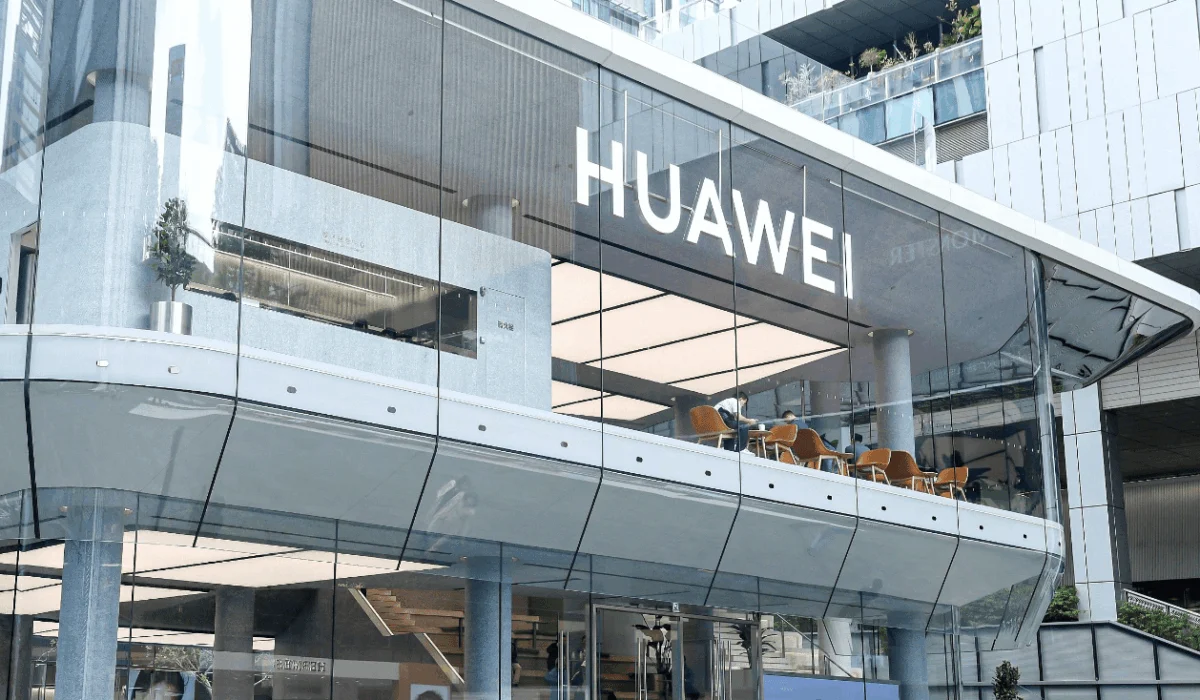
Huawei Cloud has announced the impending commercial launch of its Ascend 950 AI cluster cloud service, marking a significant milestone in the company’s ambitious artificial intelligence strategy. The service is set to commence operations in China on September 30, with a broader global rollout scheduled for November 30. This strategic expansion was revealed by Huawei Cloud CEO Zhou Yuefeng during his keynote address at Huawei Connect 2026, the company’s premier annual event showcasing its latest technological advancements and strategic direction. The Ascend 950 system, built upon Huawei’s proprietary UnifiedBus interconnect architecture, is designed to deliver immense computing power, featuring a 1,024-card AI cluster capable of reaching up to 1 EFLOPS of FP8 computing power and an impressive 2 EFLOPS of FP4 computing power. Complementing this raw processing capability is 256TB of globally addressable memory, tailored to support the end-to-end training of large-scale AI models without requiring additional cluster-level adaptation. Furthermore, Huawei confirmed that its roadmap for the next-generation Ascend 960 is progressing ahead of schedule, with the Ascend 960DT planned for the first quarter of 2027 and the 960PR slated for the third quarter of the same year. The company also highlighted the successful deployment of over 1,000 Ascend supernodes, with Ascend 950 supernodes already in commercial use, underscoring the rapid adoption and operational readiness of its cutting-edge AI infrastructure.
The Ascend 950: Technical Prowess Unveiled
The Ascend 950 AI cluster represents a formidable leap in high-performance computing specifically engineered for artificial intelligence workloads. At its core lies Huawei’s UnifiedBus interconnect architecture, a critical innovation that facilitates seamless and high-speed communication among the 1,024 AI cards within the cluster. This architecture is paramount for distributed training, where large AI models are broken down and processed across numerous computing units simultaneously. The efficiency of the interconnect directly impacts the training speed and scalability of these models, making UnifiedBus a cornerstone of the Ascend 950’s capabilities.
The raw computing power offered by the Ascend 950 is staggering. With 1 EFLOPS (ExaFLOPS) of FP8 (8-bit floating point) computing power and 2 EFLOPS of FP4 (4-bit floating point) computing power, the system is designed to tackle the most demanding AI tasks. An ExaFLOP represents one quintillion (10^18) floating-point operations per second, a metric that underscores the immense computational intensity required for training modern large language models (LLMs) and complex generative AI algorithms. The shift towards lower precision formats like FP8 and FP4 is a common optimization technique in AI, allowing for faster computations and reduced memory footprint without significant loss in model accuracy for many applications. This capability ensures that researchers and enterprises can train colossal models with unprecedented speed and efficiency.
Equally crucial is the provision of 256TB of globally addressable memory. In the context of AI, memory capacity is vital for storing model parameters, intermediate activations, and large datasets. A globally addressable memory architecture simplifies programming and data management across the distributed cluster, enabling seamless access to data from any processing unit. This eliminates bottlenecks associated with data transfer and ensures that even the most memory-intensive AI models can be trained without requiring developers to undertake complex, cluster-level memory management optimizations. The "end-to-end training of large-scale models without additional cluster-level adaptation" directly speaks to this integrated memory management and the system’s inherent design for scalability and ease of use.
Huawei Connect 2026: A Platform for Innovation
The announcement of the Ascend 950’s commercial launch was a highlight of Huawei Connect 2026, an event that serves as Huawei’s most significant annual gathering for its global ecosystem of customers, partners, and developers. Held typically in late autumn, Huawei Connect is a critical platform where the company unveils its strategic vision, showcases its latest technological breakthroughs across various domains—including cloud computing, AI, 5G, IoT, and industrial digitalization—and fosters collaboration within the ICT industry.
For years, Huawei Connect has been more than just a product launch event; it is a forum for deep dives into technological trends, industry challenges, and the practical applications of Huawei’s solutions. Themes such as "Ignite the Future," "Accelerate Industry Digitalization," and "Innovate for a Smarter World" frequently resonate through the event, reflecting Huawei’s commitment to driving digital transformation across diverse sectors. The 2026 iteration likely emphasized the growing importance of AI as a foundational technology for future economic growth and societal progress, aligning perfectly with the Ascend 950 announcement. By choosing this high-profile event, Huawei underscored the strategic importance of the Ascend 950 and its cloud AI capabilities to its overall business trajectory and its commitment to empowering the global digital economy.
Strategic Imperative: Huawei’s Full-Stack AI Vision
Huawei’s aggressive push into AI, particularly through its Ascend series and Huawei Cloud, is not merely a response to market demand but a strategic imperative born out of geopolitical pressures and a long-term vision for technological self-sufficiency. Following significant restrictions imposed by the U.S. government that severely impacted its consumer electronics and telecommunications equipment businesses, Huawei pivoted sharply towards enterprise solutions, cloud services, and foundational technologies like AI chips. This shift positions AI as a core growth engine and a critical area for independent innovation.
The Ascend series of processors forms the backbone of Huawei’s "full-stack AI" strategy. This strategy encompasses everything from the underlying AI chips (Ascend series) and chip enablement software (CANN – Compute Architecture for Neural Networks) to the AI computing framework (MindSpore) and AI application enablement platforms (ModelArts, HiAI). By developing a vertically integrated AI stack, Huawei aims to provide a comprehensive, efficient, and secure ecosystem for AI development and deployment, reducing its reliance on foreign intellectual property and supply chains.
The Ascend 950, as the latest iteration of Huawei’s high-end AI training chip, builds upon the foundations laid by earlier models like the Ascend 910. The 910, launched in 2019, was positioned as the world’s most powerful AI processor for training at the time. The 950’s introduction signifies continuous innovation and a commitment to maintaining leadership in AI compute power, crucial for the increasing complexity of AI models. Huawei’s investment in its own AI chips is a direct challenge to established players like Nvidia, Intel, and AMD, particularly in the Chinese market where the demand for domestic alternatives is high.

MindSpore and the Software Layer
Hardware, no matter how powerful, is only as effective as the software that orchestrates it. This is where Huawei’s open-source AI computing framework, MindSpore, plays a pivotal role. MindSpore is designed to be developer-friendly, offering a unified development experience across different scenarios, including device, edge, and cloud. It supports various AI paradigms, from traditional machine learning to deep learning, and is optimized to run efficiently on Ascend hardware.
The synergy between Ascend chips and MindSpore is a cornerstone of Huawei’s full-stack AI strategy. MindSpore provides the programming interface and optimization capabilities that allow developers to fully leverage the raw power of the Ascend 950. Its design emphasizes automatic differentiation, distributed training, and adaptive execution, making it particularly well-suited for large-scale model training. By promoting MindSpore as an open-source framework, Huawei aims to build a robust developer community and ecosystem around its AI hardware, further solidifying its position in the global AI landscape. This strategy is reminiscent of how CUDA and TensorFlow/PyTorch have driven Nvidia’s ecosystem dominance, and Huawei seeks to replicate this success with its own stack.
Chronology of Ascend Development
Huawei’s journey into proprietary AI chips began several years ago, reflecting a proactive stance on emerging technologies.
- 2018: Huawei first unveiled its Ascend series AI processors, introducing the Ascend 910 for training and Ascend 310 for inference. This marked its formal entry into the competitive AI chip market.
- 2019: The Ascend 910 was officially launched, boasting impressive specifications for AI training. At the same time, Huawei also announced MindSpore, its AI computing framework, demonstrating its commitment to a full-stack approach.
- Subsequent Years: Huawei continued to refine and expand its Ascend product line, focusing on both cloud-based AI training and edge AI inference, while also building out the software and service layers on Huawei Cloud.
- Huawei Connect 2026: The commercial launch of the Ascend 950 cloud service, building on previous generations, demonstrates a mature and ready-for-market offering. The accelerated roadmap for the Ascend 960 (960DT in Q1 2027, 960PR in Q3 2027) signals Huawei’s aggressive pursuit of next-generation AI capabilities and its ability to rapidly iterate on its hardware designs despite external challenges. The deployment of over 1,000 Ascend supernodes, and the commercial use of Ascend 950 supernodes, indicates significant internal and early-adopter utilization, validating the technology’s readiness and performance.
Industry Implications and Market Dynamics
The launch of the Ascend 950 AI cluster cloud service carries significant implications for both the domestic Chinese market and the global AI industry.
Competitive Landscape: In China, Huawei Cloud is a major player, competing with giants like Alibaba Cloud and Tencent Cloud, both of whom also offer extensive AI services and are developing their own AI hardware or partnering closely with domestic chipmakers. The Ascend 950 positions Huawei Cloud with a powerful, proprietary AI infrastructure that can offer differentiated performance and cost efficiencies to its customers. Globally, Huawei Cloud competes with AWS, Microsoft Azure, and Google Cloud, all of which leverage their own or third-party AI accelerators (like Nvidia’s GPUs). Huawei’s move strengthens its competitive edge by offering a fully integrated, high-performance AI stack.
Geopolitical Context and Technological Sovereignty: From a broader geopolitical perspective, Huawei’s continued advancement in AI hardware and cloud services reinforces China’s drive for technological sovereignty. By developing its own chips and full-stack AI solutions, China aims to reduce its reliance on foreign technology, particularly from the United States, which has imposed export controls on advanced AI chips. The Ascend 950 is a testament to Huawei’s resilience and its ability to innovate domestically, contributing to China’s overall technological self-reliance. This development will likely be viewed as a significant step in the ongoing tech rivalry between the US and China.
Large Language Models and Generative AI: The timing of the Ascend 950’s launch is particularly pertinent given the explosive growth of large language models (LLMs) and generative AI. These models require unprecedented levels of computing power for both training and inference. The Ascend 950’s EFLOPS-scale performance and massive memory capacity make it an ideal platform for organizations looking to develop, train, and deploy their own foundational models or fine-tune existing ones. This positions Huawei Cloud as a critical enabler for the next wave of AI innovation, especially within the Chinese ecosystem.
Empowering Enterprise AI and Digital Transformation
For enterprises, the commercial availability of the Ascend 950 AI cluster cloud service translates into tangible benefits. Access to such high-performance AI infrastructure on demand via the cloud democratizes advanced AI capabilities, making them accessible to a broader range of businesses, from startups to large corporations.
- Accelerated Research and Development: Researchers and developers working on complex AI problems can leverage the Ascend 950 to significantly reduce training times for their models, accelerating the pace of innovation.
- Scalability and Flexibility: Cloud-based access means enterprises can scale their AI computing resources up or down based on their project needs, avoiding the massive upfront investment required to build and maintain their own AI data centers.
- Industry-Specific AI Solutions: Various sectors stand to benefit immensely. In finance, complex algorithmic trading and fraud detection models can be trained faster. In healthcare, drug discovery and medical imaging analysis can be expedited. Manufacturing can utilize AI for predictive maintenance and quality control, while smart cities can enhance traffic management and public safety. Huawei Cloud’s existing industry solutions, often powered by Ascend, will see a significant boost in performance and capability.
- Data Security and Compliance: For Chinese enterprises, utilizing a domestic cloud provider with proprietary hardware can offer enhanced data security and compliance assurances, which are increasingly important in a regulated environment.
Looking Ahead: The Ascend 960 and Beyond
The announcement regarding the accelerated roadmap for the Ascend 960 series underscores Huawei’s relentless pursuit of AI hardware innovation. The planned launch of the Ascend 960DT (DT likely for "Developer Training" or "Development Toolkit") in Q1 2027 and the 960PR (possibly "Production Ready" or "Processor") in Q3 2027 indicates a continuous pipeline of even more powerful AI processors. This rapid development cycle is crucial for keeping pace with the exponential growth in AI model complexity and the ever-increasing demand for compute power.
The deployment of over 1,000 Ascend supernodes and the commercial use of Ascend 950 supernodes demonstrate Huawei’s commitment to building a robust and scalable AI ecosystem. These supernodes, which are large clusters of Ascend processors, are the foundational infrastructure for Huawei Cloud’s AI services, ensuring that the company can meet the growing demand for high-performance AI computing both within China and across its global cloud regions.
In conclusion, Huawei Cloud’s commercial launch of the Ascend 950 AI cluster cloud service represents a pivotal moment for the company and the broader AI industry. It solidifies Huawei’s position as a formidable player in the global AI landscape, showcasing its technological prowess, strategic resilience, and unwavering commitment to a full-stack AI vision. By providing access to such immense computing power, Huawei aims to accelerate AI innovation, empower enterprises, and contribute significantly to the ongoing digital transformation worldwide, while simultaneously advancing China’s goals of technological self-reliance.

 Lina Irawan
 Suro Senen