Layla Zulfa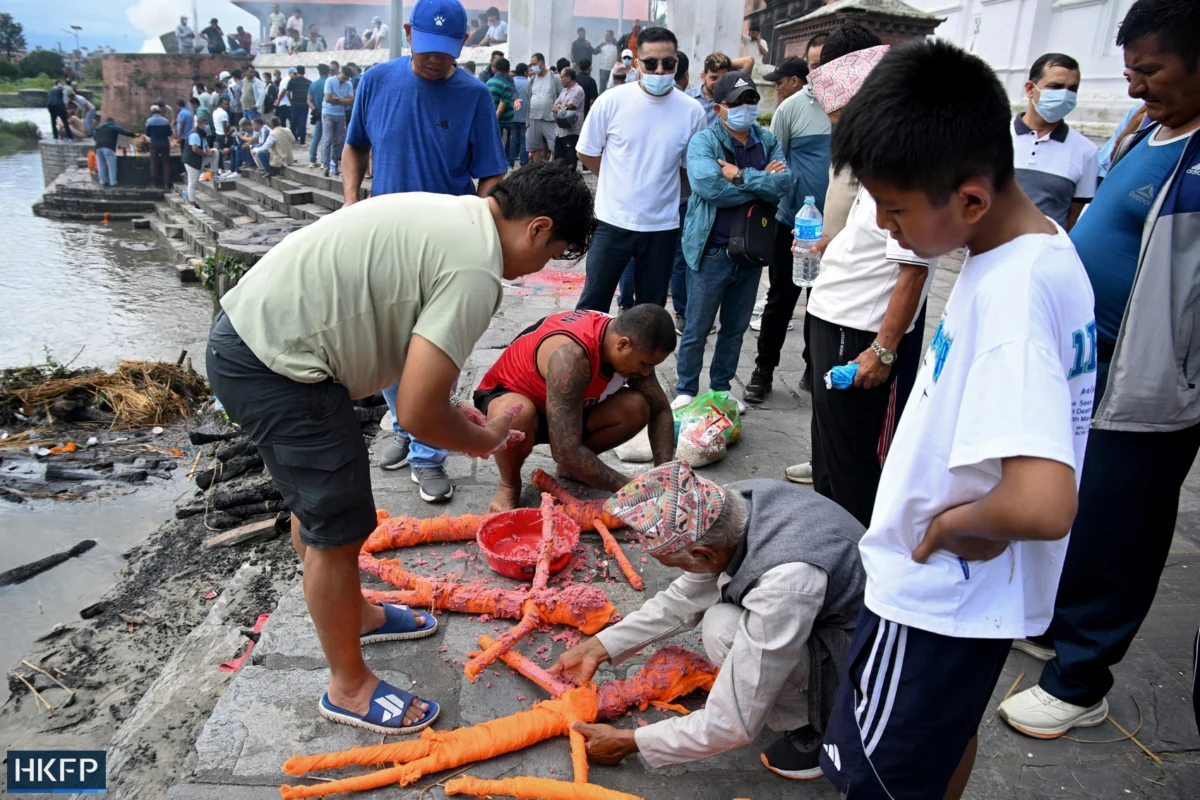
Nuwakot, Nepal – A profound sense of grief and a desperate need for closure enveloped Nepali communities on Wednesday, September 2, 2026, as families held symbolic funerals to "liberate the souls" of relatives still missing after catastrophic flash floods ravaged their villages and homes a week prior. The solemn ceremonies, steeped in traditional Hindu rites, offered a poignant display of resilience and spiritual solace in the face of an unimaginable tragedy that has claimed over 1,100 lives and left nearly 4,500 people unaccounted for across the China-Nepal border region.
The Catastrophe Unfolds: A Week of Devastation
The disaster struck with brutal force on August 26, 2026, when a high-altitude glacial collapse triggered a colossal wave of freezing water, rocks, and debris. This devastating torrent roared down the treacherous Himalayan terrain, sweeping away everything in its path, including entire villages, vital infrastructure, and countless lives. The sheer scale and velocity of the flood, a phenomenon known as a Glacial Lake Outburst Flood (GLOF), left little time for evacuation, turning the pristine mountain landscape into a scene of utter devastation.
Emergency teams, comprising both local rescuers and international aid workers, were immediately mobilized, but the challenging terrain, coupled with the immense volume of mud and wreckage, severely hampered early efforts. Roads were obliterated, communication lines severed, and entire settlements vanished, leaving rescue workers grappling with a vast and perilous search area. Initial reports painted a grim picture, which has only darkened as the days have progressed, revealing the immense human cost of this natural calamity.

Symbolic Farewells: A Quest for Peace
For many families, the week-long search for their loved ones yielded no tangible results, only an agonizing void. After days spent desperately checking overcrowded shelters and overflowing mortuaries, hope began to wane, giving way to the heartbreaking decision to conduct last rites. These symbolic funerals, a deeply spiritual act in Nepali Hindu tradition, involve the burning of straw effigies (often crafted from Kush grass, a sacred material) in lieu of actual bodies. The ritual is believed to provide spiritual liberation for the deceased, allowing their souls to find peace and transition to the afterlife, even without a physical cremation.
Dolma Newar Tamang, her voice heavy with sorrow, articulated the anguish shared by many. Flanked by her sobbing son at a funeral held for her missing husband, she explained, "We had to do this to set his soul free, so that he is at peace and happy wherever he is." Her husband had been en route to China when the disaster struck, a journey tragically interrupted by the glacial surge. "I saw the news and called him," she recounted, tears streaming down her face. "I called repeatedly, but he never picked up." Her words underscore the suddenness of the disaster and the brutal finality it imposed on countless families. The Pashupatinath temple in Kathmandu, a revered Hindu pilgrimage site, became a focal point for many of these ceremonies, offering a collective space for mourning and spiritual closure.
Search and Recovery Operations Face Monumental Challenges
As the symbolic funerals provided a measure of spiritual comfort, the physical search and rescue operations continued relentlessly, albeit with diminishing hopes of finding survivors. Nepali rescuers, often working in perilous conditions, were still sifting through tons of packed sludge that had entombed multiple tunnels of crucial hydropower plants, a testament to the extensive damage to critical infrastructure. These plants, vital for the nation’s energy supply, had become death traps for many workers. So far, only bodies have been recovered from these submerged tunnels, yet teams continued to dig, drill, and blast through debris, driven by a sliver of hope.
Nepal’s Foreign Minister Shisir Khanal voiced this enduring optimism, however faint. "Miracles do happen," he told AFP, acknowledging the grim reality but refusing to surrender entirely to despair. "At this point, I do not want to completely give up hope." This sentiment reflects the immense pressure on authorities to continue efforts, even as the window for finding anyone alive shrinks with each passing hour. The scale of the debris and the remote, mountainous nature of the affected areas make these operations among the most challenging ever undertaken in the region.

Mounting Casualties and a Deepening Humanitarian Crisis
The official casualty figures continued to climb throughout the week. By Wednesday, September 2, Nepal reported the recovery of 1,114 bodies, with a staggering 3,916 people still missing. Across the border, Chinese state media reported 16 dead and 546 missing, bringing the overall reported death toll to 1,130 and the total number of missing to 4,462. These numbers are fluid and expected to change as more areas become accessible and recovery efforts progress.
The humanitarian crisis extends beyond national borders. Among the missing are over 800 foreign nationals from more than 30 countries: 583 in Nepal and 261 in China. These include intrepid tourists who came to trek the majestic Himalayas and devout Hindu pilgrims seeking spiritual peace at Tibet’s sacred Mount Kailash, highlighting the global reach of the disaster. The international community has expressed concern, with several nations offering assistance and support to their citizens affected by the floods. Further downstream, in India, at least 17 bodies have also been pulled from rivers, underscoring the regional impact of the colossal water surge.
The sheer volume of unidentified bodies has overwhelmed local mortuaries in Nepal, forcing authorities to resort to mass burials after meticulous DNA sampling, a painful but necessary step to manage the deceased and provide a chance for future identification. This process adds another layer of trauma for families, many of whom may never receive the remains of their loved ones.
The Global Climate Nexus: Himalayas Under Threat
The devastating flash floods have reignited urgent discussions about climate change and its disproportionate impact on vulnerable nations like Nepal. A largely rural nation of 30 million people, Nepal has contributed minimally to the greenhouse gas emissions driving global warming, yet it stands among the countries suffering its most severe consequences. The anger over the scale of destruction is palpable, rooted in the understanding that this is not merely a natural disaster, but one exacerbated by global environmental shifts.

Scientists have long warned that the Himalayas, often called the "Third Pole" due to their vast ice reserves, are warming at an alarming rate, significantly faster than the global average. This accelerated warming is leading to rapid glacier melt and the formation of larger, more unstable glacial lakes. When the natural dams holding these lakes breach, often due to seismic activity, landslides, or extreme weather, the result is a GLOF – a sudden, massive discharge of water that can obliterate everything downstream. This particular event is a stark illustration of such a phenomenon.
The glaciers in the wider Himalayan and Hindu Kush ranges are a critical lifeline, serving as a primary water source for approximately 240 million people residing in these mountainous regions. Furthermore, they sustain an additional 1.65 billion people in the vast South Asian and Southeast Asian river valleys below. The stability of these ice reserves is therefore paramount not just for Nepal, but for a significant portion of the global population.
Nepal’s Prime Minister Balendra Shah issued a grave warning, stating that the catastrophe was "a serious indication" of the escalating risks confronting the Himalayan nation. He emphasized the global dimension of the crisis in a social media post: "Climate change is a global contribution, and disaster response is also a global responsibility." His statement serves as a powerful call to action, urging international cooperation and support for nations on the frontlines of climate change.
Economic Aftershocks and Reconstruction Challenges
The financial toll of the disaster is expected to be staggering. Kathmandu has already warned that reconstruction efforts could cost billions of dollars, a figure that presents an immense challenge for a nation with limited resources. Nepal is still recovering from a tumultuous period, having marked a year this month since deadly mass protests over rampant corruption and a woeful economy led to the overthrow of the then-government. The existing economic fragility and political instability will undoubtedly complicate the nation’s ability to respond effectively to a disaster of this unprecedented scale. International aid and long-term financial commitments will be crucial for Nepal to rebuild and recover.

The damage extends across the border into Tibet, China, highlighting the transboundary nature of the impact. Chinese state media reported that road access to the hard-hit Gyirong Port, a critical trade gateway, was finally restored on Wednesday after "days of round-the-clock repair work." This illustrates the extensive damage to infrastructure even in more developed regions affected by the flood.
Transboundary Impact and Geopolitical Dimensions
The disaster has also brought to light complexities in cross-border information sharing and transparency. While Nepal has provided regular updates on casualties and rescue efforts, the situation in Tibet, an autonomous region of China, has been less transparent. Foreign journalists are typically restricted from reporting in Tibet, and Chinese authorities maintain a tight grip on information sources in the region.
Tibetan advocacy groups in exile have questioned China’s official account of the disaster, raising concerns about the true extent of the damage and casualties within Tibet. Beijing, however, insists that its "release of information has been open, transparent and timely," maintaining that it has handled the crisis responsibly. This disparity in reporting underscores the broader geopolitical sensitivities surrounding the region and the challenges in obtaining comprehensive information from all affected areas. The involvement of foreign nationals from dozens of countries also adds an international dimension to the search, recovery, and diplomatic efforts.
Looking Ahead: Resilience and Prevention
As Nepal grapples with the immediate aftermath of this monumental tragedy, the long-term implications are profound. The loss of life, the displacement of communities, and the destruction of infrastructure will have lasting social, economic, and psychological impacts. The event serves as a stark reminder of the urgent need for enhanced disaster preparedness, early warning systems, and climate adaptation strategies in the Himalayan region.

International collaboration is paramount, not only in immediate humanitarian aid and reconstruction but also in addressing the root causes of climate change and supporting vulnerable nations in building resilience. The scientific community continues to monitor glacial melt and GLOF risks, providing crucial data for preventative measures. However, the scale of the challenge demands a concerted global effort to mitigate emissions and support nations like Nepal, which bear the brunt of a crisis not of their making. The symbolic funerals in Nuwakot, while offering spiritual closure, simultaneously serve as a powerful and somber testament to the devastating consequences of a warming planet on human lives and livelihoods.


 Sagoh
Sagoh
 Asro
Asro