 Asro
Asro
A renowned Chinese comedian, Guo Degang, is currently under investigation by local authorities following reports that he made light of a revered patriotic song during a performance. The 53-year-old artist, celebrated for his role in the resurgence of traditional Chinese crosstalk, known as xiangsheng, is facing scrutiny in a climate of increasingly tight state control over artistic expression and stringent laws designed to protect national symbols.
The investigation, confirmed by the Wuhan culture and tourism bureau to AFP on Sunday, centers on an alleged incident during a July performance in the central city of Wuhan. Local media reports indicate that Guo Degang improvised parts of "Playing My Beloved Pipa," a significant 1956 tune commemorating Chinese fighters’ victories against Japanese soldiers during World War II. Specifically, he is accused of altering a key lyric, changing "quiet on Weishan Lake" to "quiet in the Forbidden City," and delivering these lines with a "comedic" inflection. Authorities have stated that this riff was not pre-approved, raising questions about potential violations of commercial performance regulations.
The incident underscores the delicate balance artists in China must navigate between creative expression and the state’s pervasive ideological control. The ruling Communist Party (CCP) maintains a firm grip on the country’s arts scene, often viewing cultural output as a tool for promoting socialist values, national unity, and historical narratives aligned with official doctrine. In recent years, under President Xi Jinping, this oversight has intensified, leading to new legislation and stricter enforcement aimed at safeguarding national heroes, symbols, and historical interpretations from perceived disrespect or slander.
The Incident Unfolds: A Detailed Account

The controversy surrounding Guo Degang erupted following his performance in Wuhan in July. Eyewitnesses and local media outlets reported that during his routine, Guo deviated from approved material to incorporate an improvised segment featuring the patriotic song "Playing My Beloved Pipa." The song, officially recognized in 2019 as an "outstanding" piece celebrating the founding of the People’s Republic of China, holds deep historical and emotional resonance. It evokes the bravery and sacrifice of Chinese soldiers during the arduous struggle against Japanese forces in World War II, a period central to modern Chinese national identity and historical memory.
The specific alteration Guo allegedly made involved the lyric "quiet on Weishan Lake." Weishan Lake is historically significant as a site of fierce resistance against Japanese occupation. By reportedly changing this to "quiet in the Forbidden City," China’s former imperial palace and a potent symbol of its dynastic past, and delivering it with a comedic tone, Guo is perceived by some as having trivialized or disrespected the song’s original meaning and historical context. The Wuhan culture bureau explicitly stated that this particular improvisation was not part of the approved script, signaling a potential breach of the strict pre-screening protocols required for public performances. The investigation by the Wuhan culture and tourism bureau aims to determine the extent of these "suspected violations" of rules governing commercial performances.
Regulatory Scrutiny and Official Response
The swift official response to the allegations against Guo Degang highlights the CCP’s zero-tolerance policy towards perceived transgressions against national symbols. The Wuhan culture and tourism bureau’s confirmation of an ongoing investigation, though not specifying its current stage, sends a clear message to the entertainment industry about the red lines that cannot be crossed. This proactive enforcement reflects a broader governmental directive to cultivate a cultural environment that supports "positive energy" and reinforces patriotic values.
The legal framework underpinning such investigations includes the Law of the People’s Republic of China on Protecting Heroes and Martyrs’ Reputation and Honor, enacted in 2018. While the specific charges against Guo have not been fully disclosed, any perceived insult to historical figures or events enshrined in national memory can fall under this law or related regulations concerning public order and cultural dissemination. The unapproved nature of the comedic riff is a crucial aspect, as all public performances in China are subject to content review by cultural authorities. Any deviation from approved scripts or themes, especially those touching upon sensitive historical or political subjects, can lead to severe repercussions.

Official rhetoric often emphasizes the importance of respecting national pride and the sacrifices made for the nation’s founding. Therefore, an act perceived as mocking a song linked to the anti-Japanese war effort is likely to be viewed with particular gravity by state authorities, who are keen to control historical narratives and promote a unified, patriotic national identity.
Guo Degang: A Luminary of Crosstalk
Guo Degang’s involvement in such an investigation is particularly noteworthy given his prominent status in Chinese popular culture. Born in Tianjin, a city with a rich tradition of xiangsheng, Guo rose to national fame in the 2000s and 2010s for single-handedly revitalizing the traditional comedic art form. Xiangsheng, literally meaning "face and voice," is a form of rapid-fire, often satirical, comedic dialogue typically performed by two artists (a gongge and a penggen). It relies heavily on wordplay, puns, and social commentary, demanding exceptional linguistic agility and stage presence.
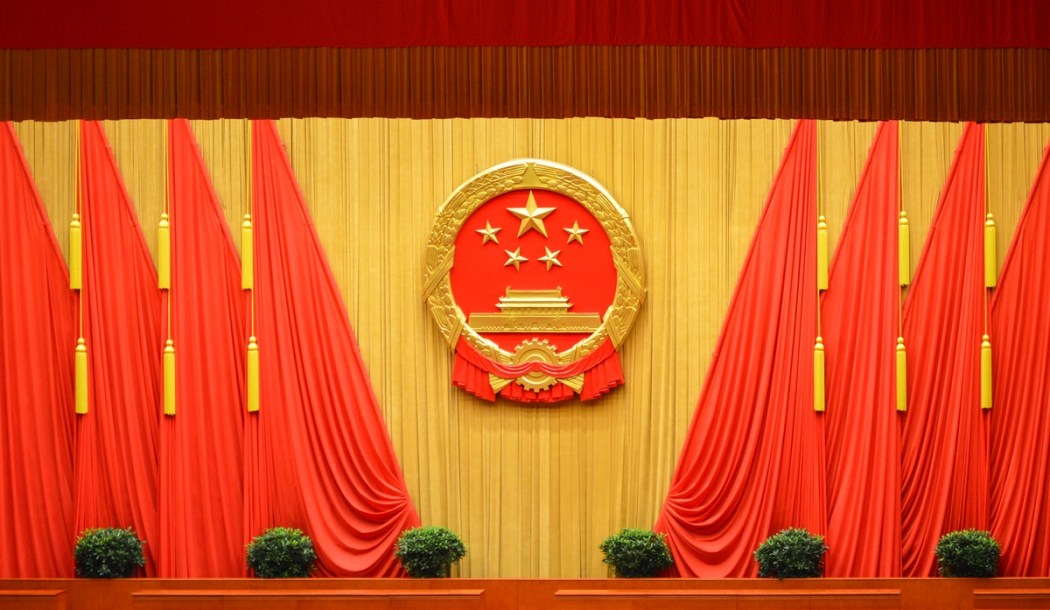
Before Guo’s emergence, xiangsheng was perceived by many as a fading art form, struggling to appeal to younger audiences. Guo, through his Deyunshe troupe, infused xiangsheng with contemporary relevance, blending traditional techniques with modern humor and a sharp wit. His performances, often characterized by their accessibility and engaging storytelling, attracted massive audiences, selling out theaters across China and beyond. His popularity was so immense that he frequently appeared on state broadcaster CCTV’s prestigious annual Spring Festival Gala, a prime platform for national recognition. He also performed at the Great Hall of the People in Beijing, a grand government building reserved for major state events, further cementing his status as a mainstream cultural icon.
His past acceptance by state media and his performance at such revered venues highlight the irony of his current predicament. It underscores how even highly successful artists, once embraced by the establishment, can quickly fall out of favor if their artistic choices are deemed to cross new or evolving political red lines.
The Significance of "Playing My Beloved Pipa"
The song at the heart of the controversy, "Playing My Beloved Pipa," is more than just a melody; it is a cultural touchstone. Composed in 1956, it belongs to a genre of revolutionary and patriotic songs that played a crucial role in shaping national consciousness in post-1949 China. These songs served to celebrate the Communist Party’s triumph, honor the sacrifices of its soldiers, and instill a sense of collective national pride. "Playing My Beloved Pipa" specifically recounts the heroic exploits of Chinese fighters during World War II, a period remembered for immense suffering but also for the ultimate victory against foreign aggression.
The war, known in China as the War of Resistance Against Japanese Aggression, is a foundational element of modern Chinese nationalism. Any perceived slight against the memory of those who fought, or the symbols representing their struggle, is met with strong official and public condemnation. The song’s recognition in 2019 as an "outstanding" work celebrating the People’s Republic of China’s founding further elevated its status, making it an even more protected symbol of national heritage and revolutionary spirit. For authorities, mocking such a song is not merely a breach of artistic decorum but an affront to national history and patriotic sentiment.
Broader Crackdown on Artistic Expression in China
Guo Degang’s investigation is not an isolated incident but rather indicative of a broader and intensifying crackdown on artistic expression under President Xi Jinping. Since Xi came to power, there has been a systematic effort to reassert Party control over all spheres of society, including culture and entertainment. Artists are increasingly expected to align their work with "socialist core values" and to actively promote Party narratives. This environment has led to a shrinking space for satire, critique, and even lighthearted commentary that might be construed as subversive or disrespectful.

A stark precedent for Guo’s situation occurred in 2023, when a comedy performance group faced severe penalties after one of its comics, Li Haoshi, made an oblique joke about the armed forces. Li Haoshi referenced a well-known army slogan while narrating an anecdote about watching his dogs chase a squirrel. While seemingly innocuous to an outside observer, officials swiftly condemned the joke, stating it had "caused a bad social impact" and violated the law. The consequences were draconian: the performing group was fined the equivalent of millions of dollars (reported to be 14.7 million yuan, or approximately $2 million USD at the time) and had its shows suspended indefinitely. Li Haoshi himself was arrested and detained.
This incident sent shockwaves through China’s entertainment industry, particularly among stand-up comedians and xiangsheng performers, many of whom rely on observational humor and social commentary. It reinforced the message that even seemingly subtle references to sensitive topics can lead to severe professional and legal repercussions. The Li Haoshi case served as a chilling reminder that the "red lines" for humor are not always explicit and can be interpreted strictly by authorities, often retroactively.
A History of Censorship and Self-Censorship
Censorship in China’s cultural sphere is deeply rooted, extending back decades. While periods of relative liberalization have occurred, the overall trend under the CCP has been one of control. Artists, writers, filmmakers, and performers have long navigated a complex landscape of explicit bans and implicit understandings of what is permissible. This has fostered a culture of self-censorship, where creators pre-emptively avoid sensitive topics to protect their careers and avoid potential legal trouble.
The current era under Xi Jinping has seen a marked acceleration of this trend. The Party has emphasized cultural confidence and a rejection of "western influences," pushing for art that reflects a distinctively Chinese narrative, often one that is nationalistic and celebratory of the state. This ideological push impacts everything from film scripts to song lyrics, television programs, and live performances. For comedians, whose craft often involves pushing boundaries and questioning norms, this environment presents an existential challenge. The very essence of satire — to hold a mirror to society, sometimes critically — clashes with the Party’s desire for unwavering positive messaging.

Immediate Repercussions and Public Reaction
The immediate fallout for Guo Degang has been swift and indicative of his precarious position. His Weibo account, a crucial platform for public engagement for Chinese celebrities, has been inactive since August 9, fueling speculation about his restricted ability to communicate publicly. Furthermore, venues in various Chinese cities have begun postponing performances featuring Guo this month, offering refunds to ticket holders. This preemptive action by venues suggests a fear of official reprisal or a directive from cultural authorities to distance themselves from the embattled comedian.
Public reaction to such incidents in China is often divided. On one side, ardent nationalists and state media commentators are likely to endorse the investigation, emphasizing the sanctity of national symbols and the need for artists to uphold patriotic values. They might view Guo’s alleged joke as a betrayal of national sentiment and a dangerous precedent. On the other side, supporters of artistic freedom and fans of Guo Degang may express concern, lamenting the shrinking space for creative expression and fearing a chilling effect on the comedy industry. However, open public criticism of government actions in such sensitive areas is rare and risky.
Implications for China’s Entertainment Industry
The investigation into Guo Degang carries significant implications for China’s broader entertainment industry. It reinforces the message that no artist, regardless of their fame or past contributions, is above the scrutiny of cultural authorities. This will undoubtedly lead to heightened self-censorship among comedians, actors, and other performers. Producers and venue operators will also become more cautious, likely imposing stricter content reviews and shying away from any material that could be deemed politically sensitive.

The incident could also stifle innovation and experimentation within traditional art forms like xiangsheng. If even subtle changes to patriotic songs are met with such severe reactions, artists may retreat to safer, more formulaic content, fearing that any deviation could jeopardize their careers and livelihoods. This trend risks homogenizing cultural output, making it less diverse and less capable of genuinely engaging with contemporary social issues.
The Future of Satire in China
The future of satire and critical humor in China appears increasingly bleak. The cases of Li Haoshi and now Guo Degang illustrate a clear pattern: the boundaries of acceptable comedic expression are tightening, and the consequences for crossing those lines are becoming more severe. The Party’s vision for culture prioritizes social stability, national unity, and ideological conformity over artistic freedom.
For a comedian like Guo Degang, whose career was built on witty observation and engaging with the public, this environment poses an unprecedented challenge. His investigation serves as a stark reminder to all artists in China that in the current political climate, even a lighthearted jest about a patriotic song can invite the full force of state scrutiny, with potentially career-ending repercussions. The incident will likely further solidify the atmosphere of caution and self-censorship that pervades China’s creative industries, leaving little room for the kind of sharp, spontaneous humor that once defined figures like Guo Degang.


 Evan Lee Salim
 Ali Ikhwan