Suro Senen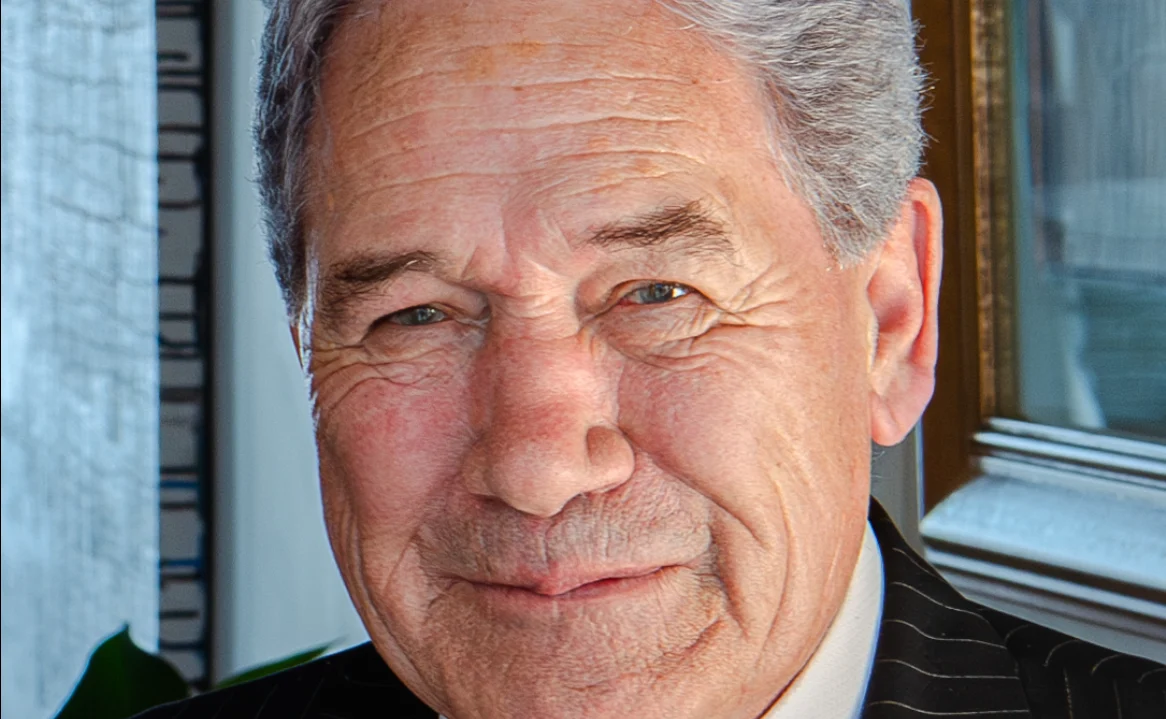
New Zealand’s Deputy Prime Minister and Foreign Minister, Winston Peters, ignited a significant diplomatic and domestic controversy on Thursday after a heated exchange in Parliament where he instructed a lawmaker of Chinese descent to "go back to your own country." The comments, made during a debate on New Zealand’s Covid-19 pandemic response, swiftly drew a rare public rebuke from China’s ambassador to Wellington and reignited discussions about parliamentary decorum, racial sensitivity, and the complexities of New Zealand’s foreign policy, particularly with its largest trading partner, China.
The Incident Unfolds in Parliament
The contentious remarks occurred on Wednesday within the halls of New Zealand’s Parliament during a robust debate concerning the nation’s handling of the Covid-19 pandemic. Lawrence Xu-Nan, a Member of Parliament for the Green Party, who was born in Tianjin, China, but grew up in Auckland, posed a direct question to Peters: "Are you vaccinated?" The query, aimed at the leader of the populist NZ First party, seemed to touch a nerve with the veteran politician known for his often-blunt and nationalistic rhetoric.
Peters’ response was immediate and sharply critical, escalating beyond the scope of the original question. He asserted that Xu-Nan had "come here five minutes ago," implying a lack of tenure or belonging. He then directly commanded, "Go back to your own country. That’s where they lie like a flatfish, but they don’t lie like that here." Peters continued, undeterred by the evident tension, stating, "This is called a democracy, unlike what you’re used to. Go back to where you’ve come from, you loudmouth." The comments were widely interpreted as xenophobic and an attack on Xu-Nan’s heritage and legitimacy as a New Zealand parliamentarian. Xu-Nan, who immigrated to New Zealand as a child and holds New Zealand citizenship, has been an active voice in the Green Party, advocating for various social and environmental causes. His political career reflects a journey of integration and contribution to New Zealand society.

Immediate Diplomatic Fallout: Beijing’s Rare Intervention
The severity of Peters’ comments was underscored by an unusual intervention from Beijing’s ambassador to New Zealand, Wang Xiaolong. Typically, diplomatic envoys refrain from commenting on the domestic political affairs of their host nations. However, Ambassador Wang chose to break this convention, taking to the social media platform X (formerly Twitter) on Thursday to issue a pointed, albeit indirect, criticism. Wang stated, "While I usually prefer to stay out of domestic politics, suffice it to say, sometimes, a statement says more about the person that makes it than anything or anybody else." This subtle but firm declaration from Beijing indicated the seriousness with which China viewed Peters’ remarks, particularly given Peters’ role as Foreign Minister, making the comments not just a domestic incident but one with international implications.
Peters, never one to back down from a challenge, promptly fired back at Ambassador Wang on X. He argued that the Ambassador’s comments had "proven my point," reinforcing his earlier statements. "We live in a democracy that includes free speech and rights — those two values that other certain countries not only limit, but do so with force," Peters asserted. He concluded his retort with a defiant flourish: "If that offends the pearl clutchers and the communist shills labelling it as ‘dangerous’ — welcome to New Zealand." This exchange on social media between New Zealand’s top diplomat and China’s ambassador highlights the increasing role of digital platforms in contemporary diplomacy and the heightened sensitivity surrounding geopolitical narratives.
A Pattern of Controversial Rhetoric

This is not an isolated incident for Winston Peters or his NZ First party, which often plays a pivotal "kingmaker" role in New Zealand’s often-fractured political system, influencing government formation. The party’s populist and nationalistic platform frequently involves strong stances on immigration and national identity. Earlier in the year, Shane Jones, Peters’ deputy and another prominent figure in NZ First, stirred controversy by criticising New Zealand’s free trade deal negotiations with India, warning of a potential "butter chicken tsunami." This comment, widely seen as a racially charged jab at Indian immigration and cuisine, also drew significant public backlash.
Last year, both Peters and Jones were compelled to retract and temper their remarks after an incident involving Mexican-born MP Francisco Hernandez. During a parliamentary debate, Jones reportedly yelled "send the Mexicans home." Peters subsequently supported this sentiment, telling both Hernandez and Xu-Nan that they should "show some gratitude" for being in New Zealand. These repeated incidents illustrate a recurring pattern within NZ First’s rhetoric, often targeting ethnic minority lawmakers and questioning their belonging or loyalty to New Zealand, drawing criticism from various quarters for being divisive and undermining multiculturalism.
Winston Peters: A Veteran Populist
Winston Peters, at 79, is one of New Zealand’s most enduring and polarising political figures. His career spans several decades, marked by stints in various ministerial portfolios, including Foreign Affairs and Deputy Prime Minister, under different coalition governments. He founded the NZ First party in 1993, positioning it as a voice for "ordinary New Zealanders" and often expressing skepticism towards globalisation, free trade agreements, and multiculturalism. The party’s core tenets revolve around strong national sovereignty, controlled immigration, and prioritising New Zealand interests, often appealing to a segment of the electorate feeling left behind or disaffected by mainstream politics.

Peters’ political longevity is often attributed to his charismatic, albeit combative, style and his ability to tap into populist sentiment. However, this approach has frequently led to accusations of xenophobia and racism. His "go back to your own country" remarks are consistent with a historical pattern of questioning the belonging of non-Pākehā (European New Zealanders) in public discourse, a strategy that resonates with his base but deeply offends and alienates other segments of the population, particularly migrant communities and those advocating for a more inclusive national identity.
New Zealand-China Relations: A Delicate Balance
The diplomatic spat occurs at a sensitive juncture for New Zealand’s relationship with China. China is New Zealand’s largest trading partner, with bilateral trade reaching significant figures, particularly in agricultural exports. However, Wellington has increasingly found itself navigating a complex geopolitical landscape, balancing its economic reliance on China with its security alliances, particularly with its Five Eyes partners (Australia, Canada, the United Kingdom, and the United States), who have often adopted a more confrontational stance towards Beijing on issues such as human rights, regional security, and trade practices.
New Zealand has historically sought to maintain an independent foreign policy, often described as "agnostic" or "nuanced" in its approach to China, avoiding the more hawkish rhetoric of some of its allies. However, Peters’ comments, particularly coming from the Foreign Minister, risk undermining this carefully cultivated balance. Such remarks can be perceived by Beijing as not just an isolated gaffe but as reflecting underlying discriminatory sentiments within the New Zealand government, potentially complicating future diplomatic engagements, trade negotiations, and people-to-people exchanges. The Chinese Ambassador’s public response signals Beijing’s growing intolerance for what it perceives as disrespectful or racially tinged comments directed at its citizens or people of Chinese descent abroad, especially from high-ranking officials.

Domestic Implications and Reactions
The incident has triggered widespread condemnation within New Zealand’s political and civil society spheres. Leaders from across the political spectrum, with the exception of NZ First, have criticised Peters’ language. The Green Party, Xu-Nan’s party, has unequivocally denounced the comments as racist and unacceptable in a democratic parliament. Other opposition parties and even some members of the ruling coalition have expressed discomfort, if not outright disapproval, underscoring the divisive nature of Peters’ remarks.
Immigration statistics reveal that New Zealand is a diverse nation, with a significant proportion of its population born overseas. According to Statistics New Zealand, over a quarter of the population was born outside New Zealand, and Asian ethnic groups, including those of Chinese descent, constitute a growing and vital part of the country’s social and economic fabric. Comments like Peters’ are deeply distressing for these communities, fostering a sense of alienation and questioning their place in New Zealand society, despite their contributions. Advocacy groups representing migrant communities and anti-racism campaigners have voiced strong concerns, calling for greater accountability and education among public officials regarding inclusive language and respect for diversity.
The incident also raises questions about parliamentary standards and decorum. While robust debate is a hallmark of democracy, there are unwritten rules and conventions about the nature of personal attacks, especially those based on ethnicity or origin. Speakers of Parliament and other parliamentary authorities may face pressure to address such conduct to maintain the integrity and respectful functioning of the legislative body. The ongoing public discourse will likely focus on whether such remarks, particularly from a senior minister, are compatible with the values of a modern, multicultural New Zealand.

Analysis of Broader Impact
The "go back to your own country" incident is more than a fleeting political squabble; it encapsulates deeper tensions within New Zealand society and its international positioning. Domestically, it exposes the fault lines concerning national identity, immigration, and racial harmony. While New Zealand prides itself on its multiculturalism, incidents like this highlight the persistent challenges of racism and xenophobia, particularly when amplified by prominent political figures. The public reaction, spanning from outrage to staunch defence of Peters’ "free speech," reflects the ongoing national conversation about what it means to be a New Zealander in the 21st century.
Internationally, the incident complicates New Zealand’s diplomatic standing. As Foreign Minister, Peters is the public face of New Zealand’s foreign policy. His remarks risk projecting an image of a less tolerant or less welcoming nation, potentially affecting New Zealand’s soft power and its ability to engage effectively on the global stage, especially with its Asian partners. While Peters frames his comments as a defence of democratic values and free speech against "communist shills," this narrative may not resonate universally and could be seen as an attempt to deflect from the underlying racial undertones of his statement. The challenge for New Zealand’s government will be to manage the fallout, reassure its international partners, and reaffirm its commitment to diversity and inclusive governance, even as its coalition government includes a party known for its nationalist rhetoric. This event underscores the delicate balance required to navigate domestic political pressures while upholding international diplomatic norms and national values.

 Sagoh
Sagoh
 Asro
Asro