Ammar Sabilarrohman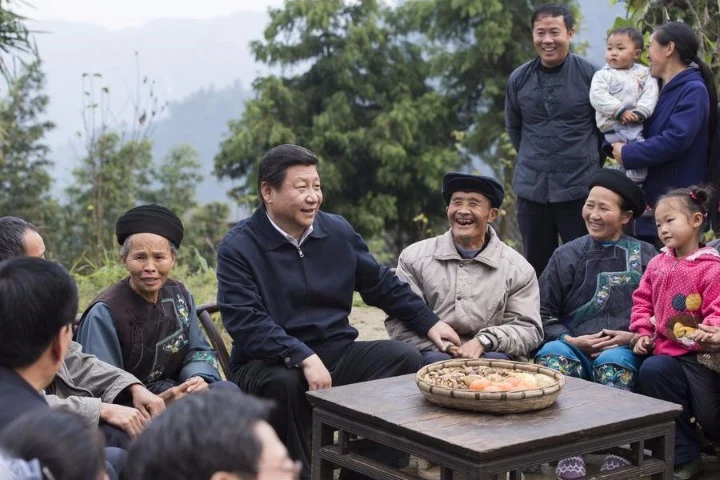
Xi Jinping, general secretary of the Communist Party of China Central Committee, has unequivocally stressed that the rigorous campaign against undesirable work styles within the Party must not only persist but also intensify, adapting to new manifestations of deep-seated issues. This directive, issued in an instruction released on Monday, came in response to a comprehensive article by Xinhua News Agency that highlighted evolving forms of misconduct among Party officials. Xi, who also serves as President and Chairman of the Central Military Commission, underscored that these seemingly "new forms" are, at their core, merely old problems resurfacing in different guises, signaling the tenacious and recurrent nature of such challenges.
Background: A Decade-Long Battle for Party Purity
The Communist Party of China’s sustained fight against corruption and misconduct is a defining feature of Xi Jinping’s leadership, initiated shortly after he assumed power in late 2012. The campaign was swiftly launched with the promulgation of the "Eight-Point Decision" in December 2012, a landmark set of rules aimed at improving Party and government conduct. This foundational document targeted specific abuses such as excessive hospitality, lavish banquets, official trips, and the misuse of public funds and vehicles. It also sought to curb ostentatious displays, lengthy meetings, and unproductive inspection tours. The initial phase of this campaign, famously described as targeting both "tigers and flies" – high-ranking and lower-level officials alike – led to the investigation and punishment of millions of Party members, including numerous ministerial-level and even Politburo-level cadres. Estimates widely reported in state media indicate that well over 1.5 million officials have been disciplined since the campaign began, ranging from reprimands to imprisonment, dramatically reshaping the political landscape and public perception of the Party.
While the initial crackdown focused heavily on overt corruption and blatant displays of extravagance, the Party leadership has consistently recognized the more subtle and insidious forms of misconduct that undermine governance and public trust. Issues such as bureaucratism and "formalities for formalities’ sake" have been recurring targets, as they stifle innovation, waste resources, and alienate the populace. Xi’s latest instruction serves as a powerful reminder that despite significant achievements, vigilance cannot waver, and the battle for Party conduct and work styles is an unending endeavor.
Xi Jinping’s Renewed Emphasis: Intractability and Recurrence
In his instruction, General Secretary Xi Jinping specifically warned against the "intractability and recurrence" of these undesirable work styles. He explicitly named "formalities for formalities’ sake, bureaucratism, hedonism, and extravagance" as persistent threats. His statement, "The efforts to address such misconduct should not be stopped and the work to improve the Party’s conduct and work styles should never end," conveyed a clear message of zero tolerance and sustained commitment. This underscores the Party’s understanding that these issues are not easily eradicated and require continuous institutional and ideological reinforcement.
Xi directed Party and governmental departments across all localities and sectors to conduct thorough self-examinations of their performance in this regard. He urged them to implement concrete measures to rectify identified problems, with particular emphasis on "the most prominent ones such as seeking excessive publicity but lacking solid practice and implementation." This highlights a critical concern: the tendency for some officials to prioritize superficial achievements and public image over substantive work and tangible results, a manifestation of the "formalities for formalities’ sake" problem. Furthermore, Xi called upon leading officials at all levels to exemplify leadership in this ongoing campaign, setting a personal standard for conduct and accountability. He also mandated that the practice of "formalities for formalities’ sake" must be strictly avoided in the upcoming Communist Party of China campaign on "staying true to our founding mission," emphasizing the need for genuine self-reflection and practical action rather than perfunctory exercises.
The Evolving Landscape of Undesirable Work Styles: Xinhua’s Observations
The Xinhua News Agency article, which prompted Xi’s instruction, provided a crucial diagnostic assessment of the contemporary challenges. It acknowledged the major achievements of the anti-undesirable work styles campaign but cautioned that problems "still linger." The article meticulously detailed several contemporary manifestations of misconduct, illustrating how old problems adapt to new contexts:
- Perfunctory Work in Research and Inspections: Some officials conduct superficial investigations and inspections, merely going through the motions without truly delving into issues or seeking genuine understanding. This leads to ineffective policymaking and implementation.
- False Concern for the Public: Certain Party and governmental agencies and their workers exhibit a facade of caring for public welfare without undertaking practical work to serve the people. This can manifest as token gestures or empty promises, eroding public trust.
- Working for Attention of Higher Officials, Not Public Satisfaction: A significant concern raised was the tendency of local governments and officials to prioritize impressing superiors rather than genuinely addressing the needs and ensuring the satisfaction of the populace. This can lead to skewed priorities, resource misallocation, and policies driven by short-term political gains rather than long-term public benefit.
- Dodging Responsibilities, Inaction, and Sloth: The article pointed out cases where officials shirk their duties, demonstrate a lack of initiative, or are slow to act on pressing issues. This inertia can hinder governance, delay problem-solving, and foster public disillusionment.
- Double-Dealing and Duplicity: Perhaps most concerning was the mention of officials engaging in deceptive practices, presenting one face to superiors or the public while acting differently behind the scenes. This undermines integrity and accountability within the Party.
These observations from Xinhua provide concrete examples of the "new forms" that are essentially sophisticated versions of the old problems of bureaucratism and formalism. They indicate a need for a more nuanced and targeted approach to enforcement and education.
Official Response and Implementation: The CPC Central Committee’s Mandate
Following Xi Jinping’s instruction, the General Office of the CPC Central Committee promptly issued a circular. This circular mandated all Party and governmental agencies to thoroughly study and implement Xi’s directive with immediate and concrete action. It specifically called on these entities to "carefully sift out new forms of undesirable work styles, resolutely correct them and make solid improvement in this respect." This emphasizes the importance of both detection and effective rectification.
A critical element of the circular was its focus on timing. It explicitly stressed that the upcoming New Year’s and Spring Festival season would be an "important point in the fight." Historically, these festive periods have been vulnerable times for the resurgence of undesirable practices such as lavish entertaining, gift-giving, and other forms of extravagance, often under the guise of traditional celebrations. The circular, therefore, instructed authorities to "resolutely prevent the return of misconduct and to consolidate and build on the advances made in implementing the central Party leadership’s eight-point decision on improving Party and government conduct." This forward-looking directive aims to preempt violations and reinforce the established norms of austerity and integrity, ensuring that the gains made since 2012 are not eroded.
Timeline of Key Anti-Corruption Milestones
- November 2012: Xi Jinping assumes leadership of the CPC.
- December 2012: The CPC Central Committee issues the "Eight-Point Decision" on improving Party and government conduct, marking the formal launch of the anti-corruption and anti-misconduct campaign.
- 2013-Present: The campaign rapidly expands, leading to investigations and punishments of high-profile "tigers" (e.g., Zhou Yongkang, Bo Xilai, Xu Caihou, Guo Boxiong, Sun Zhengcai) and numerous "flies" across all levels of government and state-owned enterprises.
- Ongoing: Various targeted campaigns against specific forms of misconduct, including "four undesirable work styles" (formalities for formalities’ sake, bureaucratism, hedonism, and extravagance) and promoting "mass line" education campaigns to connect officials with the public.
- Recent Years: Increased focus on systemic issues, internal Party discipline, and establishing long-term mechanisms to prevent corruption and misconduct.
- This Instruction (Monday): Xi Jinping’s latest directive, triggered by the Xinhua article, signaling a renewed and adaptable effort against evolving forms of misconduct, particularly formalism and bureaucratism.
Analysis of Implications and Broader Impact
Xi Jinping’s latest instruction carries significant implications across various facets of Chinese governance and society.
Political Implications: This directive reinforces the Party’s commitment to maintaining its internal discipline and integrity, which is crucial for its legitimacy and continued rule. By continually purging undesirable elements and correcting work styles, the Party aims to strengthen its leadership and consolidate Xi’s authority. It underscores that the campaign is not a temporary measure but a permanent fixture of Party building, essential for ensuring ideological purity and loyalty. The emphasis on leading officials taking the lead also serves as a critical mechanism for top-down enforcement and setting an example, fostering a more unified and disciplined Party apparatus.
Governance Implications: The fight against formalism and bureaucratism is directly linked to improving the efficiency and effectiveness of government. When officials prioritize substance over show, and public satisfaction over impressing superiors, governance can become more responsive and results-oriented. Reducing inaction, sloth, and the dodging of responsibilities can lead to better implementation of policies, more effective public services, and a more dynamic administrative system capable of addressing complex challenges. This ultimately aims to enhance the Party’s governing capacity and its ability to deliver on its promises to the people.
Societal Implications: For the general public, the continued fight against misconduct is vital for restoring and maintaining trust in the Party and government. Issues like false concern for the public and officials working for superiors’ attention rather than the people’s satisfaction directly impact citizens’ daily lives and their perception of fairness. By cracking down on these practices, the Party seeks to bridge the gap between officials and ordinary people, fostering a more harmonious society where public grievances are genuinely addressed. The emphasis on austerity also helps to counter social inequalities and the perception of privilege, promoting a sense of shared responsibility and collective good.
Economic Implications: Corruption and undesirable work styles can act as significant drags on economic development. Bureaucratism creates red tape, stifles innovation, and increases transaction costs for businesses. Inaction and sloth can delay crucial infrastructure projects or economic reforms. By fostering a cleaner and more efficient government, the campaign aims to create a more predictable and fair business environment, attract investment, and ensure that economic resources are allocated based on merit rather than patronage. Reducing waste and extravagance can also free up public funds for more productive investments in public services and economic development.
Challenges and Outlook: Despite the Party’s unwavering commitment, Xi’s acknowledgment of the "intractability and recurrence" of these issues highlights the inherent challenges. These are deeply ingrained behavioral patterns and systemic vulnerabilities that require continuous vigilance and adaptive strategies. The campaign must balance strict enforcement with fostering an environment where officials feel empowered to innovate and take initiative, rather than becoming overly cautious or paralyzed by fear of reprisal. The long-term success will depend not only on punitive measures but also on comprehensive institutional reforms, ethical education, and robust oversight mechanisms that prevent misconduct from emerging in the first place.
In conclusion, Xi Jinping’s latest directive against undesirable work styles underscores the Communist Party of China’s sustained, evolving, and uncompromising commitment to self-purification. By targeting the "new forms" of old problems and emphasizing relentless vigilance, particularly during sensitive periods like the festive season, the Party aims to solidify its internal discipline, enhance governance, and maintain public trust, all crucial for its long-term strategic objectives. The fight, as Xi declared, will never end.

 Nana Wu
 Iffa Jayyana