Basiran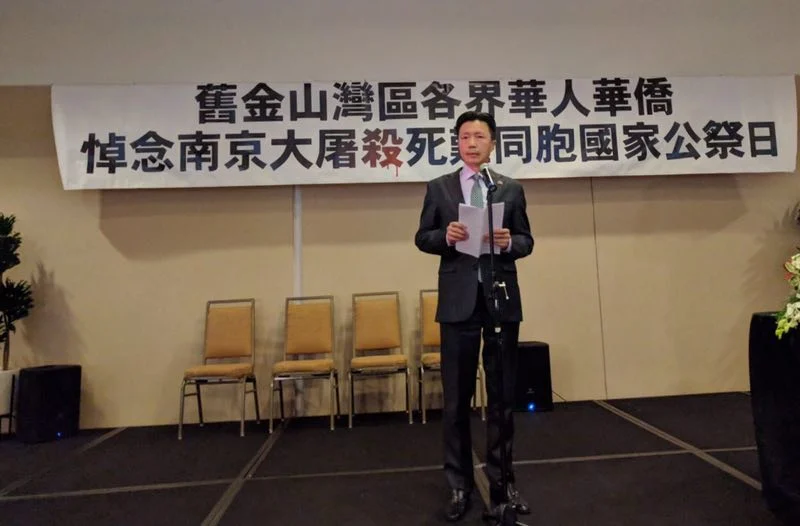
Hundreds of activists and members of the Chinese and other Asian communities gathered in San Francisco on Sunday to solemnly mark the 80th anniversary of the Nanjing Massacre, a horrific period of wartime atrocity committed by the Japanese military during World War II. The memorial service, held annually for the past two decades, aims to expose the war crimes perpetrated by the Imperial Japanese Army and to ensure that this dark chapter of history is never forgotten.
The event, meticulously organized by a coalition of prominent organizations including the Rape of Nanking Redress Coalition, the Committee to Promote Reunification of China, the Alliance for Preserving the Truth of Sino-Japanese War, and the Comfort Women Justice Coalition, served as a powerful reminder of the immense suffering inflicted upon Chinese civilians. The gathering underscored a growing international call for accountability and remembrance of historical injustices.
Remembering the Atrocities: Scale and Scope of the Nanjing Massacre
The Nanjing Massacre, which commenced on December 13, 1937, following the capture of China’s then-capital by Japanese troops, represents one of the most brutal episodes of the Second Sino-Japanese War. For more than 40 agonizing days, the city endured a systematic campaign of murder, rape, and destruction. Official historical accounts and survivor testimonies document the tragic loss of approximately 300,000 Chinese civilians and unarmed soldiers. Furthermore, a significant portion of Nanjing’s infrastructure, estimated to be one-third of its buildings, was reduced to rubble, leaving the city in ruins and its population devastated.
Zha Liyou, the acting Chinese consul general in San Francisco, addressed the attendees, emphasizing the egregious violation of international conventions by the Japanese Army. "The Japanese Army blatantly violated international conventions and committed the extremely cruel atrocity in Nanjing, where 300,000 Chinese civilians were murdered and one third of the buildings were destroyed," Zha stated, highlighting the systematic nature of the violence. The sheer scale of the slaughter, coupled with widespread sexual violence against tens of thousands of women, has cemented the Nanjing Massacre as a symbol of the profound human cost of unchecked military aggression.
The Intertwined Fates of Victims: Comfort Women and the Nanjing Massacre
The commemoration also drew attention to the interconnectedness of wartime suffering, particularly in relation to the issue of "comfort women." Judith Mirkinson, president of the Comfort Women Justice Coalition, drew a direct parallel between the atrocities in Nanjing and the systematic sexual enslavement of women by the Japanese Imperial Army during World War II. "Our stories are linked. The fate of over 400,000 women sexually enslaved by the Japanese Imperial Army during World War II is part and parcel of what happened during the Nanjing Massacre," Mirkinson asserted.
Mirkinson further articulated a profound message for the 21st century, positing that truth and reconciliation are paramount to ensuring lasting peace. "The 20th century has been called the most violent century in the history of the world, and that one way to ensure peace in the 21st century is through truth and reconciliation," she remarked. Her statement underscored the belief that genuine reconciliation cannot be achieved without a full acknowledgment of past crimes and a commitment to justice for victims. "Reconciliation does not come without truth. So the Japanese government must acknowledge their crimes. They must give justice to those few people who still survive from the Nanjing Massacre and to the memory of what happened there," she urged, calling for concrete actions from the Japanese government.
A Broader Context: The Second Sino-Japanese War and its Devastating Impact
The Nanjing Massacre was not an isolated incident but rather a brutal manifestation of Japan’s aggressive expansionist policies in Asia. The invasion of Northeast China in September 1931 marked the beginning of a prolonged period of Japanese occupation and warfare that ultimately escalated into a full-scale invasion on July 7, 1937. This protracted conflict, which continued until Japan’s surrender in 1945, inflicted unimaginable devastation upon China. Estimates indicate that approximately 35 million Chinese soldiers and civilians were killed or injured during this period, a staggering human toll that underscores the immense scale of suffering endured by the Chinese nation.
National Remembrance and Global Recognition
In recognition of the profound historical significance and the immense suffering of its people, the Chinese government has officially designated the anniversary of the Nanjing Massacre as a National Memorial Day for Nanjing Massacre Victims. This designation signifies the nation’s collective commitment to remembering the victims, honoring the survivors, and pursuing justice and enduring peace.
Worldwide, the Chinese diaspora has joined hands to commemorate this historic event, reinforcing the global nature of remembrance and advocacy. The memorial service in San Francisco is a testament to the enduring impact of the massacre and the continued efforts to bring its history to light.
The Purpose of Remembrance: Fostering Peace, Not Enmity
Consul General Zha Liyou articulated a crucial distinction regarding the purpose of remembering such a horrific event. "To remember the atrocities committed by the Japanese Army during World War II does not mean to pass on the enmity but rather to remind people not to forget the history and inspire them to love peace," he explained. This sentiment highlights the educational and forward-looking aspect of historical commemoration, aiming to learn from the past to build a more peaceful future. He added, "It might be a comfort to the victims and those who sacrificed their lives that the Nanjing Massacre has been etched into the memory of the Chinese people and the world civilization."
UNESCO Recognition: Acknowledging Universal Value
The historical significance and the profound human impact of the Nanjing Massacre have also received international recognition. In 2015, the Nanjing Massacre was officially inscribed onto the UNESCO Memory of the World Register. This prestigious registry is dedicated to preserving documented heritage of universal value, ensuring that such critical historical records are safeguarded for future generations and acknowledged on a global scale. The inclusion signifies the international community’s recognition of the massacre’s profound historical importance and its impact on human civilization.
Broader Implications and the Path Forward
The continued commemoration of the Nanjing Massacre, particularly in diaspora communities, serves multiple crucial functions. Firstly, it ensures that the narratives of the victims and survivors are not erased or minimized, countering attempts at historical revisionism. Secondly, it educates younger generations about the realities of war and the consequences of unchecked aggression, fostering a greater appreciation for peace and human rights. Thirdly, it amplifies the call for accountability and justice, keeping pressure on governments to confront their historical responsibilities.
The demand for truth and reconciliation, as voiced by speakers like Judith Mirkinson, reflects a growing global understanding that addressing historical injustices is a necessary precursor to building genuine and lasting peace. The Japanese government’s official stance on the Nanjing Massacre has been a point of contention for decades, with differing interpretations and acknowledgments of responsibility. While apologies have been issued, many victims’ groups and international observers argue that these have often been insufficient or qualified, lacking the full acknowledgment of culpability and the commitment to reparations or redress that would signify true reconciliation.
The legacy of the Nanjing Massacre continues to resonate, serving as a stark reminder of the human capacity for brutality and the critical importance of vigilance in protecting human rights and upholding international law. The annual commemorations in San Francisco and elsewhere are vital components of a global effort to ensure that such horrors are never repeated, and that the pursuit of truth and justice remains an enduring imperative. The inscription on the UNESCO Memory of the World Register is a significant step, but the ultimate goal of reconciliation requires ongoing dialogue, genuine acknowledgment, and a commitment to learning from the past to shape a more humane future. The voices of survivors and their descendants, amplified through these memorial events, are essential in this ongoing journey.


 Nana Wu
 Suro Senen