 Laily UPN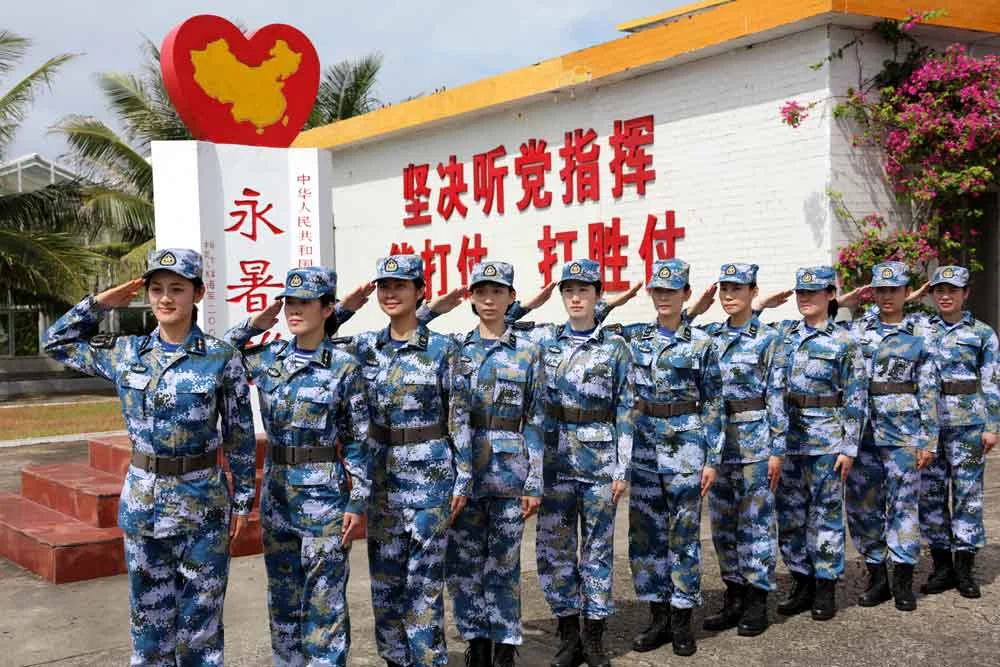
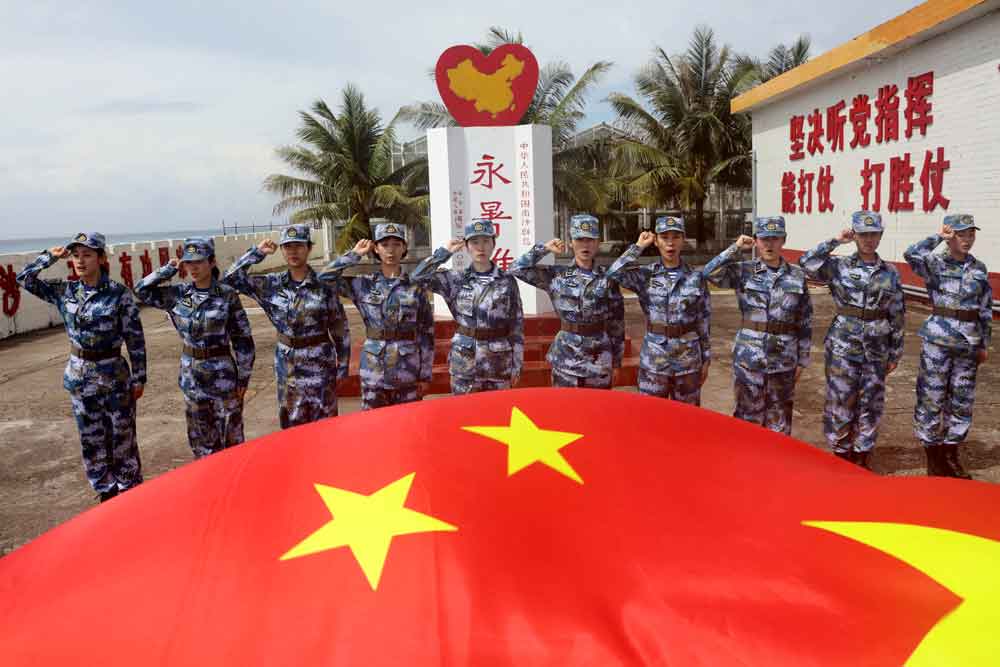
The People’s Liberation Army (PLA) Navy announced a significant development in China’s presence in the South China Sea, confirming the deployment of 10 female service members to join the garrison guarding the Nansha Islands. This unprecedented move, formally commencing on December 11, 2017, marks the first time female personnel have been permanently stationed in China’s southernmost territories, specifically on Yongshu Reef. The deployment underscores the PLA’s ongoing modernization efforts and its commitment to bolstering its operational capabilities across all strategic domains, including the remote and geopolitically sensitive Nansha Islands.
A New Chapter in Nansha Garrison Operations
The contingent of 10 women comprises both officers and sergeants, boasting an average age of 23, and all hold university diplomas. Their assignments span a diverse range of critical roles, including staff, communications, and medical services, highlighting their comprehensive integration into the operational fabric of the garrison. This strategic allocation of skilled personnel reflects a broader trend within the PLA to optimize human resources and enhance the effectiveness of its forward-deployed units. The official news release from the PLA Navy emphasized the historic nature of this deployment, distinguishing it from previous short-term missions where female PLA members temporarily visited the islands but remained under the command of their originating units on the mainland. This new arrangement signifies a permanent rotational presence, fully embedding these women within the Nansha Islands Garrison’s command structure.
The conditions on the Nansha Islands, part of the larger Spratly Islands archipelago, are inherently challenging due to their remote location, tropical climate, and the logistical complexities of sustaining a presence so far from the mainland. However, the comprehensive infrastructure developed by China on features like Yongshu Reef (Fiery Cross Reef) aims to mitigate these difficulties. Zhou Yaling, one of the newly deployed female service members, offered a perspective that challenges common perceptions of isolated outposts. She was quoted in the release as remarking, "Nansha is more beautiful than what they had imagined. There are airports, harbors, streets, hospitals and sporting grounds. All of them make the islands like a lovely city on the sea." This description points to the extensive investment in creating habitable and functional environments, crucial for the long-term morale and operational readiness of personnel. Zhang Jiahong, political commissar of the PLA Nansha Islands Garrison, addressed the welfare of the new recruits, stating that these female members would be regularly rotated back to the mainland for rest periods every few months to ensure their health and well-being, acknowledging the unique pressures of such postings.
Background and Geopolitical Significance of the Nansha Islands
The Nansha Islands, internationally known as the Spratly Islands, are a collection of more than 100 small islands, islets, reefs, and shoals in the South China Sea. They are subject to overlapping territorial claims by China, Vietnam, the Philippines, Malaysia, Brunei, and Taiwan. The strategic importance of these islands cannot be overstated. They sit astride vital international shipping lanes, through which an estimated one-third of global maritime trade passes annually, including a substantial portion of the world’s oil and gas shipments. The area is also believed to hold significant untapped reserves of oil and natural gas, as well as rich fishing grounds.
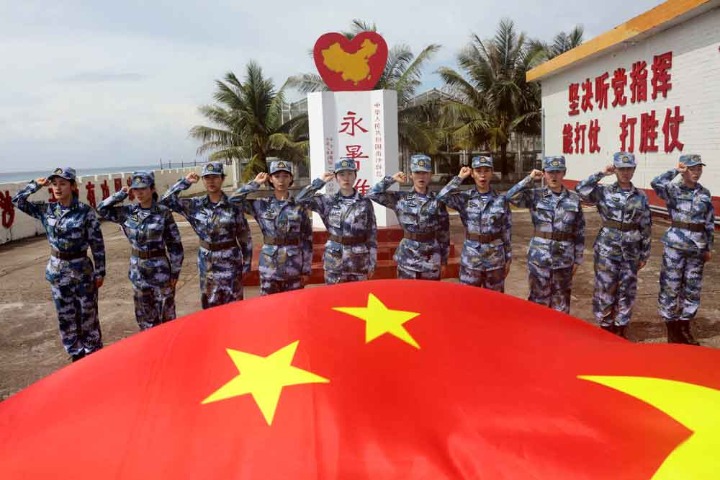
China’s historical claims to the Nansha Islands date back centuries, with modern assertions often referencing historical maps and usage. In recent decades, particularly since the 1980s and intensifying in the 2010s, China has significantly expanded its physical presence in the archipelago. This expansion has involved extensive land reclamation projects on several features, transforming submerged reefs and small islets into artificial islands capable of supporting substantial infrastructure. Yongshu Reef, where the female garrison is stationed, is one of the largest and most developed of these features. It boasts a 3,000-meter runway capable of accommodating military and civilian aircraft, substantial port facilities, radar installations, lighthouses, and various administrative and support buildings, including medical facilities, sports grounds, and living quarters. These developments have dramatically enhanced China’s ability to project power, conduct surveillance, and provide logistical support in the southern reaches of the South China Sea, while also generating considerable international concern and criticism regarding the militarization of disputed territories.
The establishment of the PLA Nansha Islands Garrison itself was a strategic move to formalize and consolidate China’s administrative and military control over its claimed territories. The garrison’s mission includes safeguarding China’s sovereignty, maritime rights, and interests, as well as providing search and rescue, disaster relief, and environmental protection services. The deployment of female personnel adds another dimension to this established presence, signaling a maturing and normalizing of operations in this remote outpost.
The Evolving Role of Women in the People’s Liberation Army
The integration of women into the Nansha Islands Garrison is part of a broader, long-term trend within the PLA to expand and diversify the roles of female service members. Historically, women in the PLA were predominantly assigned to support functions such as medical services, communications, and cultural work. However, over the past few decades, there has been a conscious effort to integrate women into more front-line and specialized combat roles. This evolution mirrors global military trends where gender barriers are increasingly being dismantled to leverage a wider talent pool and enhance overall military effectiveness.
Since the early 2000s, Chinese women have taken on roles as fighter pilots, submariners, special forces operatives, and missile technicians. The PLA Navy, in particular, has been at the forefront of this integration, with female sailors serving on destroyers, frigates, and hospital ships, including the renowned "Peace Ark." The deployment to the Nansha Islands represents a logical extension of this policy, placing women in demanding, long-term operational assignments in a highly strategic and sensitive environment. It reflects the PLA’s commitment to gender equality in military service and its recognition that modern warfare and military operations require diverse skills and capabilities, irrespective of gender. This move also serves as a powerful symbol internally, demonstrating that women are integral to China’s defense posture, even in its most remote and challenging outposts. It potentially boosts recruitment efforts among educated young women, showcasing opportunities for service in critical national defense roles.
Operational Challenges and Mitigation Strategies
Serving on the Nansha Islands presents a unique set of operational and personal challenges. The extreme isolation, hundreds of kilometers from the nearest major landmass, coupled with the harsh tropical climate characterized by high temperatures, humidity, and the constant threat of typhoons, demands exceptional resilience from military personnel. Logistical chains are stretched, and while facilities have improved dramatically, the sense of being disconnected from mainland life can be profound.
The roles assigned to the female contingent—staff, communications, and medical services—are crucial for maintaining the garrison’s functionality and well-being. Communications specialists are vital for ensuring seamless links with mainland command centers and other deployed units, while medical personnel are indispensable for managing health issues in a remote environment where immediate evacuation for serious conditions may be challenging. The presence of university-educated officers and sergeants in these roles signifies a high level of expertise and professionalism brought to the garrison.
The insights provided by Zhou Yaling regarding the "lovely city on the sea" underscore the importance of the advanced infrastructure in mitigating these challenges. The presence of modern hospitals, recreational facilities, and well-maintained living quarters contributes significantly to the quality of life and morale of the stationed personnel. The stated policy of regular rotations back to the mainland for rest, as articulated by Political Commissar Zhang Jiahong, is also a critical psychological and physical support mechanism. This systematic approach to personnel management is essential for long-term sustainability and for preventing burnout in such demanding environments. It reflects a modern understanding of military welfare and operational readiness, acknowledging the human element in protracted deployments.
Strategic Implications and Broader Impact
The deployment of female personnel to the Nansha Islands carries several layers of strategic implications, both domestically and internationally. Domestically, it reinforces the narrative of a modernizing PLA that is increasingly meritocratic and inclusive. It highlights the military’s efforts to fully utilize its human capital and adapt to the evolving demands of contemporary defense. This move can serve as an inspiration for women across China, showcasing opportunities for service in critical national defense roles and contributing to a sense of national pride and unity.
On the international stage, this development contributes to China’s assertion of sovereignty and administrative control over the Nansha Islands. By integrating female personnel into the permanent garrison, Beijing sends a subtle but clear message about the "normalized" and enduring nature of its presence in these disputed territories. It signifies a long-term commitment to maintaining and enhancing its operational capabilities in the region. While unlikely to directly alter the geopolitical calculus for other claimants or international powers, it solidifies the perception of China’s sustained occupation and development of these features.
The broader implications also touch upon the evolving dynamics of the South China Sea. As China continues to build out and staff its facilities, the operational landscape of the region becomes increasingly complex. The presence of a diverse, well-educated, and permanently stationed garrison, now including women, underscores the comprehensive nature of China’s strategy – encompassing not just military hardware but also robust human infrastructure. This development, while seemingly a domestic personnel decision, is inextricably linked to the larger narrative of regional power dynamics and China’s role as a major maritime power in the Indo-Pacific. It marks a small yet significant step in the ongoing evolution of China’s military posture and its sustained presence in one of the world’s most contested maritime regions.


 Muslim