Laily UPN
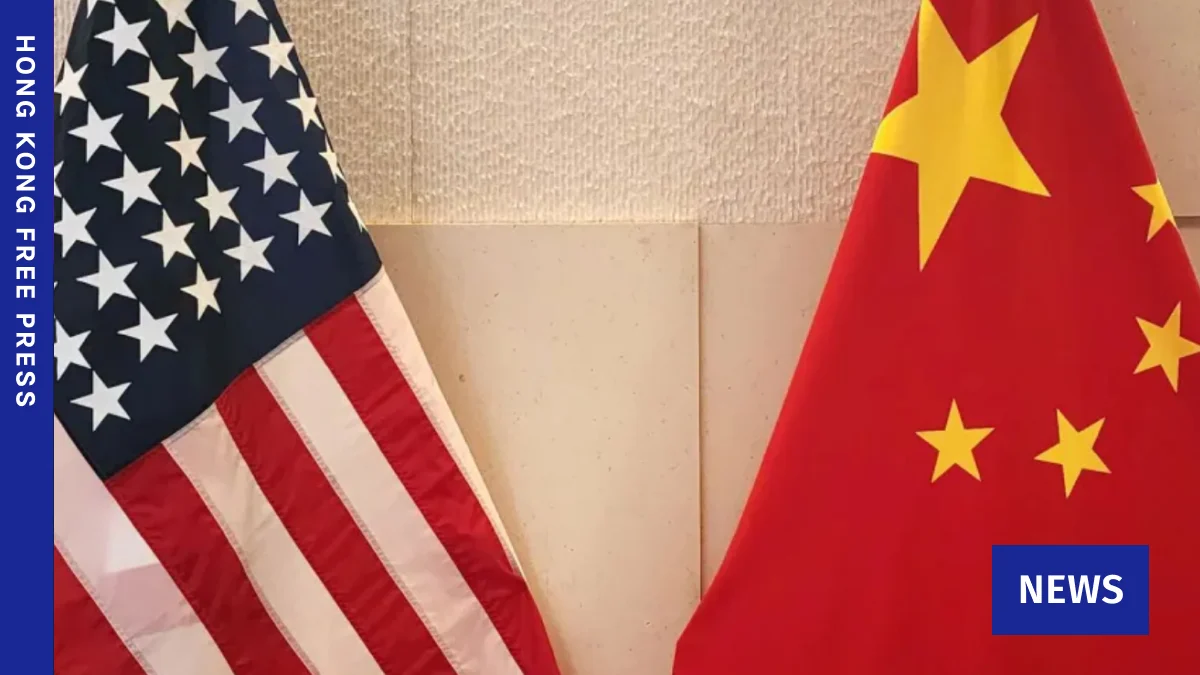
Beijing, China – China has issued a stern warning of potential "countermeasures" following the United States’ finalization of new regulations that significantly shorten the allowable stay for foreign journalists, with Chinese nationals facing the most stringent restrictions. The move marks a further escalation in the ongoing diplomatic and media tensions between the world’s two largest economies, threatening to further impede the free flow of information and exacerbate bilateral mistrust.
The contentious new rules, anticipated to take effect as early as September 2026, will limit the stay of most foreign journalists to an initial period of 240 days, approximately eight months, with provisions for extensions of similar durations. However, the Department of Homeland Security’s finalized regulations specifically target Chinese nationals, who will be granted an initial stay of merely 90 days, renewable for subsequent 90-day periods. This marked disparity has ignited a furious reaction from Beijing, which views the policy as a discriminatory act aimed directly at its media personnel.
Beijing’s Vehement Condemnation and Threat of Reciprocity

In a sharply worded statement delivered at a regular news briefing on Friday, Chinese Foreign Ministry Spokesperson Lin Jian unequivocally condemned the new American policy. "China is firmly opposed to the United States’ discriminatory actions targeting specific countries," Lin declared, emphasizing Beijing’s strong disapproval of what it perceives as an unfair and targeted measure. He further demanded that the United States "immediately undo its discriminatory policies against Chinese journalists," asserting the sovereign right of China to protect its citizens and interests.
The spokesperson left little doubt about China’s intent to respond in kind, stating, "China reserves the right to take reciprocal countermeasures," though he refrained from detailing the specific nature or scope of such actions. This veiled threat suggests that Beijing is prepared to implement retaliatory measures that could mirror the American restrictions, potentially affecting American journalists operating within China. Such a tit-for-tat escalation would undoubtedly deepen the challenges faced by international correspondents seeking to cover developments in both nations.
A History of Escalation: US-China Media Tensions
The latest visa restrictions are not an isolated incident but rather the culmination of a protracted and increasingly hostile series of actions and counter-actions between Washington and Beijing regarding media access and freedom. The trajectory of these tensions can be traced back several years, with significant escalations occurring in the early 2020s (assuming the 2026 date is a future projection, reflecting ongoing patterns).

In February 2020, the U.S. State Department designated five major Chinese state-run media organizations – Xinhua News Agency, China Global Television Network (CGTN), China Radio International, China Daily Distribution Corporation, and Hai Tian Development USA – as "foreign missions," citing their direct control by the Chinese government. This designation required them to register their personnel and properties with the State Department, similar to embassies and consulates, and significantly limited their staffing. Later that year, the U.S. further capped the number of Chinese citizens permitted to work for these organizations in the United States.
Beijing swiftly retaliated. In March 2020, China expelled more than a dozen American journalists working for The New York Times, The Wall Street Journal, and The Washington Post, demanding they return their press credentials. This unprecedented move was widely criticized by international press freedom advocates and exacerbated already strained diplomatic relations. China justified its actions as a direct response to the "unreasonable oppression" of its media organizations by the United States.
The cycle of restrictions continued. The U.S. later imposed further visa validity limits on Chinese journalists, reducing their multi-entry visas to single-entry visas and restricting their stay to 90 days, extendable. China responded by delaying visa renewals for some American journalists and, in some cases, effectively expelling them by refusing to renew their credentials. This ongoing exchange has created an increasingly difficult environment for journalists caught in the crossfire, with many reporting increased scrutiny, intimidation, and uncertainty about their ability to remain in either country. The current DHS regulations represent a formalization and, for Chinese nationals, a tightening of these previously implemented restrictions.
The Reciprocity Argument and Broader Geopolitical Context

Both the United States and China frequently invoke the principle of "reciprocity" to justify their actions regarding media access. From Washington’s perspective, the new visa rules are a response to what it views as China’s long-standing suppression of press freedom within its borders, including strict censorship, limited access for foreign journalists, and the effective use of state media for propaganda purposes. U.S. officials have often argued that American journalists in China face significant hurdles, surveillance, and a lack of transparency, making it difficult to report freely and fairly. The argument suggests that if China restricts American media, the U.S. should reciprocate by restricting Chinese media.
Conversely, Beijing vehemently rejects these accusations, asserting that its media environment is open and that foreign journalists are treated fairly. It portrays U.S. actions as politically motivated attempts to demonize China and stifle voices that present an alternative narrative to the Western mainstream media. China’s foreign ministry has consistently framed its retaliatory measures as necessary steps to protect its national dignity and the legitimate rights of its journalists abroad.
These media restrictions are inextricably linked to the broader, increasingly confrontational geopolitical landscape between the U.S. and China. The relationship has been strained across multiple fronts: a protracted trade war, disputes over intellectual property theft, accusations of forced labor in Xinjiang, the crackdown on democracy in Hong Kong, China’s assertive actions in the South China Sea, and growing concerns over technological competition, particularly regarding companies like Huawei and TikTok. Media access has become another battleground in this comprehensive rivalry, with both sides using it as leverage in their diplomatic exchanges. The Trump administration, in particular, made a "broader immigration crackdown" a centerpiece of its policy, and these new rules for journalists appear to fit within that larger framework, regardless of the specific targeting of Chinese nationals.
Impact on Journalism and Press Freedom

The announcement has drawn immediate and severe criticism from international media rights organizations. Reporters Without Borders (RSF), a global non-profit organization advocating for press freedom, expressed its outrage over the limitations, telling Agence France-Presse (AFP) on Thursday that such measures are deeply concerning. Other organizations, such as the Committee to Protect Journalists (CPJ), have consistently voiced similar concerns, arguing that restricting journalists’ ability to report freely undermines global understanding and fuels misinformation.
These new rules create significant practical challenges for journalists. A 90-day (or even 240-day) limit, requiring frequent renewals, introduces immense bureaucratic burdens and uncertainty. Journalists need time to build sources, understand complex local contexts, and undertake in-depth investigations. Short, precarious visas make long-term reporting projects virtually impossible, forcing correspondents to constantly worry about their legal status rather than focusing on their work. This "chilling effect" can lead to self-censorship and a reluctance to pursue sensitive stories, fearing non-renewal of visas.
Moreover, the differentiation between Chinese nationals and other foreign journalists raises questions about fairness and equity. While the U.S. government might argue that Chinese state media operates under a different mandate than independent news organizations, the blanket application of stricter rules based on nationality sets a potentially dangerous precedent. It risks politicizing the accreditation process for journalists and could be mirrored by other nations, leading to a global erosion of press freedoms.
Analytical Perspectives: The Erosion of Information Channels

Analysts and experts in international relations and media studies view these developments with alarm. Dr. Sarah Jenkins, a professor of East Asian Studies at Georgetown University, commented, "This tit-for-tat dynamic is not only detrimental to the individual journalists caught in the middle but critically damages the channels of information and understanding between two global powers. When journalists can’t do their jobs, the public on both sides loses out on nuanced, on-the-ground reporting, making it easier for state-backed narratives to dominate."
The shrinking space for independent foreign journalism in both the U.S. and China could lead to a more polarized and less informed global discourse. Without direct access to events and perspectives, reporting relies more heavily on official statements, state media, and secondary sources, potentially creating an "echo chamber" effect where pre-existing biases are reinforced. This is particularly problematic at a time when accurate and independent reporting is crucial for navigating complex international challenges, from climate change to global pandemics.
Potential Future Scenarios and Congressional Review
The U.S. Department of Homeland Security’s new rules are subject to review by the Republican-led Congress, a process that could theoretically lead to modifications or even rejection, though such an outcome is often rare for finalized executive branch regulations. Given the bipartisan consensus on taking a harder line on China in recent years, it is unlikely that Congress would move to significantly soften the restrictions, especially those specifically targeting Chinese nationals.

Looking ahead, China’s "reciprocal countermeasures" could take various forms. The most direct response would be to impose similar or even stricter visa and accreditation limits on American journalists in China. This could include further reductions in stay durations, more frequent and arduous renewal processes, or even a numerical cap on the number of American journalists allowed in the country. Beijing might also choose to target specific U.S. news organizations or journalists deemed particularly critical of China.
Beyond direct media retaliation, China could also explore other diplomatic or economic avenues to express its displeasure, though these would be less directly tied to the issue of journalistic visas. The underlying message from Beijing is clear: any perceived affront or discriminatory action against its citizens or interests will not go unanswered.
In conclusion, the United States’ new, stricter visa regulations for foreign journalists, particularly the differentiated and harsher limits imposed on Chinese nationals, represent a significant escalation in the ongoing media and diplomatic conflict between Washington and Beijing. While the U.S. cites concerns over reciprocity and national security, China decries the move as discriminatory and warns of retaliation. This cycle of restrictions is detrimental to press freedom, hinders accurate reporting, and further strains an already fragile bilateral relationship, ultimately impacting the global public’s ability to access diverse and independent information about two of the world’s most influential nations. The international community, especially media rights groups, will be closely watching the implementation of these rules and the inevitable response from China, fearing a deepening erosion of journalistic access and an intensification of geopolitical tensions.

 Jia Lissa
 Suro Senen