
 Sagoh
Sagoh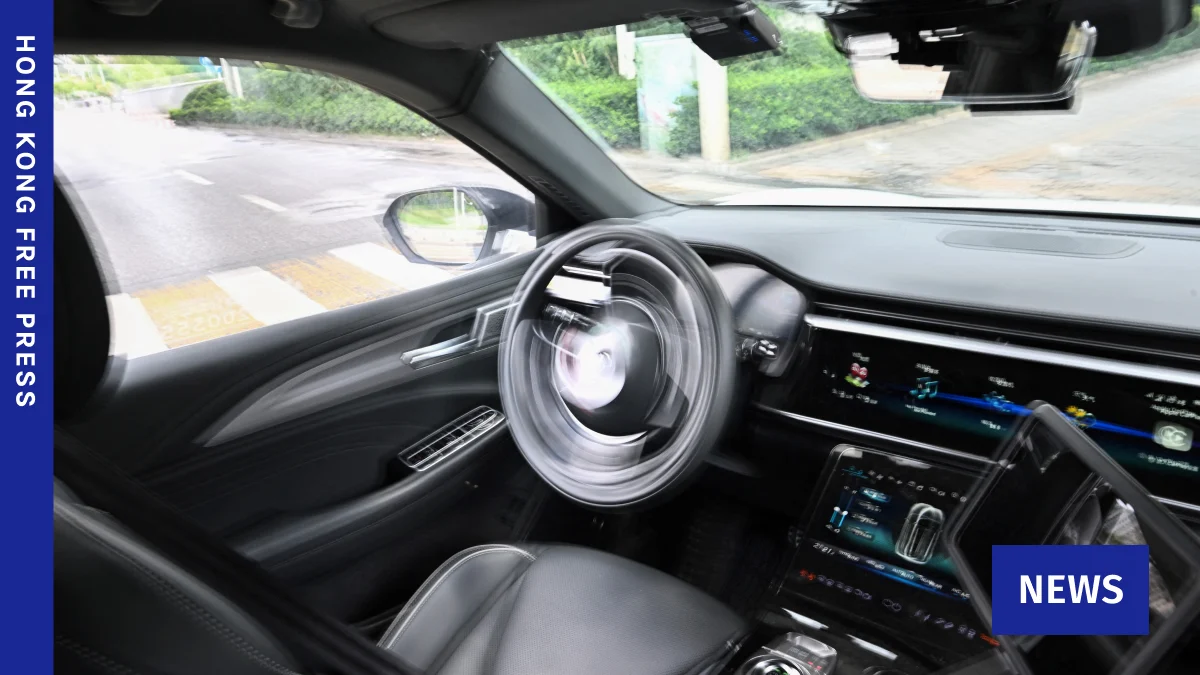
China has recently enacted comprehensive new safety regulations governing the rapidly expanding sector of autonomous vehicles (AVs) on its roads, a move officially announced by the government this Tuesday. A cornerstone of these new standards is the mandatory inclusion of a deactivation override, ensuring human intervention capability in all self-driving systems. These landmark regulations, set to take effect on July 1, 2027, signal a significant step by Beijing to balance technological innovation with paramount public safety concerns in the burgeoning era of driverless transportation.
The new framework is designed to encompass the full spectrum of autonomous vehicles, from those operating with a human safety driver as a backup to fully independent, self-operating robotaxis, exemplified by manufacturers such as the American firm Waymo and China’s own Baidu Apollo. Under these stringent rules, vehicle manufacturers will bear the responsibility of demonstrating that their autonomous systems can achieve and maintain a safety performance level equivalent to or superior to that of human drivers. This benchmark establishes a high bar for the industry, demanding rigorous testing, validation, and continuous improvement in AV technology.
Furthermore, a critical aspect of consumer protection enshrined in the regulations is the requirement for manufacturers to explicitly inform buyers about any inherent limitations within their autonomous driving systems. This transparency aims to prevent misuse or over-reliance on technology by users who may not fully comprehend the operational boundaries of their vehicles, such as performance under adverse weather conditions, in complex urban environments, or on specific road types. The Ministry of Industry and Information Technology (MIIT), the government body responsible for drafting these standards, emphasized that the rules are intended to standardize interactions between humans and machines, thereby mitigating "risks of misuse or abuse" of autonomous functionalities. This includes mandating safe and clearly defined procedures for both the activation and deactivation of automated driving modes, ensuring intuitive and reliable control transitions.
For vehicles that still rely on a human backup driver, the regulations introduce a crucial safety protocol: the autonomous system must continuously monitor the human driver’s readiness to assume control. This provision addresses a known challenge in partially automated driving systems, where drivers can become disengaged or complacent, leading to delayed or inadequate responses in critical situations requiring manual intervention. Technologies such as eye-tracking, head posture monitoring, and steering wheel grip detection are likely to be employed to assess driver attentiveness and readiness for handover, prompting alerts or even safe system disengagement if a driver is deemed unresponsive.

China’s Strategic Push for Autonomous Vehicle Dominance
The introduction of these comprehensive safety regulations comes against a backdrop of China’s aggressive pursuit of leadership in the global autonomous vehicle industry. Recognizing the strategic importance of AI and smart mobility, the Chinese government has heavily invested in and promoted the development of self-driving technology as a national priority. Major tech giants and automakers, including Baidu, Alibaba, Tencent, Huawei, XPeng, Nio, and traditional manufacturers like Geely and SAIC, are at the forefront of this race, deploying robotaxi services and advanced driver-assistance systems (ADAS) across various cities.
Cities like Wuhan, Beijing, Shanghai, Guangzhou, and Shenzhen have become crucial testing grounds and operational hubs for driverless vehicles. Baidu’s Apollo Go, for instance, has expanded its robotaxi services significantly, completing millions of rides in designated zones. These initiatives are not merely commercial endeavors but are also integral to China’s broader vision for smart cities, intelligent transportation infrastructure, and enhancing urban efficiency and sustainability. The scale of investment and the speed of deployment have positioned China as a formidable competitor to Western pioneers in the AV space, such as Waymo and Cruise in the United States.
However, the rapid advancement has also highlighted the critical need for robust regulatory frameworks. While innovation is encouraged, the safety of passengers, pedestrians, and other road users remains paramount. The global market for autonomous vehicles is projected to grow substantially in the coming decade, with China expected to be a major driver of this growth. Analysts from McKinsey & Company predict that China could be the world’s largest market for autonomous vehicles, with revenues from autonomous driving services and related technologies reaching trillions of yuan by 2040. This immense potential underscores the necessity for regulations that foster both innovation and public trust.

A Timeline of Critical Developments and Regulatory Evolution
The journey towards comprehensive AV regulation in China has been incremental, punctuated by both technological breakthroughs and safety incidents.
- Early 2010s: Initial research and development into autonomous driving technology began to gain traction in China, largely driven by academic institutions and tech companies.
- Mid-2010s: Companies like Baidu started investing heavily in AVs, launching their "Apollo" open platform in 2017 to accelerate industry development.
- Late 2010s: Pilot programs and limited public testing of robotaxis began in controlled environments and designated zones in major Chinese cities. Local governments started issuing temporary permits for testing.
- 2020-2023: Significant expansion of robotaxi services. Cities began allowing commercial operations for fully driverless vehicles in certain areas, albeit with stringent oversight.
- 2025 (Fatal Xiaomi Crash): A pivotal incident occurred involving a Xiaomi car operating in assisted driving mode, resulting in a fatality. This accident served as a stark reminder of the inherent risks and the limitations of current ADAS technologies, even those short of full autonomy. This event prompted Beijing to issue stern warnings to leading automakers, signaling that safety rules would be "more tightly enforced" across the industry. This incident likely accelerated the finalization of the current comprehensive regulations.
- June 2026 (UN Agency Adoption): A United Nations agency adopted the first global regulations specifically for fully autonomous vehicles. China played an active role in backing these international standards, indicating its commitment to harmonizing its domestic rules with global best practices. This international consensus provided a valuable framework and impetus for China’s subsequent domestic regulatory announcement.
- This Tuesday (Announcement): China’s government officially announced its new, comprehensive safety rules for autonomous vehicles, including the mandatory deactivation override, with an effective date of July 1, 2027.
Global Context and the Push for Harmonization
China’s new regulations do not exist in a vacuum; they align with a broader global movement towards establishing clear guidelines for autonomous vehicles. The June 2026 adoption of the first global regulations by a UN agency, which China supported, signifies an international recognition of the need for standardized safety protocols. This harmonization is crucial for the cross-border development and deployment of AV technology, facilitating international trade and ensuring a consistent safety baseline worldwide.

Other countries and regions are also actively developing their regulatory frameworks. The United States, for instance, has a patchwork of state-level laws alongside federal guidance, with agencies like the National Highway Traffic Safety Administration (NHTSA) playing a key role in safety oversight. The European Union is also working towards a unified regulatory approach, emphasizing type approval processes and cybersecurity. China’s move to implement detailed national standards, especially with a mandatory human override, positions it among the leading nations prioritizing safety and control in the evolution of autonomous driving.
Reactions from Industry and Experts: Balancing Innovation and Responsibility
While no direct statements from specific companies were provided in the immediate aftermath of the announcement, the industry is expected to largely welcome the regulatory clarity, even as it presents new compliance challenges. For companies like Baidu Apollo, Pony.ai, AutoX, and WeRide, which are already heavily invested in robotaxi operations, these rules provide a stable framework for future development and deployment. The mandate for a deactivation override and driver readiness monitoring for assisted systems underscores a commitment to shared responsibility between AI and human oversight, a principle likely to be embraced by safety-conscious developers.
However, meeting the "safety matches human drivers" benchmark will require significant ongoing investment in R&D, testing, and validation. This could potentially slow down the pace of commercial deployment for some newer or smaller players who may struggle with the stringent requirements. Experts anticipate that the regulations will foster greater public trust in autonomous technology by addressing key concerns about control and accountability. Analysts also suggest that these rules could cement China’s position not just as a leader in AV deployment, but also as a standard-setter in AV safety, potentially influencing future international regulations.

The emphasis on informing buyers about system limitations is also a crucial step towards responsible marketing and consumer education. It acknowledges that even the most advanced autonomous systems have operational envelopes and are not infallible, a message vital for preventing incidents caused by driver over-confidence or misunderstanding.
Broader Implications and Future Outlook
The long-term implications of these new safety regulations extend beyond the immediate automotive industry.
- Innovation and Competition: While imposing stricter safety requirements, the clear regulatory environment can actually foster innovation by providing a defined target for developers. It may also lead to consolidation in the industry, as companies with robust safety engineering capabilities gain an advantage.
- Public Trust and Adoption: Enhanced safety standards are critical for building public confidence, which is essential for widespread adoption of autonomous vehicles. A safer perception could accelerate the transition to smart mobility solutions.
- Economic Impact: The growth of the AV sector will create new jobs in software development, AI, cybersecurity, testing, and maintenance. It will also necessitate new insurance models and legal frameworks.
- Urban Planning and Infrastructure: The proliferation of autonomous vehicles will influence urban planning, requiring smart infrastructure, dedicated lanes, and integrated traffic management systems.
- Ethical Considerations: The regulations implicitly touch upon ethical considerations by mandating human oversight and clear deactivation protocols, ensuring that human control remains a final arbiter in complex situations.
Looking ahead, the effective date of July 1, 2027, provides a significant grace period for manufacturers to adapt their existing and future vehicle designs and software systems. This period will be crucial for developing and implementing the necessary hardware and software updates, conducting extensive testing to meet the new safety benchmarks, and refining human-machine interfaces. The MIIT will likely continue to monitor the industry’s progress and may issue further detailed guidelines or amendments as the technology evolves.

China’s latest move to introduce stringent safety regulations for autonomous vehicles represents a decisive step towards creating a secure and reliable framework for the future of transportation. By mandating human deactivation overrides, setting high safety benchmarks, and promoting transparency, Beijing aims to ensure that its rapid advancements in autonomous driving technology proceed hand-in-hand with public safety and trust. This comprehensive approach is poised to shape not only China’s domestic AV landscape but also contribute significantly to the global discourse on responsible autonomous vehicle deployment.


 Jia Lissa
 Suro Senen