Reynand Wu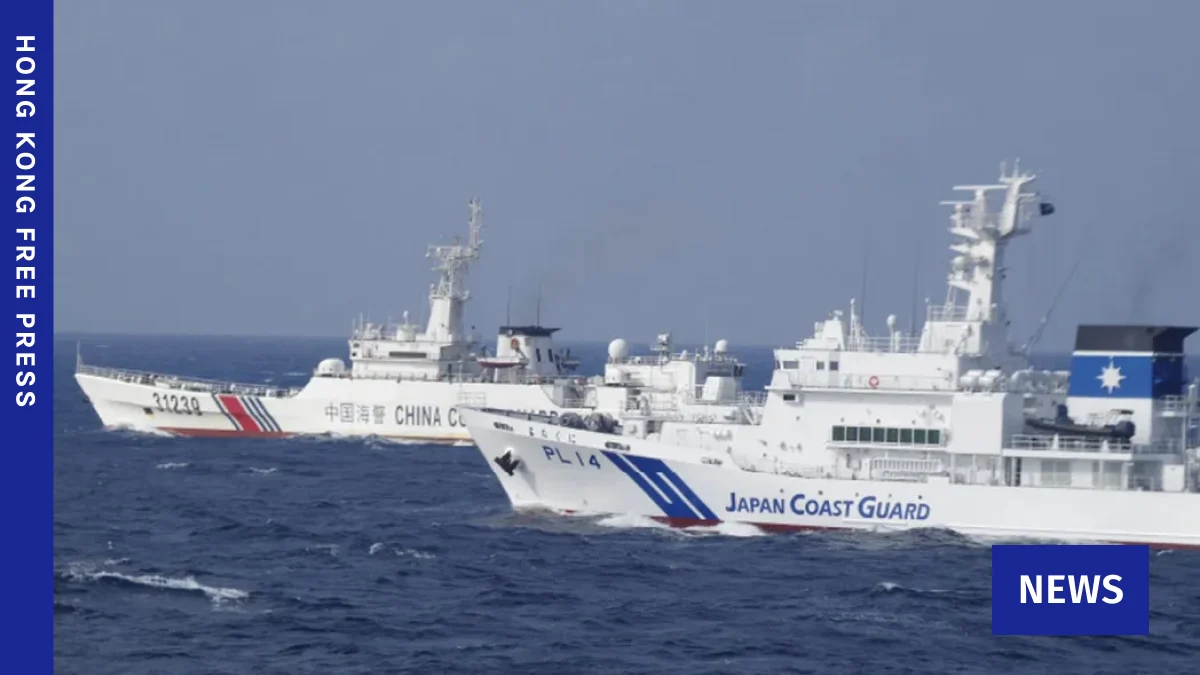
In a fresh escalation of long-standing territorial disputes, maritime patrol vessels from both Japan and China engaged in a tense standoff near a chain of uninhabited islands in the East China Sea on Tuesday. Each nation’s coast guard claimed success in driving out the other’s vessels, which they asserted had unlawfully intruded into their respective territorial waters. This incident marks another chapter in the protracted diplomatic friction surrounding these islands, known as the Senkaku in Japan and the Diaoyu in China, strategically located between Taiwan and Okinawa.
A Flare-Up in Contested Waters: The Tuesday Confrontation
The confrontation unfolded when two Chinese Coast Guard (CCG) ships approached a Japanese fishing vessel, the Zuihou Maru, sailing in the vicinity of the disputed archipelago. According to the Japan Coast Guard (JCG), its vessels were dispatched to the area to protect the Japanese fishing boat and ensure its safety. The JCG reported that it issued repeated warnings and orders for the Chinese vessels to depart, successfully compelling them to leave what Japan considers its territorial waters by approximately 9:20 AM (0020 GMT). The JCG emphasized its deployment around the Japanese fishing vessel to guarantee its security throughout the incident, labeling the Chinese incursion as a "violation of international law."
Conversely, the China Coast Guard presented a starkly different narrative. In a separate statement, the CCG asserted that the Japanese fishing boat, Zuihou Maru, had "intruded into the territorial waters" around the islands. The CCG claimed its vessels took "necessary measures to warn and expel it," implying that their actions were a legitimate response to a perceived Japanese transgression. This direct contradiction in accounts underscores the deep-seated nature of the dispute and the competing claims of sovereignty over the islands.
The Japanese coast guard further detailed that a total of four Chinese ships were observed sailing around the contested area before two of them entered what Japan maintains as its sovereign waters. This deployment of multiple vessels by China suggests a coordinated operation, a common tactic employed by Beijing in asserting its claims. Tokyo has consistently reiterated its commitment to responding "calmly and resolutely in accordance with international and domestic law," vowing to take "every possible measure to ensure the security of our territorial waters."

The Enduring Senkaku/Diaoyu Dispute: A Historical Overview
The Senkaku/Diaoyu islands comprise five uninhabited islets and three barren rocks with a total land area of approximately 6.3 square kilometers. Their strategic location and potential economic resources, particularly believed energy reserves in the surrounding seabed, have made them a flashpoint for decades.
Japan officially incorporated the islands into its territory in 1895, following the First Sino-Japanese War. After World War II, the islands were administered by the United States as part of the Ryukyu Islands chain and were returned to Japan in 1972. China, however, disputes Japan’s historical claim, asserting that the islands have been part of its territory since the 14th century and were unjustly seized by Japan. Taiwan also lays claim to the islands, further complicating the geopolitical landscape.
The dispute gained significant international attention in the late 1960s when a United Nations survey indicated the potential for vast oil and natural gas deposits in the East China Sea. Since then, both countries have increasingly asserted their administrative and sovereign claims through various means, including naval patrols, aerial surveillance, and diplomatic protests. A particularly tense period occurred in 2012 when the Japanese government purchased three of the privately-owned islands from a Japanese family, triggering widespread anti-Japanese protests in China and a significant increase in Chinese maritime incursions.
A Pattern of Escalation: Recent Maritime Incidents

Tuesday’s incident is not isolated but rather part of a discernible pattern of increased maritime activity and confrontation in the East China Sea. Chinese government vessels, primarily from the CCG, have routinely entered waters claimed by Japan around the Senkaku/Diaoyu islands. While such incursions are frequent – Chinese ships last entered Japan’s claimed territorial waters on June 10, for example – it is less common for them to directly approach or engage with Japanese fishing boats. This direct interaction with civilian vessels signifies a potential escalation in tactics, increasing the risk of miscalculation or accidental collision.
According to data released by the Japan Coast Guard, Chinese government ships entered Japanese territorial waters around the Senkaku Islands a record 33 times in 2020, and the trend has continued in subsequent years, albeit with some fluctuations. These incursions often involve multiple vessels, sometimes including those that appear to be former naval ships converted for coast guard duties, which are larger and more heavily armed than typical coast guard vessels. The sheer volume and persistence of these activities are viewed by Tokyo as a sustained attempt by Beijing to challenge the status quo and unilaterally assert its administrative control over the disputed territory.
Beyond the immediate vicinity of the islands, China has also sent survey ships and coast guard vessels into other areas of the East China Sea, often conducting activities believed to be related to hydrocarbon exploration in areas where the maritime boundary is disputed. Japan has repeatedly protested these actions, arguing that they violate international law and infringe upon its sovereign rights.
The Broader Diplomatic Context: Intertwined Tensions
The maritime standoff occurs against a backdrop of significantly strained relations between Japan and China, exacerbated by recent high-level political statements. Relations have notably worsened since Japanese Prime Minister Sanae Takaichi’s comments in November, which sparked fury from Beijing. Takaichi stated that Tokyo could intervene militarily in any attack on self-ruled Taiwan, a democratic island that China views as a renegade province and has not ruled out taking by force.

Beijing vehemently condemned Takaichi’s remarks, interpreting them as a grave interference in China’s internal affairs and a challenge to its "One China" principle. In the aftermath, China has adopted punitive measures, including issuing warnings against its citizens traveling to Japan and tightening trade restrictions on certain Japanese firms. This linkage between the Taiwan issue and maritime disputes in the East China Sea highlights the interconnectedness of regional security challenges and how developments in one area can quickly spill over into others.
The economic relationship between Japan and China, while substantial, is increasingly overshadowed by geopolitical competition and security concerns. Japan, a key U.S. ally, has become more vocal in expressing concerns about China’s growing military assertiveness and its actions in the South China Sea, Hong Kong, and Xinjiang. Tokyo’s evolving defense posture, including increased military spending and closer security cooperation with the United States and other regional partners, is largely seen as a response to Beijing’s rising power.
Strategic Significance and International Implications
The East China Sea is a critical maritime corridor, vital for international trade and energy transportation. Its waters host major shipping lanes connecting Northeast Asia with the rest of the world. Any instability or conflict in this region would have profound global economic repercussions. Furthermore, the potential energy reserves beneath the seabed, though unquantified, represent a significant lure for both energy-dependent nations.
From an international law perspective, both Japan and China frequently cite the United Nations Convention on the Law of the Sea (UNCLOS) to bolster their claims. However, their interpretations of key provisions, such as those related to territorial waters, exclusive economic zones (EEZs), and innocent passage, often diverge significantly. The lack of a universally accepted judicial resolution to these overlapping claims perpetuates the cycle of confrontation.

The United States, Japan’s primary security ally, has a strong interest in maintaining peace and stability in the East China Sea. While the U.S. maintains a neutral stance on the sovereignty of the Senkaku/Diaoyu islands, it recognizes Japan’s administration of them and has repeatedly stated that the U.S.-Japan Security Treaty covers the islands. This commitment implies that the U.S. would come to Japan’s defense in the event of an armed attack on the islands, a factor that profoundly shapes regional calculations and serves as a deterrent against more aggressive actions. However, it also raises the stakes, introducing the potential for a broader regional conflict involving major powers.
Other regional actors, including South Korea and Taiwan, also watch developments in the East China Sea with concern. South Korea has its own maritime disputes with both Japan and China, while Taiwan’s claims to the Diaoyu islands align with historical Chinese narratives. The complex web of claims and alliances underscores the fragility of regional security and the urgent need for diplomatic solutions.
Looking Ahead: Prospects for Dialogue Amidst Continued Tensions
The latest standoff highlights the persistent challenges in managing the Japan-China relationship, particularly concerning territorial disputes. While both nations recognize the importance of dialogue, their entrenched positions on sovereignty make meaningful breakthroughs difficult. Regular communication channels between their respective coast guards exist, but they have not prevented these recurring confrontations.
Analysts suggest that a de-escalation of tensions would require a significant shift in diplomatic approaches from both sides, possibly involving confidence-building measures or a joint resource development agreement that sets aside the sovereignty issue. However, domestic political pressures in both countries often make such concessions politically unpalatable. For Beijing, asserting its claims in the East China Sea is often viewed as a matter of national sovereignty and historical justice, while for Tokyo, defending the Senkaku islands is a fundamental aspect of territorial integrity.

Until a diplomatic resolution is found, or a more robust crisis management mechanism is established, incidents like Tuesday’s standoff are likely to remain a recurring feature of the East China Sea. The potential for miscalculation, particularly involving civilian vessels, remains a significant concern for regional stability and the broader international community. The enduring challenge for Japan and China will be to navigate these volatile waters without allowing an isolated incident to spiral into a wider, more dangerous confrontation.

 Sagoh
Sagoh
 Asro
Asro