Ali Ikhwan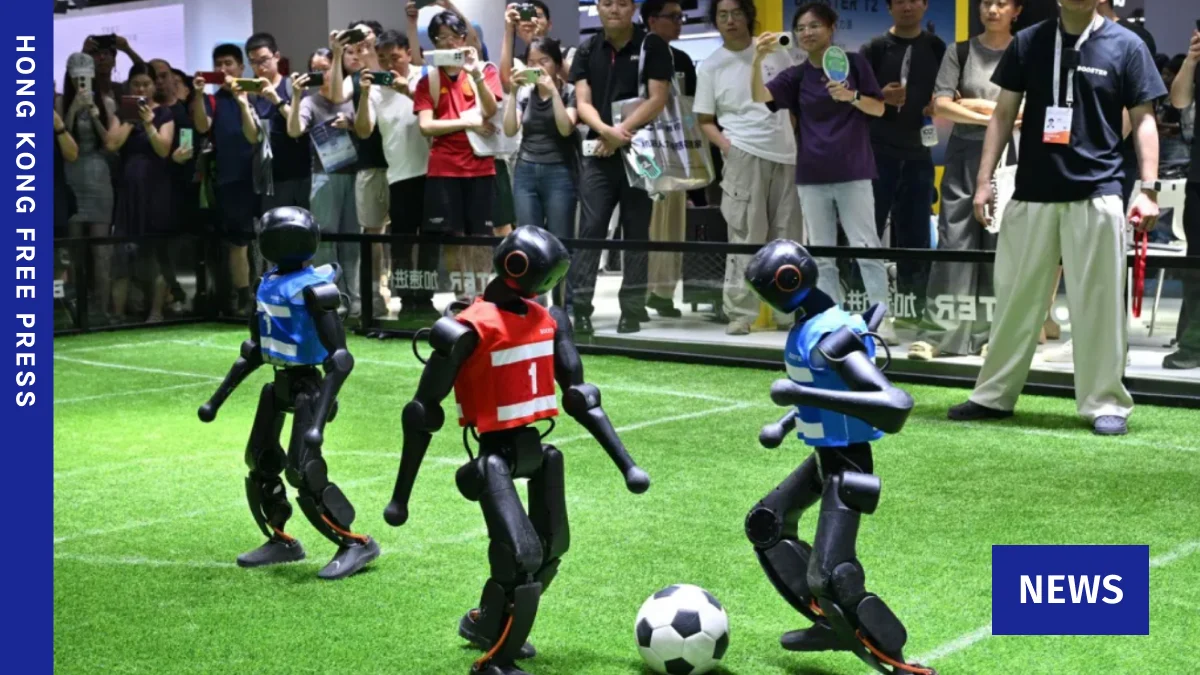
Shanghai, China – The global technology landscape is undergoing a profound transformation, with tech giants aggressively pursuing the integration of artificial intelligence into the very fabric of our daily lives, particularly through the next generation of smartphones. This race reached a fever pitch at the World Artificial Intelligence Conference (WAIC) in Shanghai on July 18, 2026, where several firms showcased advanced smartphones leveraging sophisticated AI agents to perform a myriad of tasks, from ordering takeout to composing intricate messages, all activated by a simple voice command. This burgeoning trend signals not just an evolution in mobile technology but a potential revolution in how users interact with digital services, challenging established app ecosystems and redefining the contours of the digital economy.
The concept of "AI agents" represents a significant leap beyond conventional voice assistants. Unlike reactive assistants that merely execute direct commands within a single application, AI agents are designed to be proactive, context-aware, and capable of performing complex, multi-step tasks across various applications and services autonomously. They learn user preferences, anticipate needs, and can execute decisions, effectively acting as a personal digital concierge. For instance, an AI agent could compare prices across multiple e-commerce platforms, arrange travel itineraries by coordinating flight bookings with hotel reservations and ride-hailing services, or even manage a user’s calendar and communications, all without requiring the user to open individual apps. This promise of seamless, hyper-personalized digital interaction is driving intense innovation and competition among smartphone manufacturers and AI developers worldwide.
WAIC 2026: A Glimpse into the Future of Mobile AI

The World Artificial Intelligence Conference, a premier global event for showcasing AI advancements, served as a critical platform for unveiling these agentic smartphones. China, a global leader in AI development and adoption, has been at the forefront of this shift, with its domestic tech giants pouring vast resources into AI research and product development. The conference floor buzzed with anticipation as at least three prominent firms presented their vision for an AI-powered mobile future, signaling a major paradigm shift in smartphone functionality. This emphasis on AI at WAIC underscores China’s strategic commitment to leading the global AI race, integrating cutting-edge capabilities into consumer devices to enhance user experience and maintain technological sovereignty. The image of humanoid robots from Booster Robotics playing football, captured at the conference, symbolically highlighted the playful yet profound integration of AI into various aspects of life, from entertainment to utility.
Nubia and ByteDance’s Ambitious Foray: The NaviX Ultra and Doubao
Among the most closely watched announcements was smartphone maker Nubia’s unveiling of its NaviX Ultra, a device powered by Doubao, ByteDance’s massively popular AI chatbot tool. ByteDance, the parent company of global sensation TikTok, has been aggressively expanding its AI capabilities, with Doubao emerging as a formidable competitor in China’s fiercely contested AI chatbot market, rivalling offerings from Tencent and Alibaba. Nubia boldly proclaimed, "A new era of AI agent smartphones begins," accompanying the statement with striking images of the new handsets.
The journey for the Doubao-powered phone, however, has not been without its challenges. The concept first materialized with a limited run of a prototype dubbed the "Doubao Phone," which was released in December of the preceding year (December 2025) and sold out rapidly, demonstrating strong consumer interest in agentic capabilities. This initial prototype showcased impressive functionality, capable of following simple voice commands to execute tasks across various applications, including ordering food from different platforms and comparing shopping prices instantly. Users were captivated by the prospect of a single AI entity streamlining their digital interactions, bypassing the need to navigate multiple app interfaces.

However, the rapid success of the prototype soon collided with the entrenched interests of China’s dominant internet ecosystems. Just days after its release, major tech giants, including e-commerce behemoth Alibaba, social media and gaming giant Tencent, and online retailer JD.com, swiftly restricted the built-in assistant’s access to their platforms. This move effectively hobbled the Doubao Phone’s AI agent, particularly in critical functions like payments, forcing ByteDance to disable the powerful tool under certain circumstances. The swift backlash highlighted a fundamental tension: while AI agents promise unprecedented user convenience, they also threaten to disintermediate established platforms that rely on direct user engagement, data collection, and in-app monetization. These tech giants view the AI agent as a direct threat to their walled gardens, potentially ceding control of user interactions and valuable data to a third party.
The Ecosystem Clash: A Battle for Control
The restrictions imposed by Alibaba, Tencent, and JD.com underscore a critical hurdle for the widespread adoption of AI agent devices: gaining broad and unfettered access to applications owned by other companies. Kiranjeet Kaur, associate research director at US market intelligence firm IDC, articulated this challenge clearly: "Gaining broad access to apps owned by other companies is a sticking point for AI agent devices." She emphasized that established platforms are keen to maintain direct contact with their users, fearing that "they lose control to another party" if AI agents become the primary interface.
This struggle for control is not merely about technological integration; it is fundamentally about business models and market power. Companies like Alibaba and Tencent have built vast digital empires predicated on their super-app strategies, where users spend significant time within their ecosystems for everything from communication and entertainment to shopping and financial services. An AI agent that can seamlessly navigate across these platforms, potentially abstracting away the individual app experience, threatens to dilute brand loyalty, reduce direct advertising revenue, and shift the locus of power away from the platform owners to the agent provider. The implicit refusal of these giants to grant open access is a defensive maneuver to protect their user bases and revenue streams.

Despite the obvious allure, Kaur also pointed out the current limitations of the technology: "Agenting is everyone’s dream, but we haven’t reached there yet," she stated, noting that the performance of AI agent tools is still "often patchy." This reality check suggests that while the vision is compelling, the technical maturity and reliability required for truly seamless, error-free cross-app task execution are still under development.
Recognizing these challenges, Nubia’s strategy with the NaviX Ultra appears to have shifted. According to Chinese tech media reports, the NaviX Ultra does not attempt to force its way into proprietary apps through unauthorized access, but rather seeks to "collaborate" with them. This implies a move towards formal partnerships and API integrations, a more sustainable, albeit slower, path to achieving cross-app functionality. This strategic pivot highlights the complex dance between innovation and industry politics, where direct confrontation with entrenched giants proved unsustainable for the initial Doubao Phone prototype.
Honor’s Innovative "Robot Phone" and Strategic Partnerships
Another significant unveiling at WAIC came from smartphone manufacturer Honor, which showcased its distinctive "Robot Phone." This device pushes the boundaries of smartphone form factors with an interactive camera that flips up on a small robotic arm. This unique design enables the phone to be a more dynamic and "companion-centric" device, capable of interpreting human gestures, "bopping" to musical rhythms, taking stabilized selfies, and capturing steady videos autonomously.

Crucially, Honor announced that an advanced AI agent, leveraging several AI models—some co-developed with Alibaba—will be embedded in the Robot Phone when it goes on sale later this year. The collaboration with Alibaba is particularly noteworthy. While Alibaba was among the companies that restricted access to the Doubao Phone, its partnership with Honor suggests a willingness to engage with AI agent technology through direct, mutually beneficial agreements rather than outright blocking. This could represent a blueprint for how AI agent developers might navigate the complex ecosystem landscape: through strategic alliances with major platform owners, ensuring controlled integration that respects existing business models while still delivering advanced AI capabilities to users.
StepFun’s "AI Agent-Native Smartphone" and Deep Integrations
Shanghai-based AI startup StepFun also made waves with the unveiling of its "AI agent-native smartphone," the STEPX Neo, ahead of the WAIC. StepFun’s approach appears to be heavily focused on pre-negotiated integrations. Chairman Yin Qi emphasized that "deep partnerships" had been established with several major Chinese platforms, including Alipay (Alibaba’s payment arm) and ride-hailing giant Didi, as reported in a sponsored article by state news agency Xinhua.
These "deep partnerships" are a critical differentiator. By securing formal agreements with dominant service providers from the outset, StepFun aims to circumvent the access issues that plagued earlier attempts. The Xinhua report highlighted the extensive capabilities enabled by these collaborations: "Leveraging these services, the smartphone can provide one-stop support for travel bookings, everyday purchases, local services, office productivity and video editing." This holistic integration from the ground up positions the STEPX Neo as a strong contender in the agentic smartphone space, offering a comprehensive suite of AI-driven services without battling for unauthorized access.

The Global Landscape: Google and Brain Technologies
The race for AI agent dominance extends far beyond China’s borders. Globally, major tech companies like Google are heavily invested in infusing smartphones with increasingly advanced AI features. Google’s Pixel phones, for instance, already boast sophisticated AI capabilities, from advanced computational photography to intelligent call screening and contextual suggestions powered by its Gemini AI models. The company is steadily progressing towards a more proactive and integrated AI experience, with features such as the ability to book appointments or manage complex schedules through voice commands becoming more refined. Google’s strategy involves embedding AI deeply within its Android operating system and hardware, aiming to create a seamless, AI-first user experience that anticipates needs.
In a parallel development, US startup Brain Technologies launched an agentic "Natural AI Phone" in Japan in April, in partnership with mobile giant SoftBank Corp. This international venture illustrates the global ambition for AI agent technology. A demonstration given to AFP in April provided a realistic glimpse into the current state of these agents. The Brain Technologies phone, which connected with a handful of apps including the popular social network LINE, successfully messaged a contact to apologize for being late based solely on an audio command. However, the demonstration also revealed the nascent nature of the technology, as the agent "often failed to carry out requests," highlighting the "patchy performance" noted by IDC’s Kaur. This mixed performance underscores that while the potential is immense, the journey to perfectly reliable and robust AI agents is still ongoing.
Challenges and the Path Forward

The advent of AI agent smartphones, while promising, faces significant hurdles beyond just app ecosystem resistance. Technical challenges include refining natural language understanding to handle complex, nuanced commands; ensuring robust context retention across long conversations and multiple tasks; and developing reliable error recovery mechanisms. The underlying AI models, particularly Large Language Models (LLMs), need further advancements to achieve the level of intelligence and adaptability required for truly autonomous and trustworthy agents.
Data privacy and security also represent paramount concerns. As AI agents gain access to more personal data and assume greater control over sensitive tasks like payments and communications, the need for stringent security protocols and transparent data handling policies becomes critical. Users must trust these agents implicitly, and any perceived breach of privacy or security could severely impede adoption. Regulatory bodies worldwide are already grappling with how to govern AI, and agentic smartphones will likely become a focal point for new legislation concerning data ownership, algorithmic transparency, and consumer protection.
Profound Implications for the Digital Economy
Despite the challenges, industry analysts are unanimous in predicting a transformative impact. Marc Einstein of Counterpoint Research succinctly captured the current dynamic: "There is no clear winner in this race yet, which is why it is currently quite a hot topic." However, his long-term prognosis is even more striking: "But in five or 10 years time, we won’t be using apps on our phones like we do today. This will fundamentally change the digital economy and disrupt business models."

Einstein’s prediction points to a future where the traditional app store model, and indeed the very concept of individual apps, could be significantly diminished. If AI agents become the primary interface for accessing services, users may no longer navigate to specific apps; instead, they will simply articulate their needs to the agent, which will then orchestrate the necessary actions across various backend services. This shift could redefine how developers reach users, how companies advertise, and how value is created and captured in the digital realm.
The implications are far-reaching. Businesses that currently rely on app downloads and in-app engagement will need to adapt their strategies to ensure their services are accessible and optimized for AI agents. This could lead to a new era of "agent-native" services, where companies design their offerings specifically for AI orchestration rather than direct user interaction. The competitive landscape will also intensify, with a new battle emerging over who controls the dominant AI agent platform – whether it be smartphone manufacturers, AI model developers, or a new class of "agent aggregators."
The race for AI agent smartphones is more than just a technological arms race; it is a fundamental re-imagining of the smartphone’s role and our relationship with digital technology. As demonstrated at WAIC 2026, the foundational elements are in place, but the path to widespread, seamless integration is fraught with technical complexities, fierce industry rivalries, and evolving ethical considerations. The coming decade promises to be a period of unprecedented innovation and disruption, as these intelligent agents gradually reshape our mobile experience and, by extension, the entire digital economy.


 Sagoh
Sagoh
 Asro
Asro