Lina Hope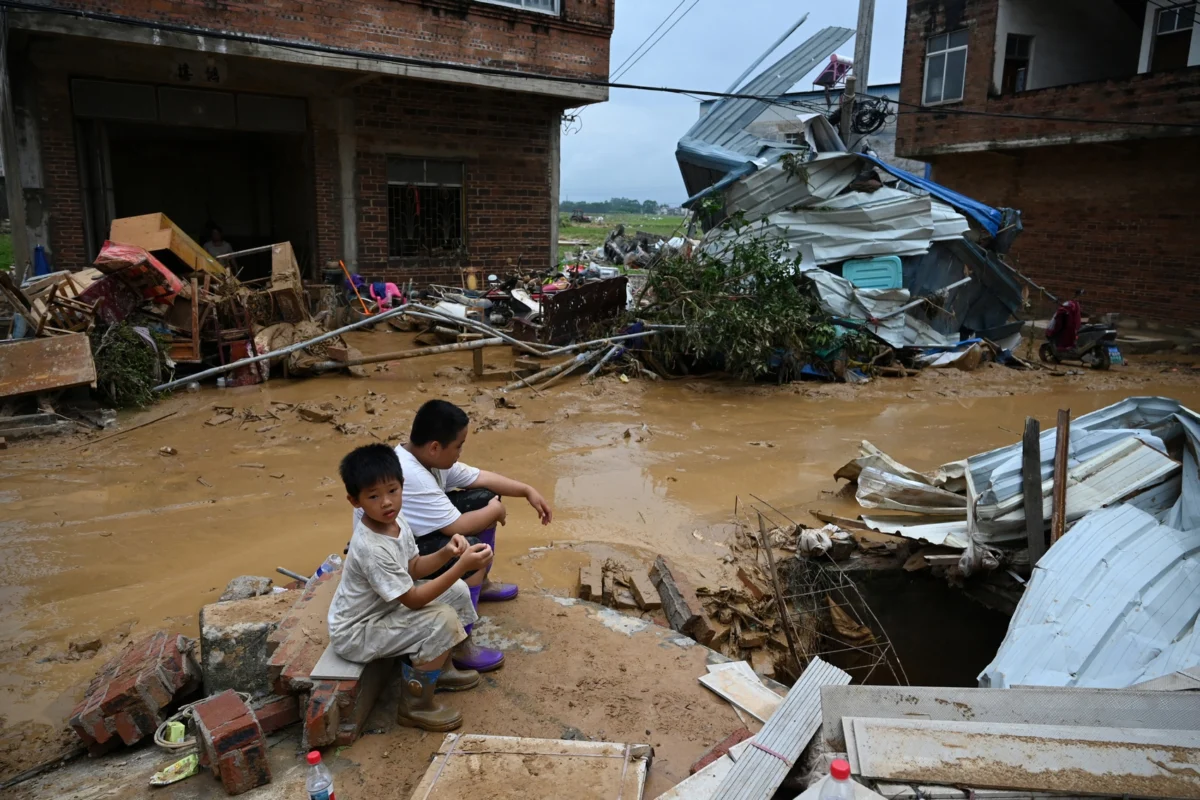
Southern China is reeling from devastating floods that have claimed at least 39 lives and left nine people missing in the Guangxi Zhuang Autonomous Region, state media reported on Thursday. The catastrophic deluge, a result of extreme weather conditions that have plagued the region this week, has triggered widespread destruction, including critical infrastructure failures and unprecedented displacement, as residents embark on a daunting cleanup operation amidst the looming threat of Super Typhoon Bavi. The unfolding crisis highlights China’s vulnerability to intensifying climate-related disasters, testing its resilience and disaster response mechanisms.
The scale of the tragedy became starkly clear with reports of a dam breach at the Liulan Reservoir, a critical piece of local infrastructure, which alone is linked to 26 fatalities and seven individuals still unaccounted for. This incident, reported by state news agency Xinhua, underscores the severity of the rainfall that overwhelmed existing flood control systems. Beyond Liulan, local residents conveyed to AFP reporters that another, smaller reservoir near the town of Gantang also succumbed to the relentless waters, amplifying the destruction and extending the zone of impact. The collapse of these water retention structures unleashed torrents that swept through communities, leaving a trail of death and devastation across the agricultural heartlands and residential areas of Guangxi.
Unprecedented Deluge and Community Trauma

For the inhabitants of villages like Liulan and Dutian in Hengzhou city, the recent floods represent an unparalleled disaster. Residents, many of whom have lived in the region for generations, described a scenario they had "never in history" witnessed. A man identified only by his surname, Huang, expressed profound shock, stating, "We never received any warning. If we had received a warning, our losses would have been much less." He recounted how the floodwaters rose to unprecedented levels, destroying possessions even on the second floor of his home – an occurrence echoed by another resident, Bi Yunchun, who remarked, "In several hundred years, this is the first time the water has reached the second floor… Never before in history." These testimonies paint a grim picture of communities caught off guard by the speed and ferocity of the rising waters, highlighting potential gaps in early warning systems or the sheer overwhelming nature of the event, which exceeded historical precedents.
The human cost extends beyond the immediate fatalities and missing persons. Thousands have been displaced, with earlier reports indicating that over 100,000 people had been evacuated across affected areas in China this week as authorities raced to move residents from harm’s way. While 600 residents from Dutian village, situated perilously close to the Liulan Reservoir, were reported to be safely sheltering, they remain cut off from external aid, their homes directly impacted, with some reduced to mere foundations. The psychological toll on survivors, grappling with loss of life, livelihoods, and cherished memories, is immeasurable. The pervasive thick mud and debris, seen coating streets and infiltrating homes in Liulan when AFP reporters visited on Wednesday, serve as a tangible reminder of the disaster’s immediate aftermath and the arduous journey to recovery ahead for these deeply affected communities.
Vast Response Efforts and Lingering Challenges
In the wake of the disaster, a significant mobilization of resources has been underway across the Guangxi region. Roadblocks were observed on the way to Liulan on Thursday, a testament to the ongoing challenges faced by rescue and relief teams navigating damaged infrastructure and still-hazardous conditions. Coaches filled with dedicated volunteers and members of the Chinese People’s Militia – a civilian reserve army force integral to national disaster response – were seen traveling towards the devastated village, signaling a concerted effort to aid the affected populations. Security personnel were also observed marching during cleanup operations, underscoring the coordinated nature of the response from various governmental and civilian entities.

Technological solutions are being deployed to overcome geographical barriers inherent in disaster-stricken landscapes. A rescue team was reportedly utilizing large drones to transport food and essential supplies to individuals trapped on the other side of a still-rushing river, highlighting innovative approaches to reaching isolated communities. This deployment of drones is crucial for ensuring that basic necessities reach those cut off by floodwaters, preventing further humanitarian crises and addressing immediate survival needs. The sheer scale of the cleanup, however, remains a colossal task, with residents in Liulan already observed using excavators to clear their mud-swamped homes and salvage what little remains. This community-led effort, bolstered by external support, is vital for the initial phase of recovery, but the long-term reconstruction will require sustained commitment and resources.
Ecological Fallout: Escaped Animals Add to Crisis
The floods have not only wreaked havoc on human populations and infrastructure but have also unleashed an unusual and potentially dangerous ecological fallout. In a bizarre turn of events, the Guigang Zoo in the region issued an urgent plea to the public on Wednesday for assistance in locating at least 100 animals that had escaped their damaged enclosures. Among the missing creatures are alpacas, miniature pigs, and even zebras, posing an unprecedented challenge for local authorities and raising concerns about public safety and the welfare of the animals themselves, particularly in unfamiliar and potentially hostile environments.
Even more alarming were earlier reports this week from Hengzhou city, where the head of a local village committee disclosed that an estimated 800 to 900 snakes had escaped after a breeding farm was completely washed away by the floods. The presence of hundreds of potentially venomous snakes roaming free in a disaster-stricken area introduces a severe additional risk to residents already grappling with the aftermath of the deluge. This unique aspect of the disaster complicates cleanup efforts and heightens the sense of vulnerability among the populace, necessitating careful navigation and specialized expertise in animal recapture and management. The incident also brings to light the regulatory environment surrounding exotic animal breeding farms in flood-prone regions and the need for robust contingency plans to prevent such occurrences, which could lead to ecological imbalances or public health threats.

Super Typhoon Bavi: A Looming Dual Threat
As Guangxi grapples with the immediate aftermath of its devastating floods, a new and formidable threat is rapidly approaching China’s eastern coastline: Super Typhoon Bavi. This powerful weather system is forecast to make landfall or bypass Taiwan on Saturday before striking the coastlines of China’s Fujian and Zhejiang provinces that same evening. The National Meteorological Center (NMC) has warned that Bavi, with a staggering diameter exceeding 1,000 kilometers (620 miles), will bring "heavy to torrential rain over the next three days" to a vast swathe of the country, extending even to north and northeastern China. The sheer size of Bavi indicates a wide-ranging impact, threatening not just immediate coastal areas but also inland regions with prolonged periods of severe weather.
The prospect of a Super Typhoon hitting the eastern provinces, while Guangxi is still reeling, presents a complex and challenging dual disaster scenario for Chinese authorities. Super Typhoons are characterized by sustained winds of at least 241 km/h (150 mph), capable of causing extensive damage to infrastructure, widespread power outages, and initiating severe storm surges in coastal areas. While Bavi is expected to "gradually weaken" after landfall as it moves northwest, its immense size and projected rainfall volume could exacerbate flooding in regions already saturated from previous rainfall or, worse, trigger new rounds of flash floods and landslides in its path. Pre-emptive measures, including the evacuation of vulnerable populations from coastal areas, the recall of fishing vessels, and the securing of offshore platforms, are likely already in full swing across Fujian and Zhejiang, with authorities issuing high-level alerts and deploying emergency response teams. The meteorological center’s warnings indicate a broad impact zone, meaning even inland provinces could face significant disruption and flooding from the typhoon’s residual effects, stressing national emergency response capabilities.
Historical Context and Climate Change Implications

China has a long and complex history of battling devastating floods, particularly along its major river systems like the Yangtze, Yellow, and Pearl Rivers, of which Guangxi’s rivers are a part. The summer monsoon season regularly brings heavy rainfall, but recent decades have seen an increasing frequency and intensity of extreme weather events. The current flooding in Guangxi, described by locals as "never in history" and "unprecedented," aligns with scientific projections regarding the impacts of climate change. A warming global climate leads to more moisture in the atmosphere, resulting in heavier precipitation events. This, coupled with rapid urbanization and changes in land use that reduce natural water absorption, amplifies flood risks and increases the vulnerability of both rural and urban populations.
The extensive network of dams and reservoirs across China, including the Liulan Reservoir, forms a cornerstone of the nation’s flood control strategy, alongside providing hydropower and irrigation. While generally effective, the failure of even a few of these structures during extreme rainfall events raises critical questions about their design capacity, maintenance protocols, and the adequacy of early warning systems. The Chinese government has invested heavily in infrastructure and disaster preparedness, establishing sophisticated meteorological monitoring and emergency response systems. However, the sheer scale and intensity of recent extreme weather events continue to push these systems to their limits, demonstrating the need for continuous adaptation and improvement in the face of evolving climate patterns.
The economic implications of such widespread flooding are substantial. Beyond the immediate costs of rescue and relief, there are significant long-term expenses associated with rebuilding homes, infrastructure, and restoring agricultural land. The disruption to supply chains and local economies can ripple through regional and even national markets. The loss of livestock, crops, and productive land will have a lasting impact on the livelihoods of countless rural families in Guangxi, necessitating comprehensive recovery programs. The concurrent threats from floods and a super typhoon underscore the growing complexity of disaster management in an era of climate change. Authorities must not only respond to immediate crises but also adapt long-term strategies, investing in climate-resilient infrastructure, enhancing early warning systems, and educating communities on preparedness. The Guangxi floods and the approach of Typhoon Bavi serve as a stark reminder of the urgent need for comprehensive climate adaptation and mitigation efforts globally, and a test of China’s capacity to manage such complex, multi-faceted environmental challenges.
The situation remains fluid as cleanup operations continue in Guangxi and coastal provinces brace for the arrival of Super Typhoon Bavi. The focus for authorities will be on minimizing further loss of life, providing humanitarian aid, and preparing for the next wave of extreme weather, while the affected communities face the daunting prospect of rebuilding their lives in the aftermath of an unparalleled disaster.


 Asro
Asro
 Evan Lee Salim