Evan Lee Salim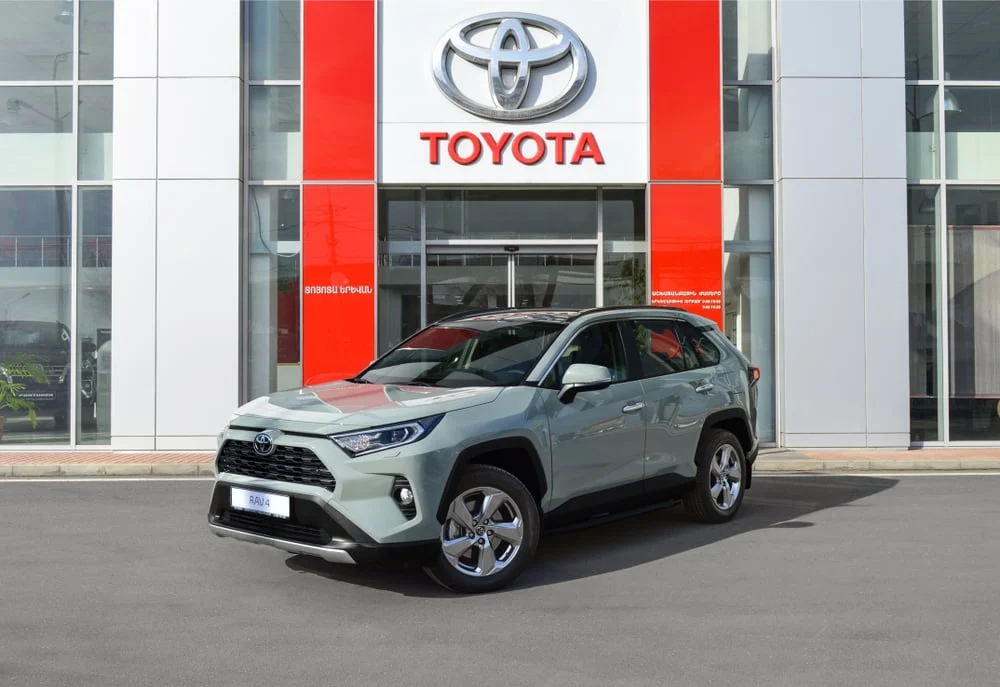
TOYOTA CITY, JAPAN – Shareholders of Toyota Motor Corporation, at their Annual Ordinary General Shareholders’ Meeting held today in Toyota City, Aichi Prefecture, have overwhelmingly re-elected Akio Toyoda to the esteemed position of Chairman. Concurrently, the meeting saw strong backing for the company’s newly appointed President and CEO, Kenta Kon, who was also approved as a member of the board. This decisive vote signifies a continued endorsement from the investor base for Toyota’s long-standing "multi-pathway" strategy. However, this approach has drawn increasing criticism from climate advocates and environmental organizations who contend that it deliberately slows the global transition to zero-emission electric vehicles (EVs), a critical imperative in addressing the escalating climate crisis.
Following the conclusion of the shareholder meeting, Kenta Kon addressed reporters, reaffirming Toyota’s commitment to its diversified powertrain strategy. Kon explicitly stated that the company intends to continue investing in and developing a range of powertrains, emphasizing that Toyota would not be "hitting the brakes suddenly" on its current trajectory. This statement underscores the company’s resolve to maintain its established course, even in the face of mounting pressure for a more rapid shift towards full electrification.
The decision has been met with sharp criticism from environmental groups. Erin Eunseo Choi, climate and energy campaigner at Greenpeace East Asia, articulated this concern, stating, "Geopolitical volatility and soaring oil prices have exposed the vulnerability of our fossil fuel-dependent industries, accelerating EV demand while Toyota slows to adapt. In a reply to Greenpeace, Toyota said it supports the Paris Agreement, yet concrete steps remain invisible. Its executives speak of a ‘multi-pathway strategy,’ but there is no time for corporate complacency. An ambulance carrying a critically ill patient needs a clear destination and speed. The climate crisis is that patient, and the hospital is not getting any closer."
Toyota’s enduring position as the world’s largest automotive manufacturer by volume in 2025 is a testament to its historical success. However, its environmental footprint remains substantial. The company’s reported emissions are equivalent to more than half of Japan’s total annual emissions. This stark figure highlights the significant challenge Toyota faces in aligning its operations with global decarbonization goals.
Further compounding these concerns is Toyota’s performance in independent assessments of automaker sustainability. In the 2026 Lead the Charge ranking, Toyota experienced a significant drop to 16th place out of 18 global automakers, marking its second consecutive annual decline. This downward trend is attributed to persistent criticism regarding the slow pace of decarbonization within its supply chain and weaker human-rights tracking mechanisms. The report also highlights that battery EVs constituted a mere 2% of Toyota’s total sales in 2025, a figure that significantly lags behind many global competitors. Crucially, Toyota has yet to establish a clear internal combustion engine (ICE) phase-out target, a step considered essential by many industry observers and environmental stakeholders.
Adding to the controversy, Toyota, along with the Japan Automobile Manufacturers Association ( JAMA ), has faced intense scrutiny for its lobbying efforts in emerging markets such as Indonesia, Brazil, and Colombia. Evidence suggests these efforts have been directed towards advocating for biofuels and transitional powertrains, a strategy that critics argue is designed to intentionally delay the widespread adoption of fully electric vehicles. Such lobbying activities raise questions about Toyota’s commitment to a swift and comprehensive transition to zero-emission mobility on a global scale.
Toyota’s "Multi-Pathway" Strategy: A Detailed Examination
Toyota’s "multi-pathway" strategy, championed by leadership including Akio Toyoda, posits that a diverse range of powertrain technologies – including hybrids, hydrogen fuel cells, and synthetic fuels – will be necessary to achieve carbon neutrality. This approach contrasts sharply with the rapid pivot towards battery electric vehicles (BEVs) being undertaken by many of its competitors.
Historical Context and Strategic Underpinnings
The roots of Toyota’s current strategy can be traced back to its pioneering work in hybrid technology with the Prius, launched in 1997. This early success cemented Toyota’s reputation for innovation in fuel efficiency and established a strong foundation in electrified powertrains. However, the company’s leadership, particularly Akio Toyoda, has frequently expressed skepticism regarding the feasibility and readiness of a solely BEV-centric future, citing concerns about charging infrastructure, battery production capacity, and the overall environmental impact of battery manufacturing and disposal.
During his tenure as CEO and subsequently as Chairman, Toyoda has often spoken about the challenges and perceived isolation he feels in advocating for a broader approach to decarbonization. In a statement that resonated widely, he admitted to feeling "alone" in his conviction that the internal combustion engine still has a role to play in the future of transportation. This sentiment, while perhaps reflecting a genuine belief in a nuanced approach, has been interpreted by critics as a reluctance to embrace the undeniable momentum of the BEV revolution.
Recent Financial and Market Performance
Despite its market dominance, Toyota has not been immune to macroeconomic headwinds. Recent financial reports indicate that the company has incurred an estimated loss of US$4.3 billion due to surging material costs and lost sales in the current year. This financial impact underscores the volatility of the global automotive market and the significant investments required to navigate these challenges.
Conversely, global EV sales have experienced a remarkable acceleration. This trend is particularly evident in regions that are crucial to Toyota’s business, such as Southeast Asia, a primary market for its combustion engine vehicles, and Japan itself. In Japan, March EV sales doubled year-on-year, signaling a significant and rapid shift in consumer preferences and market dynamics. This accelerating demand for EVs presents a clear and present challenge to Toyota’s more gradual approach.
Competitive Landscape and the Rise of Chinese Automakers
The global automotive landscape is undergoing a dramatic transformation, with Chinese automakers emerging as formidable competitors. These companies have rapidly advanced in terms of pricing, technology, and market penetration, particularly in key emerging markets like Southeast Asia. China’s domestic EV market, the largest in the world, has fostered innovation and economies of scale that allow Chinese manufacturers to offer compelling EVs at competitive price points, directly challenging established players like Toyota.
This competitive pressure is a significant factor for Toyota. To remain competitive and retain its market leadership, the company is under increasing pressure to set clear, ambitious, and long-term electrification targets. The current "multi-pathway" strategy, while offering flexibility, may be perceived as a lack of decisive commitment, potentially ceding ground to rivals who are fully embracing electrification.
Environmental Groups’ Concerns and Calls to Action
Environmental organizations, including Greenpeace, have been vocal critics of Toyota’s strategy, arguing that it prioritizes the company’s existing business model over urgent climate action. Their concerns are multifaceted, focusing on the pace of emissions reduction, the impact on global climate goals, and the potential for lobbying efforts to derail progress.
Greenpeace’s Perspective
Greenpeace East Asia’s climate and energy campaigner, Erin Eunseo Choi, has consistently voiced these concerns. Choi’s statements highlight the urgency of the climate crisis, comparing it to a critically ill patient requiring immediate and decisive action. She argues that Toyota’s "multi-pathway" approach, while seemingly comprehensive, lacks the necessary speed and focus to address the climate emergency effectively.
"Chairman Toyoda recently admitted he feels ‘alone’ that his conviction in the internal combustion engine is becoming a minority view. But loneliness is not a strategy, and it’s costing Toyota its market dominance. To stay competitive against Chinese rivals—who now lead in pricing and technology and are already displacing Japanese automakers in Southeast Asia—Toyota needs an immediate, long-term electrification target," Choi stated.
She further emphasized the broader implications of Toyota’s strategy: "As climate-driven extreme weather intensifies, Toyota’s customers and communities will bear the cost of this hesitation. Its recent US$800 million investment in Kentucky, which includes EV production, is a start, but Toyota has the scale to lead this transition globally. We call on Mr. Toyoda to match his company’s resources with genuine ambition."
Broader Environmental Implications
The emissions data provided by Toyota’s own 2024 Sustainability Data Book is significant. The company reported total lifecycle greenhouse gas emissions of 589.57 million tonnes of CO2 equivalent across Scope 1 (direct operations), Scope 2 (purchased energy), and Scope 3 (value chain/vehicle use). For comparative context, Japan’s total national annual emissions for the same period stood at 961.87 million tonnes. This means Toyota’s emissions represent a substantial portion, over 61%, of Japan’s entire national output, underscoring the immense responsibility the company holds in global decarbonization efforts.
The "Lead the Charge" report’s findings further underscore the disparity between Toyota and its peers. While Toyota’s BEV sales remain a small fraction of its total output, leading automakers are reporting significantly higher percentages, with many setting ambitious targets for full electrification by 2030 or 2035. This divergence in strategy has tangible consequences for global emissions reduction targets and the planet’s ability to meet the goals set forth in the Paris Agreement.
Toyota’s Investments and Future Outlook
Despite the criticisms, Toyota is making investments in electric vehicle production. The company’s recent US$800 million investment in its Kentucky facility, which includes plans for EV production, signifies a step towards expanding its BEV manufacturing capabilities. This investment, however, is viewed by some as insufficient in scale and scope compared to the company’s overall resources and the magnitude of the climate challenge.
The re-election of Akio Toyoda as Chairman and the backing of Kenta Kon as CEO suggest a period of continuity in Toyota’s strategic direction. The company appears committed to navigating the transition to sustainable mobility through a measured, multi-faceted approach. However, the increasing pressure from environmental advocates, the rapid advancements of competitors, and the accelerating global demand for zero-emission vehicles present significant challenges that Toyota must address to maintain its leadership position and contribute meaningfully to global climate goals. The coming years will likely see continued debate and scrutiny as Toyota balances its established legacy with the imperative for a faster, more decisive shift towards a fully electrified future.
Media Contacts:
Yujie Xue, International Communications Officer, Greenpeace East Asia, +852 51273416, [email protected]
Natalia Emi Hirai, Communications Manager, Greenpeace Japan, +81 (0)8065584446, [email protected]


 Raul Delapena Setiawan
 Neng Nana