Nana Muazin
The People’s Republic of China (PRC) has publicly released the full text of the "outline" (规划纲要) of its 15th Five-Year Plan (FYP), marking a critical juncture in the nation’s strategic development. Published by Xinhua on March 13, this comprehensive document, spanning 18 chapters, 62 sections, and 171 subsections, represents the culmination of a meticulously complex planning process designed to chart the country’s course for the period spanning 2026 to 2030. Analysis of the plan’s structural logic, particularly the reordering of its key chapters compared to previous iterations, reveals significant shifts in the Chinese Communist Party’s (CCP) priorities, indicating a strategic reorientation towards bolstering domestic industrial strength and redefining its approach to global engagement amidst an increasingly challenging international landscape.
Understanding China’s Five-Year Plans: A Blueprint for National Development
China’s Five-Year Plans are foundational documents that articulate the CCP’s vision for national development across economic, social, environmental, and geopolitical domains. Since 1953, these plans have served as the principal mechanism for guiding China’s command economy and later, its socialist market economy. They are not merely aspirational targets but concrete blueprints, outlining specific goals, policies, and resource allocations that drive governmental action at all levels. Each FYP is a "triumph of bureaucracy," reflecting extensive consultations and consensus-building across the vast Party-state apparatus. Historically, these plans have been instrumental in China’s transformation, from early industrialization efforts to market reforms and its current pursuit of "national rejuvenation." The plan’s structure and the prominence given to certain sectors often serve as a reliable barometer of the Party’s current preoccupations and long-term ambitions, offering invaluable insights for both domestic stakeholders and international observers. The 15th FYP arrives at a moment of profound global uncertainty and domestic transformation, making its directives particularly significant.
The Meticulous Planning Process: A Nationwide Endeavor
The formulation of a Five-Year Plan is an exhaustive and highly centralized undertaking, designed to canvas diverse stakeholders and synthesize national objectives. The planning for the 15th FYP commenced over two years ago, illustrating the depth and breadth of the preparatory work. The drafting committee embarked on more than 40 research trips across the country, engaging with local governments, industries, and communities. Over 50 symposiums were convened, gathering input from experts, academics, and business leaders. High-level research institutions were directed to produce nearly 200 detailed reports, providing granular data and strategic recommendations. This extensive data collection and consultative phase culminated in the compilation of nearly 70,000 "high-quality suggestions" from various sectors of society.
In late 2025, the CCP Central Committee, the Party’s highest decision-making body, drew up a series of "recommendations" (建议), which formed the foundational framework for the draft plan. Following this, in early 2026, the State Council—China’s chief administrative authority—further refined the draft, gathering additional input through another series of symposiums. The final "outline" was then subjected to rigorous review and approval during the annual "Two Sessions" (两会) in March. This critical political event brings together the National People’s Congress (NPC), China’s top legislature, and the Chinese People’s Political Consultative Conference (CPPCC), a top political advisory body. While the NPC formally approves the plan, the CPPCC provides a platform for broad consultation, lending legitimacy to the process. The State Council Information Office (SCIO) confirmed the approval on March 7, preceding the public release by Xinhua. This multi-stage process underscores the plan’s authoritative nature and its comprehensive scope, reflecting a national consensus forged through extensive deliberation.
Unpacking the 15th FYP: A New Strategic Compass
The 15th Five-Year Plan, structured with a general overview assessing the development environment and setting guiding principles, bookended by a guarantee of loyalty to the Party Central Committee for implementation, contains its substantive directives primarily within chapters 2 through 17. The sequencing of these chapters is not arbitrary; it serves as a powerful indicator of the Party’s evolving strategic priorities. Historically, chapters related to economic development have appeared near the top, signaling their paramount importance. Shifts in chapter order, especially when compared across multiple plans, offer critical insights into how official perceptions of various development areas have changed over time.
For example, the 12th Five-Year Plan (2011-2015) addressed "social management" (社会管理) in its ninth chapter. By the 13th Five-Year Plan (2016-2020), this concept was rebranded as "social governance" (社会治理) and dramatically shifted to chapter 17, placing it alongside national defense and security. This repositioning reflected General Secretary Xi Jinping’s increased emphasis on the securitization of social control, a trend that has persisted in subsequent plans. This analytical approach, while not mechanically correlative, provides an alternative set of data points to complement traditional policy analysis, helping to inform expectations for China’s development trajectory over the next five years.
Shifting Economic Pillars: Industry Over Innovation
One of the most striking changes in the 15th FYP outline appears at its very beginning. For the first time, the chapter dedicated to the country’s industrial system and the real economy has been elevated to pole position, preceding the chapter on innovation-driven development. This marks a significant departure from the previous two plans, where "innovation-driven development" was explicitly featured in chapter titles. In the 15th FYP, the relevant chapter title has been reformulated to "accelerating high-level scientific and technological self-reliance and self-strengthening to lead the development of new quality productive forces" (加快高水平科技自立自强引领新质生产力发展).
The elevation of industry and the real economy over a standalone "innovation-driven development" chapter is a critical signal. While the Party’s ambition to seize the "commanding heights" (制高点) in emerging technologies remains undimmed, this reordering suggests a renewed and perhaps more immediate focus on fortifying the foundational industrial base. One interpretation is that while future growth hinges on technological breakthroughs, the present economic model requires urgent attention to mitigating structural weaknesses and leveraging China’s formidable manufacturing capabilities. This could be a response to global supply chain vulnerabilities exposed during the pandemic and heightened geopolitical tensions that threaten access to critical components. An alternative view suggests a recalibration after a decade of prioritizing innovation, where the Party-state now believes it’s time to consolidate gains and ensure that innovation is directly integrated into and serves the real economy, rather than being a separate pursuit.
The Nuance of "New Quality Productive Forces"
The concept of "new quality productive forces" (新质生产力), a term coined by Xi Jinping, underscores a drive towards high-tech, high-efficiency, and high-quality development, moving beyond traditional growth models. This framework emphasizes innovation, data, and advanced manufacturing. The inclusion of "self-reliance and self-strengthening" (自立自强) in the chapter header for the first time explicitly highlights the Party’s urgency in indigenizing critical and strategic technologies. This strategic imperative is largely driven by external pressures, particularly technology restrictions imposed by countries like the United States, aiming to reduce dependence on foreign suppliers in crucial sectors such as semiconductors, artificial intelligence, and biotechnology. The plan likely outlines substantial investments in R&D, talent development, and industrial policies to foster domestic champions capable of competing globally without reliance on external technologies.
Phased Technology Rollout: A Long-Term Vision
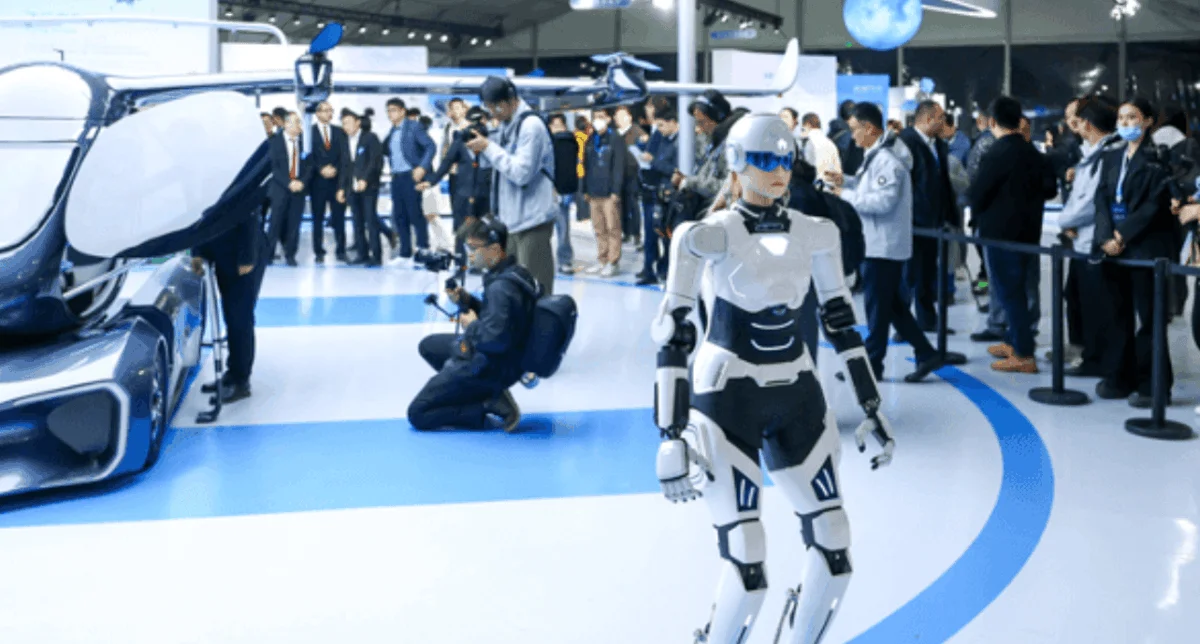
Comments from the SCIO press conference on March 7 elaborated on a phased approach to the rollout of emerging technologies, emphasizing a long-term vision rather than immediate fruition. Officials outlined a "development sequence" (发展序列) for emerging industries. The short-term focus (2026-2030) will be on next-generation information technology and new energy, areas where China already holds significant competitive advantages. The medium term will see a focus on developing emerging "pillar industries" (支柱产业) such as integrated circuits, biomedicine, and aerospace—sectors vital for national security and economic competitiveness where China is still striving for leadership. Finally, the long term envisions the development of "future industries" (未来产业) like quantum technology, brain-computer interfaces, and embodied intelligence, reflecting China’s ambition to be a global leader in frontier technologies. This phased approach suggests a pragmatic understanding that achieving technological self-reliance and leading new productive forces is a multi-decade endeavor requiring sustained investment and strategic sequencing.
Redefining "Opening Up": Securing Global Markets
Perhaps the most significant structural shift in the 15th FYP outline is the dramatic elevation of chapter seven, titled "expand high-level opening-up and create a new landscape of win-win cooperation" (扩大高水平对外开放 创造互利共赢新局面). While chapters on "opening up" have been present in previous plans, their positioning has historically been four or five places lower. This unprecedented ranking among the core chapters on economic development signals a profound recognition by the Party-state: its economic model is increasingly reliant on external markets, not just for raw materials or technology, but critically, as destinations for its enormous volume of manufactured and industrial products.
This redefinition of "opening up" is crucial. The chapter’s subsections clarify that this is less about loosening restrictions for external investors to participate in China’s domestic market and more about ensuring and expanding access to foreign markets for Chinese goods and services. Key initiatives highlighted include "independent" (自主) opening up—meaning on China’s own terms—continued construction of the Belt and Road Initiative (BRI), and promoting a "community of common destiny for mankind" (人类命运共同体). The latter, often seen as a diplomatic framework, here signals the imperative to secure diplomatic buy-in from partner countries to maintain favorable economic relationships and facilitate market access for Chinese exports. This strategic shift suggests that China is proactively seeking to safeguard its export-oriented growth model against increasing protectionism and geopolitical fragmentation.
Geopolitical Currents and External Challenges
The Party’s changing assessment of the country’s external environment is a significant driver behind this revised approach to "opening up." Dong Yu, a Tsinghua University academic involved in multiple FYP formulations, noted that geopolitical shifts constituted the "biggest change" (最大变化) during the 15th FYP planning process. He specifically referenced "a marked increase in challenges and unfavorable factors" (挑战和不利因素显著增多) and predicted that "great power competition and rivalry may further intensify" (大国竞争、大国对抗可能进一步加剧). This perspective is echoed by a leading economist at the Bank of China, who, in response to the Central Committee’s recommendations, emphasized paying "greater attention to coordinating both domestic and international situations, and more consciously plan and promote national development within a global context" (更加注重统筹国内国际两个大局,更加自觉地把国家发展置于全球背景下谋划推进). The opening chapter of the outline itself describes the international situation as "intricate and complicated" (错综复杂), underscoring the perceived need for a more proactive and strategic external engagement. This suggests that "opening up" is now viewed as a tool for mitigating external risks and securing China’s global economic standing, rather than solely attracting foreign investment.
Declining Priorities: Agriculture and the Environment
Comparing the structural evolution of FYP outlines since 2011 reveals two long-term trends: the steady descent of agriculture and environmental concerns in the hierarchy of priorities.
The Plight of the Agricultural Sector
The chapter on agriculture, once the very first substantive chapter in the 12th FYP, has plummeted to eighth place in the latest plan—its lowest position to date. This substantial decline partly reflects the relative decrease of the agricultural sector’s contribution to China’s rapidly industrializing and urbanizing national economy. As China has moved from an agrarian society to an industrial and service-based economy, agriculture’s share of GDP has naturally diminished. However, as economist Yasheng Huang has pointed out, despite official rhetoric, this decline also reflects a troubling reality: the relative position of Chinese farm workers today is "worse than it was before China joined the World Trade Organization in 2001." This suggests that the Party’s original mission, rooted in supporting its vast rural population, may have been overshadowed by other development objectives. The deprioritization of agriculture in the plan’s structure raises questions about future rural development policies, food security strategies, and the welfare of China’s remaining agricultural workforce, especially given global food price volatility and climate change impacts.
Environmental Commitments Under Scrutiny
Similarly, environmental concerns appear to have diminished in structural importance. While chapter six of the 12th FYP focused on "green development" (绿色发展), the 15th FYP covers "green transformation" (绿色转型) only in chapter 13—the last chapter before those focusing on national security-related issues. This repositioning is ambiguous. It could signal a perception within the leadership that China has made sufficient progress in environmental protection, enabling a reprioritization of other pressing issues. Over the past decade, China has indeed invested heavily in renewable energy and pollution control, achieving some notable successes. Alternatively, it might indicate an assessment that environmental risks, while significant, do not pose as immediate a threat to regime stability as previously thought, especially when balanced against economic growth targets and geopolitical imperatives. This shift warrants close monitoring, particularly as China faces immense pressure to meet its ambitious climate goals, including peak carbon emissions before 2030 and carbon neutrality by 2060. The reordering could imply that environmental targets might be pursued with less immediate urgency or that their implementation will be more tightly integrated with industrial policy rather than being a standalone priority.
Broader Implications and Global Repercussions
The structural shifts within the 15th FYP outline carry significant implications for both domestic and international audiences. The emphasis on industrial strength and self-reliance signals a continued push for technological independence and manufacturing dominance, potentially intensifying global competition in key sectors. The redefinition of "opening up" underscores China’s determination to secure its export markets, which could lead to more aggressive trade policies and further expansion of the Belt and Road Initiative, with potential implications for global trade balances and economic relationships.
Implications for International Business and Trade
For foreign businesses operating in China, the plan suggests a continued focus on domestic champions and a potentially more challenging environment for market access, especially in strategic sectors. The "independent opening up" framework implies that access will be granted on China’s terms, prioritizing national interests. The emphasis on maintaining foreign market access for Chinese products could lead to increased trade tensions if other nations perceive unfair competition or a lack of reciprocity. International companies may need to re-evaluate their strategies, potentially focusing on niche markets, localizing operations, or navigating a more complex regulatory landscape.
The Geopolitical Chessboard
The 15th FYP solidifies China’s strategic trajectory under Xi Jinping, marked by a determined pursuit of national strength, technological prowess, and global influence. The explicit acknowledgment of an "intricate and complicated" international situation, coupled with the focus on self-reliance and securing global markets, frames China’s development within a context of intensified great power competition. The BRI and the "community of common destiny" initiatives will likely continue to be central foreign policy tools to foster economic partnerships and diplomatic buy-in, particularly with developing nations. These efforts are geared towards building a more favorable international environment for China’s continued rise, even as it braces for increased external challenges.
Conclusion
Analyzing the structural logic of the 15th Five-Year Plan’s outline, particularly through comparison with previous plans, offers crucial insights into the evolving strategic priorities of the Chinese Communist Party. While not a definitive predictive tool, it provides an alternative and valuable set of data points to inform assessments of China’s future trajectory. The pronounced elevation of industrial strength and a redefined "opening up" strategy, alongside the long-term deemphasis of agriculture and environmental concerns, broadly aligns with real-world developments and geopolitical currents observed over the past 15 years. These shifts indicate that China is actively recalibrating its development model to navigate an increasingly complex global environment, prioritizing domestic resilience and securing its economic interests on the international stage. As the plan’s directives are implemented over the coming five years, their impact will undoubtedly reverberate across China and the global economy, shaping geopolitical dynamics and development paradigms for the foreseeable future.

 Dwi Wanna