 Siti Muinah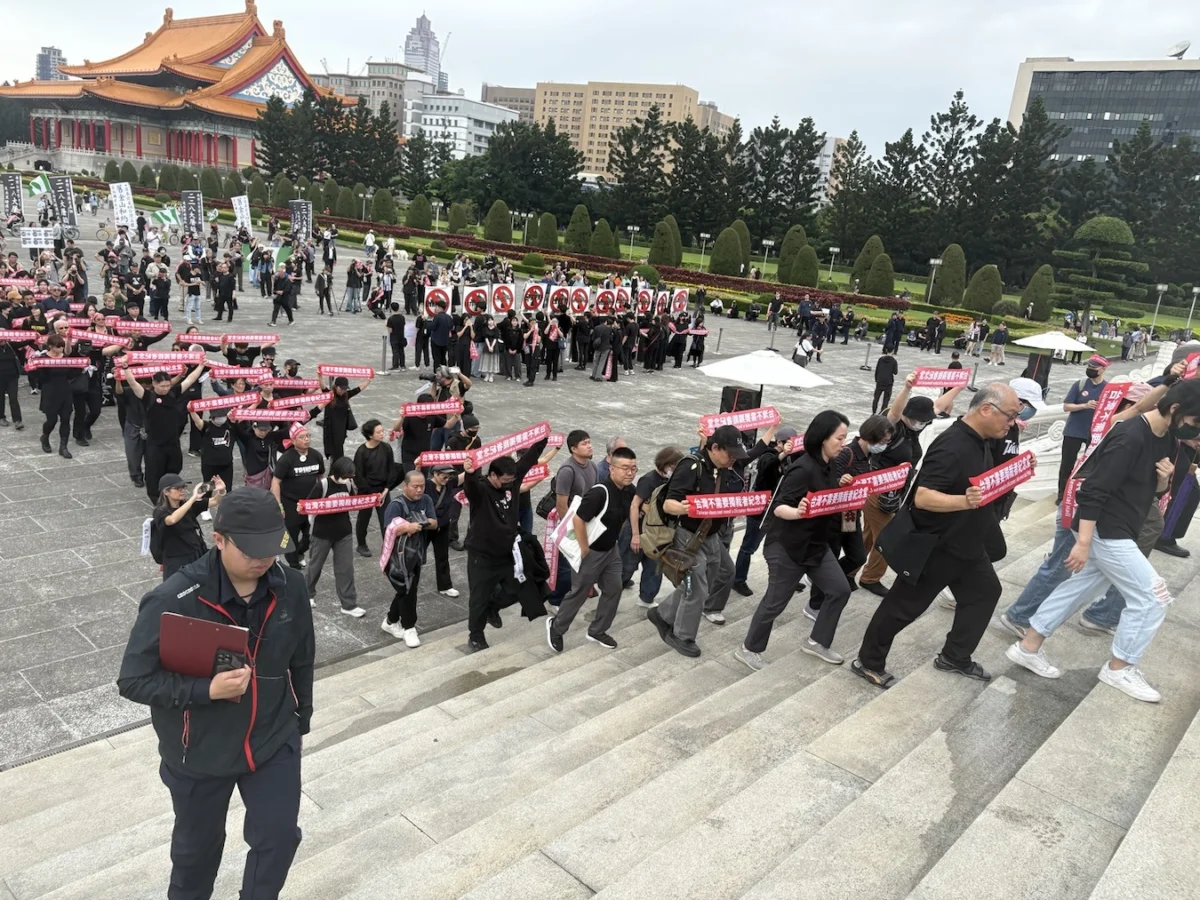
On a day marked by both solemn remembrance and active political agitation, several hundred demonstrators gathered in the heart of Taipei to demand the immediate dismantling of the Chiang Kai-shek Memorial Hall. The protest, organized by a coalition of transitional justice advocates, student groups, and victims of the White Terror, centered on the argument that a modern, democratic Taiwan should no longer host a state-funded monument dedicated to an authoritarian dictator. The event highlighted a growing rift between civil society’s push for total transitional justice and the government’s cautious approach to handling the symbols of Taiwan’s martial law era.
Chronology of the Demonstration
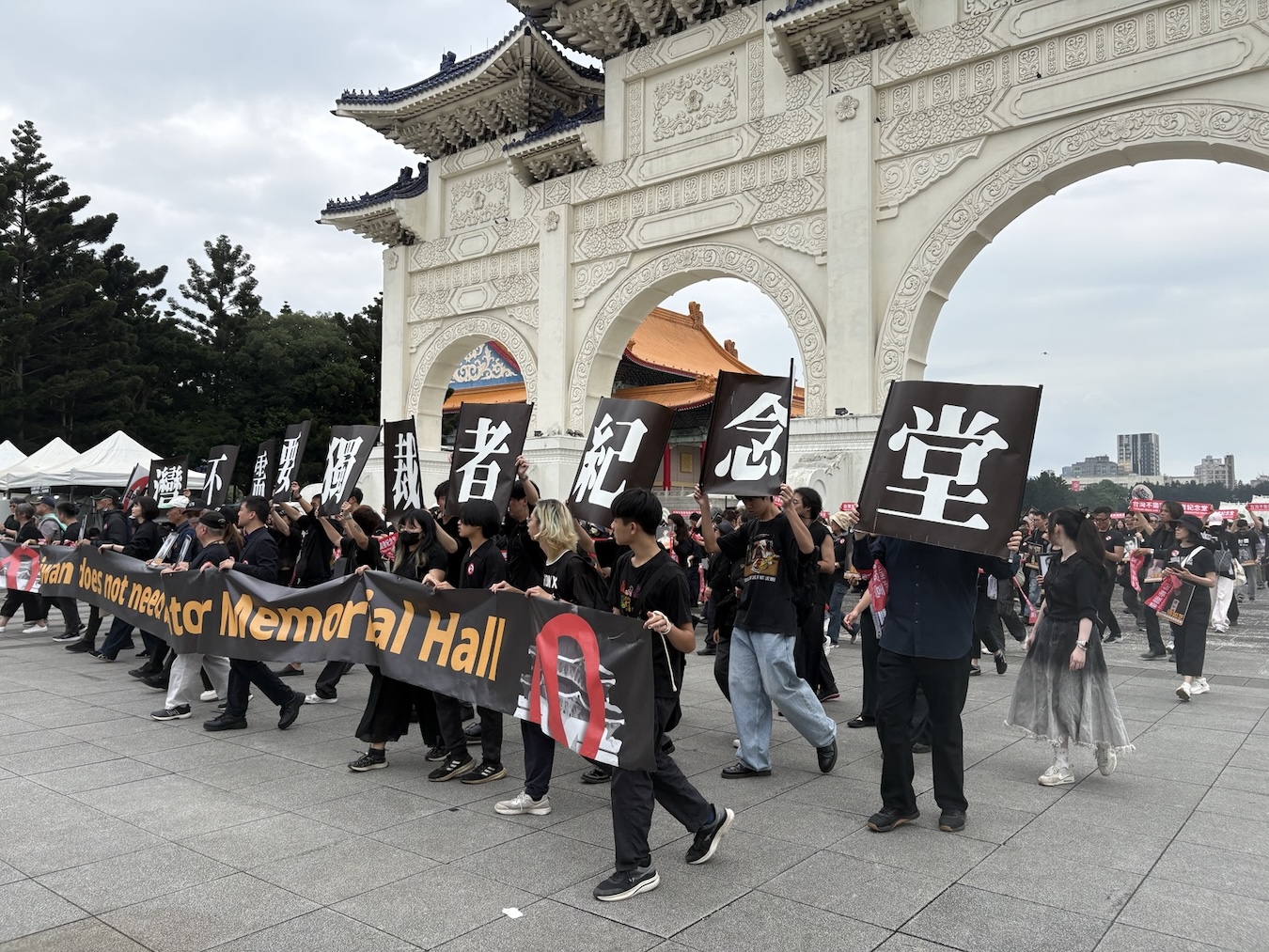
The day’s activities commenced shortly after 1:00 PM at Liberty Plaza, the massive public square that serves as the gateway to the memorial complex. Organizers set up a variety of information stalls under the iconic white archway, which was renamed from "Great Centrality and Perfect Uprightness" to "Liberty Plaza" in 2007 as part of earlier efforts to de-center the legacy of Chiang Kai-shek. These stalls featured a diverse array of civil society organizations, including groups advocating for Tibetan independence, youth empowerment initiatives, and human rights organizations focused on documenting the history of the White Terror.
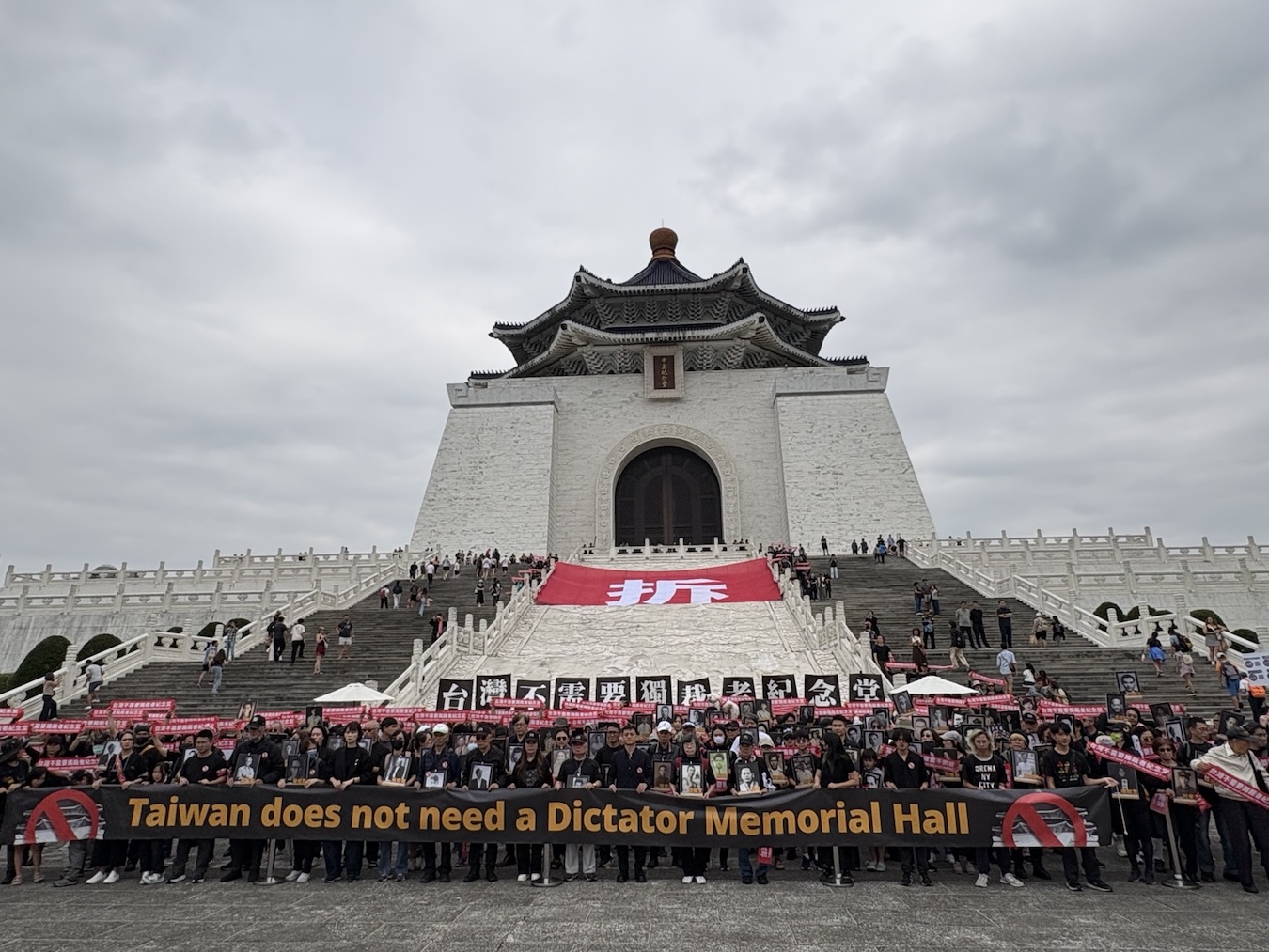
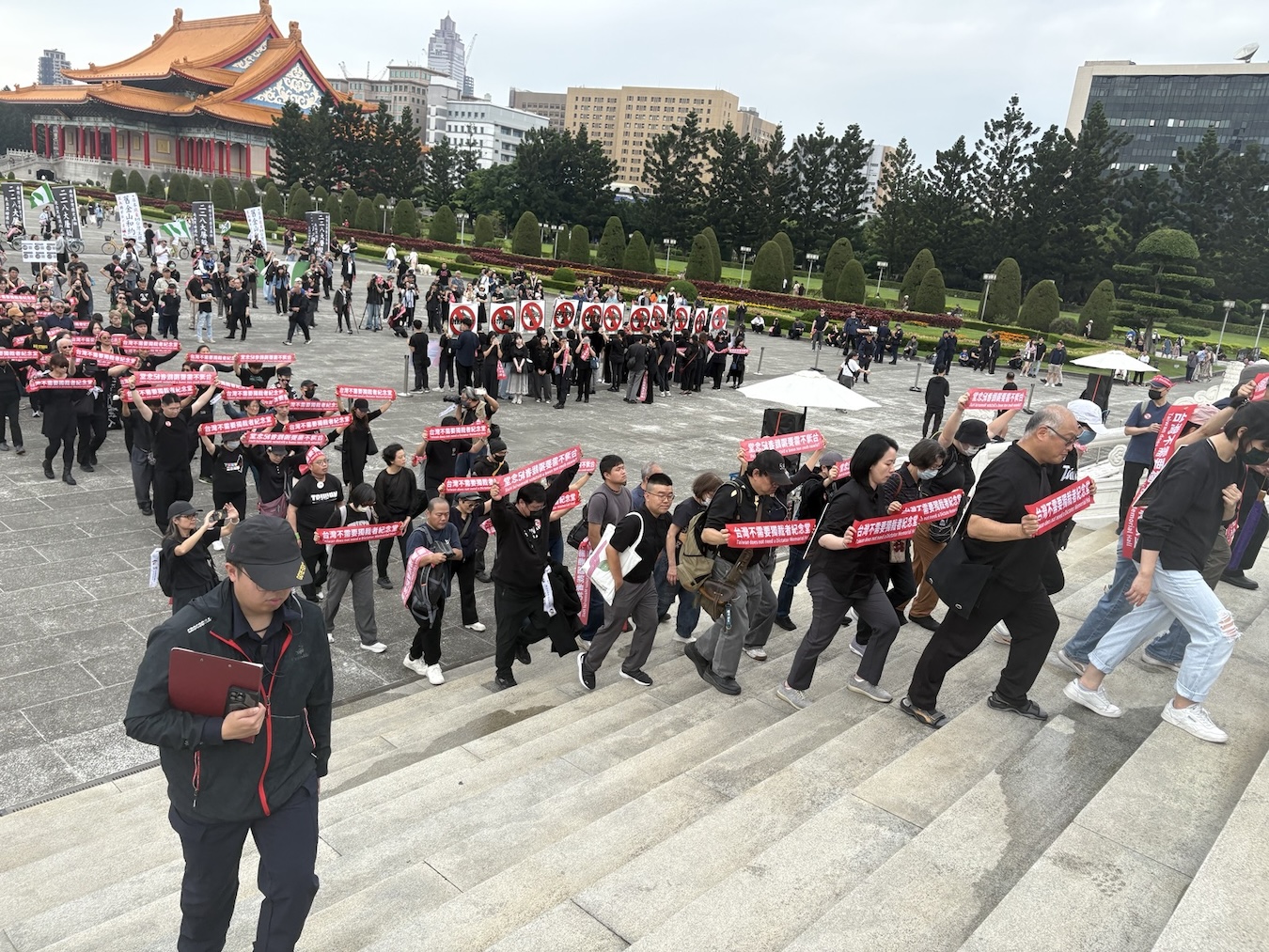
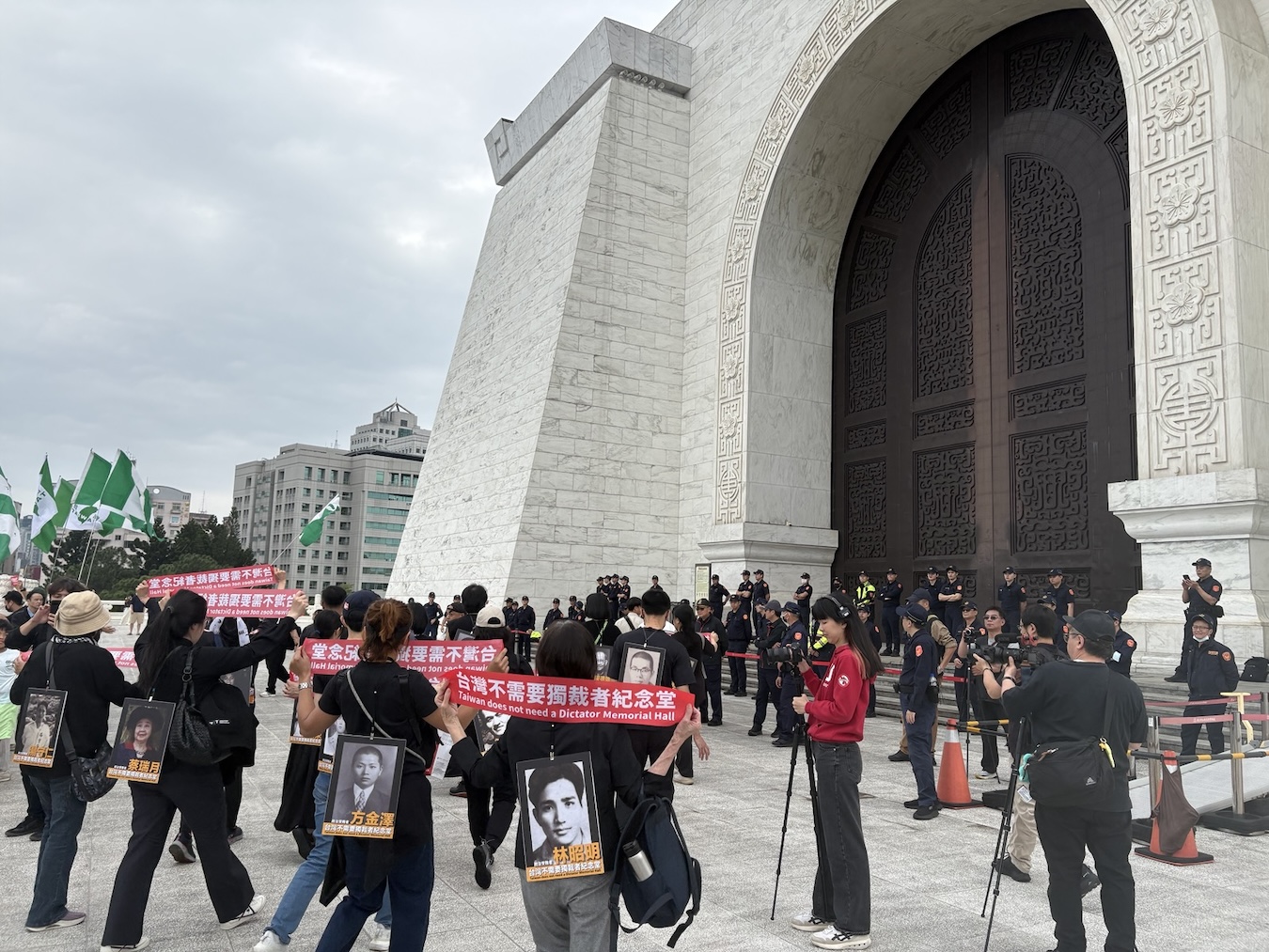
At approximately 1:50 PM, the demonstration shifted from a stationary gathering to a mobile protest. The crowd began a symbolic march across the vast courtyard situated between the National Theater and the National Concert Hall. As they moved toward the main memorial building, protesters chanted slogans calling for the removal of the massive bronze statue of Chiang Kai-shek housed within. Many participants carried portraits of individuals who were extrajudicially executed or disappeared during the decades of martial law, providing a haunting visual reminder of the human cost of the regime the monument celebrates.
Upon reaching the base of the memorial’s 89 granite stairs—a number intentionally chosen to represent the years of Chiang Kai-shek’s life—the organizers held a series of speeches. The speakers included elderly survivors of the White Terror and their descendants, who shared personal accounts of the trauma inflicted by the state. These were followed by addresses from student activists who framed the continued existence of the memorial as an educational failure and a symbol of ongoing state indifference.
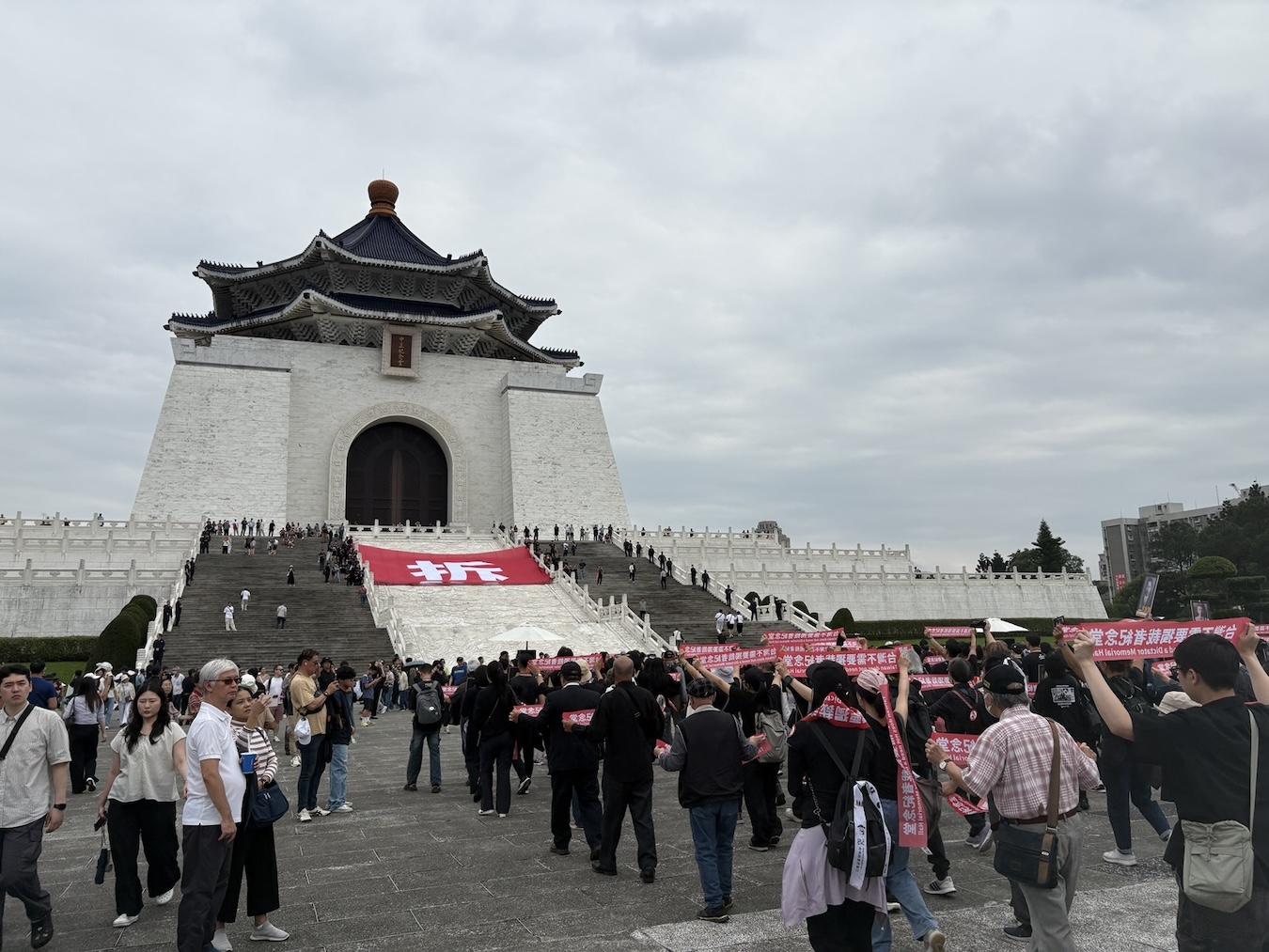
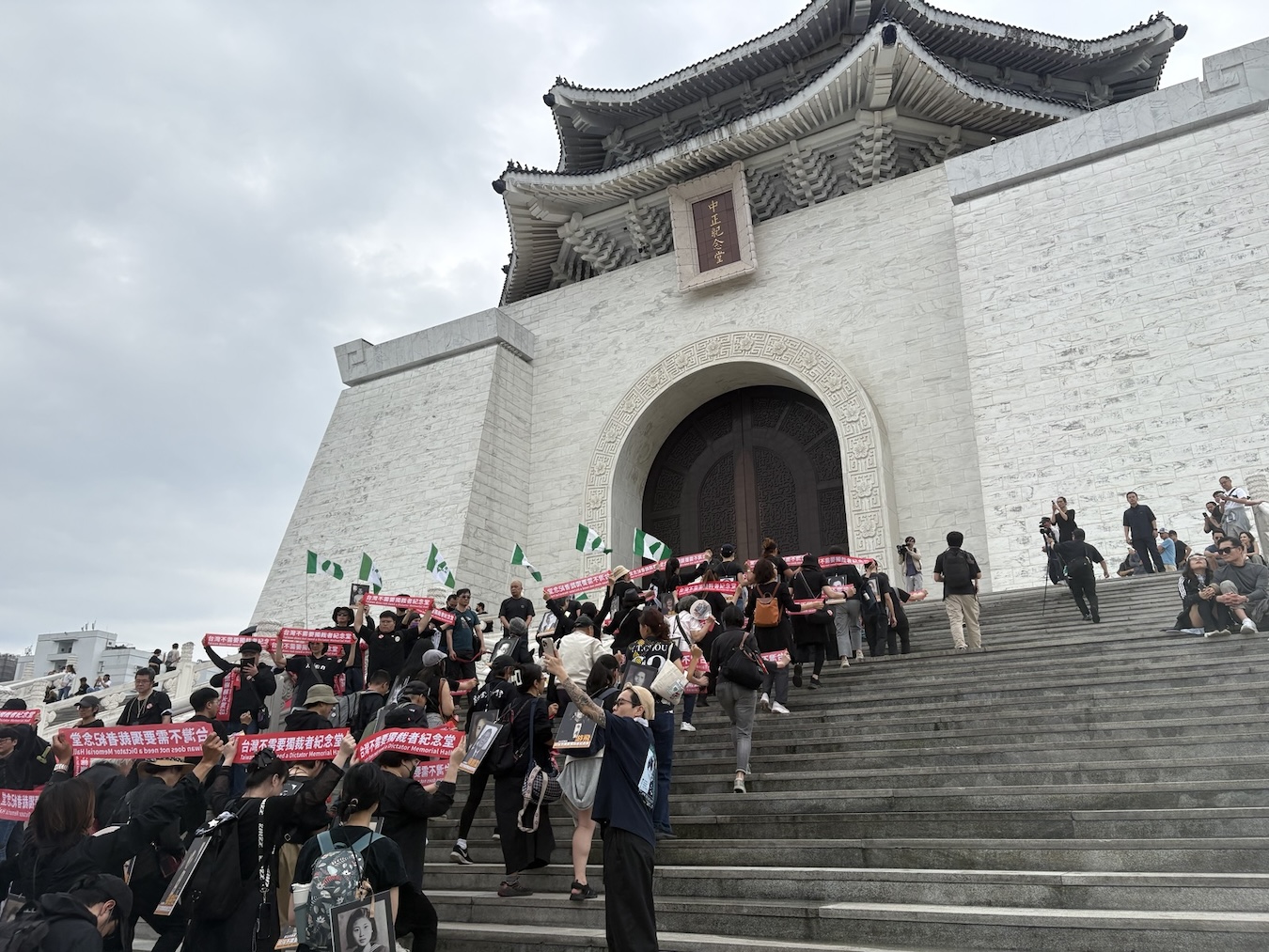
The protest reached its climax when a group of demonstrators ascended the stairs to the main hall, which was guarded by a heavy police presence and temporarily closed to the public. At the top of the monument, protesters unfurled a large red banner across the entrance, partially obscuring the symbols of the Kuomintang (KMT) party. The banner bore a single, stark command: "Dismantle." Following this action, the group descended the stairs and returned to the Liberty Plaza archway, a movement they described as "the walk toward freedom," symbolizing the transition from authoritarianism to a liberated future.
Historical Context: The Memorial as a "Temple of Authority"
The Chiang Kai-shek Memorial Hall was commissioned following the dictator’s death in 1975 and officially opened in 1980. Its architecture is deeply symbolic, drawing inspiration from the Lincoln Memorial in Washington D.C., but incorporating traditional Chinese palace elements and KMT party iconography. For decades, it has served as a focal point for state ceremonies, complete with an elite honor guard that performs hourly changing-of-the-guard ceremonies—a practice that critics argue elevates a political figure to the status of a deity.
For the protesters, the memorial is not a neutral historical site but a "temple" that continues to legitimize the era of the White Terror (1949–1987). During this period, tens of thousands of Taiwanese citizens were imprisoned, tortured, or executed for perceived opposition to the KMT’s one-party rule. Speakers at the rally pointed out that while Taiwan has successfully transitioned to a vibrant democracy, the physical landscape of the capital still prioritizes the glorification of the man who oversaw the longest period of martial law in world history at that time.
Supporting Data and the State of Transitional Justice
The demand to dismantle the memorial is not a fringe movement but a core recommendation of official government bodies. In 2022, the Transitional Justice Commission (TJC), an independent government agency established under the Tsai Ing-wen administration, released its final report before dissolving. The TJC’s primary recommendation for the memorial was the removal of the 6.3-meter-tall bronze statue and the "de-authoritarianization" of the site.
Data from the TJC and human rights organizations suggest that Taiwan still hosts over 1,000 statues of Chiang Kai-shek in public spaces, including schools and military bases. Furthermore, hundreds of roads across the island remain named "Zhongzheng"—Chiang’s given name. While the Ministry of the Interior has offered financial incentives for local governments and schools to remove these statues, progress has been slow, particularly in jurisdictions controlled by the KMT.
Protesters at the event highlighted a "race against time" regarding redress. With the average age of White Terror survivors now exceeding 80, many fear that the perpetrators of state violence will never be held accountable and that the physical symbols of their oppression will outlive the victims. The rally also touched on the lack of public awareness among the younger generation, citing recent surveys and media controversies as evidence of a fading collective memory.
Public Reactions and Political Implications
The protest occurs at a sensitive time for the current administration under President Lai Ching-te. While the Democratic Progressive Party (DPP) has historically supported transitional justice, the government faces significant political hurdles. The KMT, which currently holds a slim plurality in the Legislative Yuan, remains staunchly opposed to the removal of the memorial, viewing Chiang Kai-shek as a foundational figure who protected Taiwan from Communist China.
In a statement following the protest, KMT representatives argued that the memorial is a historical landmark and that "tearing down history" does not promote reconciliation but instead "stirs up ethnic conflict." They contend that the focus should remain on the "positive contributions" of the era, such as economic development and national security.
Conversely, the Lai administration has maintained a policy of "transformation without destruction," suggesting that the memorial could be repurposed into a "Park of Reflective Democracy" or a museum of authoritarianism. However, for the demonstrators gathered on Sunday, such compromises are insufficient. "You cannot have democracy in the shadow of a dictator," one student speaker noted. "As long as the statue remains, the message to the world is that Taiwan still worships its oppressor."
The Influence of Popular Culture and the "Murder of the Century" Controversy
The urgency of the protest was exacerbated by a recent cultural controversy surrounding the film "Murder of the Century." The movie, which depicts the events of the White Terror, has been criticized by historians and activists for allegedly justifying the KMT’s crackdowns as "necessary measures" for national stability during the Cold War.
Advocates at the rally argued that such media representations are a direct result of the state’s failure to fully address its past. They suggested that because the CKS Memorial Hall remains a major tourist attraction, international visitors and younger Taiwanese are often presented with a sanitized version of history. The protest organizers noted that many tourists take photos with the honor guard without any knowledge of the human rights abuses associated with the figure inside the hall.
Broader Impact and Future Outlook
The demonstration concluded with a vow from organizers to return every year until the monument is dismantled. The event serves as a reminder that for a significant portion of the Taiwanese electorate, transitional justice is not a finished project but an ongoing struggle.
The implications of this movement extend beyond domestic politics. As Taiwan seeks to bolster its international standing as a beacon of democracy in East Asia, the continued presence of a massive monument to an authoritarian leader remains a point of diplomatic and symbolic friction. International human rights observers have frequently noted the paradox of Taiwan’s democratic achievements coexisting with the state-funded veneration of Chiang Kai-shek.
As the Lai administration navigates its first term, the pressure from civil society to act on the TJC’s recommendations is likely to intensify. Whether the government will opt for a radical dismantling, a gradual repurposing, or continued maintenance of the status quo remains one of the most contentious issues in Taiwan’s journey toward social reconciliation. For the hundreds who marched through Liberty Plaza, the goal remains clear: a landscape that reflects the values of the present, rather than the shadows of the past.

 Muslim