Nana Muazin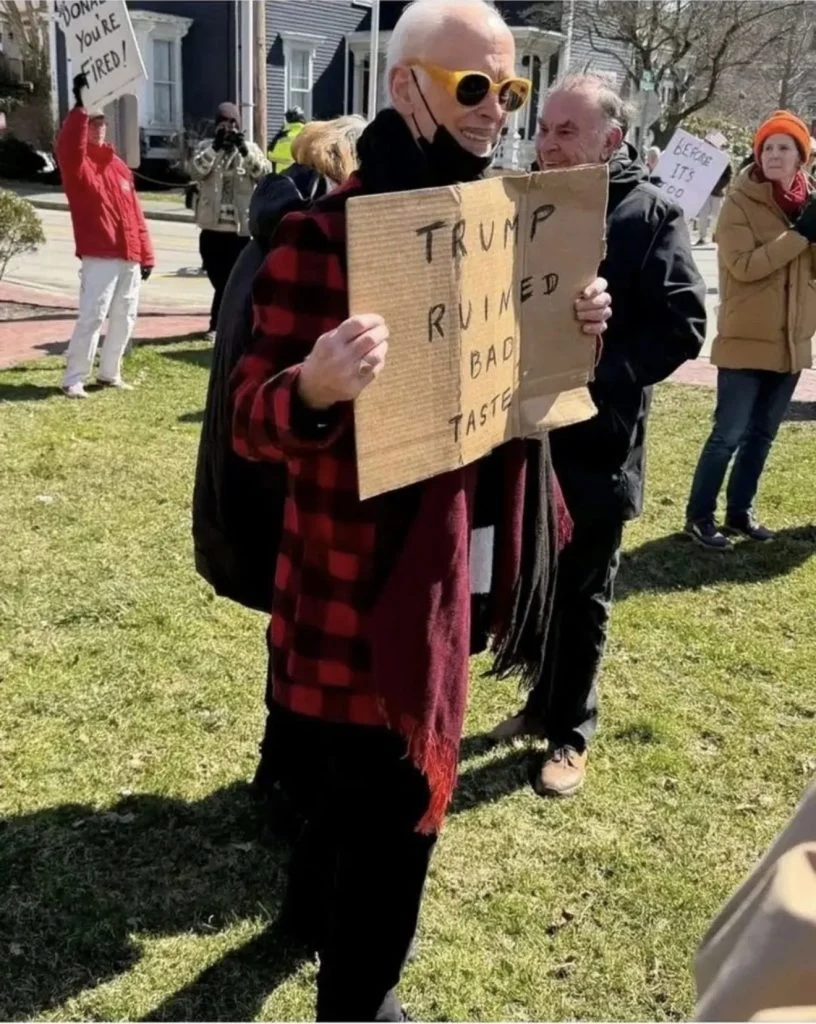
This article marks the seventy-fifth installment in the ongoing series "Other People’s Thoughts," a collection curated by Simon Leys (Pierre Ryckmans), a respected scholar and a foundational figure for China Heritage. Leys’s original compilation was described as "idiosyncratically compiled for the amusement of idle readers," a sentiment echoed by the current editorial team at China Heritage. This series aims to provide similar amusement by presenting an eclectic assembly of quotations that reflect the interests and perspectives of The Wairarapa Academy for New Sinology and its affiliated scholars.
The practice of compiling and disseminating recorded sayings, or yǔlù (语录), holds a significant place in Chinese literary and intellectual history. These collections often serve as repositories of wisdom, philosophical insights, and historical anecdotes. Prominent examples include The Analects, a compilation of Confucius’s teachings by his disciples, and the foundational text of Taoism, Laozi’s Tao Te Ching. The Chan/Zen Buddhist tradition also features kōan (公案), paradoxical riddles designed to provoke enlightenment, originating from the Tang dynasty. In contemporary times, this tradition has been mirrored, albeit in vastly different contexts, by the political pronouncements of leaders like Mao Zedong and Xi Jinping, as well as the widely circulated snippets from motivational speakers and armchair philosophers.
The "Other People’s Thoughts" series draws inspiration from this rich legacy, also finding resonance in the Chinese literary traditions of "poetry talks" (shī huà, 诗话), "casual jottings" (bǐjì, 笔记), and "marginalia" (zhá jì, 札记), which offer more informal yet insightful reflections on literature, art, and life.
This seventy-fifth chapter, like its predecessors, incorporates multimedia elements, including videos and illustrative graphics, to enhance the reader’s engagement with the selected quotations. The chapter was compiled by Geremie R. Barmé, editor of China Heritage, and published on April 1, 2026.
A Moment of Contemplation
A brief, evocative exchange, attributed to "Lao Shu" and translated by GRB, sets a contemplative tone:
"A friend told me that it’s important to wait."
"Wait for what, exactly?"
"I know what you know."
This pithy dialogue hints at shared understanding, anticipation, and perhaps an unspoken shared destiny or a deferred revelation. It suggests a connection that transcends explicit communication, relying on a mutual awareness of unfolding events or a common future.

Dispatches from a Fractured World: Other People’s Thoughts LXXV
The current compilation offers a stark reflection of a world grappling with significant geopolitical instability, ideological divides, and profound societal shifts. The selections span a range of voices, from literary critics lamenting the loss of satirical genius to military strategists assessing global crises, and from political commentators dissecting leadership styles to philosophers pondering the nature of faith and humanity.
The Loss of Satirical Insight
The passing of Sir Terry Pratchett, the celebrated author known for his satirical fantasy novels, is noted with deep regret. Christopher Lockett, writing on March 12, 2025, laments Pratchett’s absence in an era of escalating absurdity. Lockett posits that Pratchett, who died before key events like Brexit and the rise of Donald Trump, would have offered a potent blend of humor, rage, and imaginative critique for the current "odious stew" of global affairs. The loss of his "humour and rage and his capacity to imagine for us an alternative world" is described as a "profound loss," highlighting the void left by his unique perspective in navigating contemporary challenges.
Geopolitical Shifting Sands: Strategic Miscalculations
A quote attributed to former CIA head David Petraeus, though contextually brief, points to a significant perceived strategic miscalculation. The statement, "We were hoping to get a Delcy Rodriguez in Iran, but what we got is a young Kim Jong Un," suggests a diplomatic objective that has instead yielded a more unpredictable and potentially confrontational outcome. This implies a failure to accurately assess regional dynamics or the intentions of key actors, leading to an unintended strengthening of a hardline regime.
The sentiment is echoed by French politician Claude Malhuret, who offers a biting analogy for Donald Trump: "Trump: the world’s only elephant who walks around with his own china store." This metaphor vividly captures the perceived recklessness and destructive potential associated with Trump’s actions and pronouncements, suggesting a propensity for causing damage in sensitive situations.
Economic Disruption and Societal Strain: The "Trumpageddon Express"
A stark and alarming assessment from an unnamed source on March 19, 2026, paints a grim picture of global economic fallout, directly linking it to a hypothetical scenario involving "The Trumpageddon Express." The report details an unprecedented disruption in the global oil market, with a dramatic cut in Gulf production and the closure of the Strait of Hormuz, through which a significant portion of the world’s oil supply previously flowed.
The analysis underscores the pervasive reliance on crude oil: "97% of everything you touch, eat, wear, and use involves crude oil." The cascading effect of oil price surges is detailed, predicting that a doubling of prices would double the cost of essential goods and services, while a tripling would lead to the destabilization of civilization. The author concludes with a visceral description of the impending crisis: "This isn’t a recession. This is a fucking seizure." This suggests an immediate, severe, and potentially catastrophic economic shockwave impacting all facets of daily life.
Leadership in Crisis: Cognitive Rot and Political Farce
Tina Brown, writing on March 31, 2026, provides a scathing critique of leadership during a global crisis, citing an on-camera Cabinet meeting. She describes a leader’s "free-associative drivel," which veered from discussions about White House ballrooms and the Kennedy Center to personal anecdotes about Sharpie pens. This is contrasted with the gravity of the world crisis, prompting a historian friend to despairingly liken the scene to a passage from One Flew Over the Cuckoo’s Nest. The commentary questions the efficacy of constitutional safeguards like the 25th Amendment, suggesting a profound concern about the leader’s cognitive faculties and fitness for office. The comparison to historical figures like Jefferson, Lincoln, and FDR further emphasizes the perceived decline in leadership quality.
The Perilous Specter of "China Maxxing" in West Oakland
A disturbing account by Gil Durán, published on March 15, 2026, details a proposal for "China Maxxing in West Oakland," which advocates for the imposition of an authoritarian Chinese surveillance regime on a historically Black neighborhood. The proposal, attributed to Curtis Yarvin, suggests ceding control of the area to Chinese law, enforced by Chinese security forces. The described scenario includes elements of racialized condescension and the suggestion of a racist imitation of a Chinese voice, along with the chilling prospect of using technology like drone-mounted megaphones to enforce minor infractions. The proponent allegedly views this as a "win-win" and a model for future governance, raising significant ethical and human rights concerns about the potential for such extraterritorial authoritarianism and its discriminatory implications.
The Language of Conflict and Diplomacy
Amidst escalating global tensions, an Iranian spokesman is quoted on March 17, 2026, suggesting a renaming of a conflict: "It’s better to name this war Epicure instead of Epic Fury." This subtle linguistic maneuver could be interpreted as an attempt to frame the conflict in a more philosophical or less aggressive light, or perhaps to invoke a sense of predestined or inevitable outcome, potentially distancing the nation from the perceived aggression implied by "Fury."
Academic Inquiry Under Constraint: The Case of International Relations in China
Yaqi Li, writing in New China Literacy on March 19, 2026, offers a nuanced perspective on the landscape of academic inquiry in China. Li observes that when domestic politics becomes too sensitive or ideologically constrained for genuine academic exploration, the study of international relations (IR) emerges as a permissible outlet for political curiosity. This phenomenon allows Chinese undergraduates to engage with concepts of power, strategy, and conflict, provided the focus remains external to the nation’s borders. This suggests a strategic channeling of intellectual energy, where the study of foreign affairs serves as a proxy for the exploration of governance and geopolitical dynamics.
Foresight or Fantasies? Pauline Hanson’s Post-Apocalyptic Vision
An article from The Nightly on November 18, 2025, resurfaces a peculiar prediction by Australian politician Pauline Hanson from her 1997 book The Truth. Hanson foresees Australia, or "Australasia" by 2050, being ruled by a "multi-racial, lesbian, part-cyborg president" named Poona Li Hung. This prediction, revived in a court case, highlights Hanson’s controversial rhetoric. The description of President Li Hung as being of Indian and Chinese descent, and a cyborg, juxtaposed with Hanson’s past pronouncements, underscores the complex and often provocative nature of her public discourse.
The Nature of Empathy and Sarcasm
Two brief entries touch upon the nuances of human interaction and communication. A quote from the TV series Audacity humorously defines "empathetic" as simply "pathetic" with a prefix, suggesting a potential cynicism towards the term. Conversely, John Knowles’s definition of sarcasm in A Separate Peace (1959) as "the protest of those who are weak" offers a more critical perspective on its utility and motivation.
Luxury in a Time of Crisis: Dubai and the Iranian War
A report from The New York Times on March 19, 2026, details the impact of the Iranian war on the luxury goods market in Dubai. Rachel Duzan, an expatriate, expresses a conflict between her desire for luxury items and the ethical considerations of shopping during wartime. The halting of shipments into Iran and the broader economic disruptions highlight how international conflicts can reverberate through global commerce, even impacting consumer behavior in seemingly distant locales.
The Evolving Concept of the Sacred
Douglas Rushkoff, writing on March 19, 2026, explores the evolving nature of religious belief, particularly within Judaism. He argues that Judaism was intended less as a system of worship and more as a process of moving beyond religion. Rushkoff suggests that God evolves from tangible idols to abstract concepts, with the ultimate aim of finding the sacred in human connection rather than in dogma or nationalism. He criticizes the literal interpretation of religious texts, arguing that it closes off access to their timeless, multidimensional meanings, and advocates for finding the sacred in the ongoing, present experience of life.
The Art of "Conscious Uncoupling" and Political Alliances
Marina Hyde, in The Guardian on March 20, 2026, satirically analyzes Nigel Farage’s attempt to distance himself from Donald Trump. Hyde likens this to a "conscious uncoupling," a term popularized by Gwyneth Paltrow, suggesting a performative and perhaps disingenuous separation. Hyde’s commentary implies that Farage’s long-standing association with Trump makes a clean break improbable, humorously suggesting a "Faragectomy" as the only viable solution. This piece highlights the complexities and often theatrical nature of political alliances and their dissolution.
A Passion for Words: A Screenwriter’s Application
A letter from Robert Pirosh, an MGM screenwriter in 1934, offers a charming and eloquent testament to the power and beauty of language. Pirosh meticulously details his appreciation for various types of words, categorizing them by their texture, sound, and evocative qualities. His desire to transition from copywriting to screenwriting, and his year of contemplation in Europe, underscore a deep-seated passion for words and storytelling, culminating in a simple yet profound request: "May I have a few with you?"
The Stages of Life and the Search for Meaning
David Remnick’s remembrance of Calvin Tomkins on March 30, 2026, features a delightful anecdote about "the three ages of man": Youth, Maturity, and "You Look Great." This lighthearted observation offers a perspective on aging and self-perception, suggesting that societal acknowledgment of vitality can be a significant aspect of one’s perceived age.
A Provocative View on Kindness and Societal Compliance
Will Self, in an excerpt, presents a controversial and provocative view on kindness: "Nice people don’t do nice things. And when the Nazis come, they’re going to turn around and fucking massacre everybody, the nice people." This statement challenges conventional notions of altruism and moral passivity, suggesting that a lack of decisive action or assertiveness can have dire consequences in the face of genuine threat. The commentary also includes a harsh critique of J.K. Rowling’s writing and her perceived engagement with controversy.

Fleeting Moments of Grace: The Significance of Small Kindnesses
In contrast to the starker observations, Danusha Laméris’s poem "Small Kindnesses" offers a poignant reflection on the subtle acts of grace and connection that punctuate daily life. Laméris enumerates instances of everyday courtesy – people moving aside in crowded aisles, strangers offering blessings, assistance with dropped groceries, and drivers yielding. The poem posits that these "brief moments of exchange" and "fleeting temples we make together" might be "the true dwelling of the holy," suggesting that these small acts of consideration and connection are profoundly significant in a world often perceived as distant and fragmented.
The Paradox of AI and Human Attention
Alberto Romero, writing in The Algorithmic Bridge on March 27, 2026, introduces a new internet shorthand: AI;DR, meaning "AI; didn’t read." This is presented as a mutation of TL;DR ("too long; didn’t read"), signifying a refusal to engage with machine-generated content. Romero argues that the shift from a semicolon separating cause and effect (length leading to reduced reading) to one separating the machine’s output from human disregard reflects a loss of attention and a devaluation of even automated information.
Renewable Energy’s Peaceful Promise
Avi Lewis, a Canadian politician, offers a simple yet powerful observation on the inherent peacefulness of renewable energy sources: "No one ever bombed a factory full of sunshine, No one’s ever gone to war over the wind." This statement highlights the contrast between the resource-intensive and often conflict-generating nature of fossil fuels and the naturally abundant and inherently non-combative qualities of solar and wind power, suggesting a pathway towards a more peaceful global order.
The Nature of War and Morality: A Critical Examination
Greg Sargent, in The New Republic on March 30, 2026, critically analyzes Pete Hegseth’s justifications for war. Sargent argues that Hegseth, while claiming to defend "the West," appears to disregard the principles of the just-war tradition, which prohibit needless wars, excessive cruelty, and the wanton killing of civilians and surrendering combatants. Sargent contends that Hegseth’s rationale is based on falsehoods, his brutal actions are framed as inherently good, and he lionizes the killing of those who surrender, attributing these transgressions to a divine plan. This critique raises profound questions about the intersection of religious conviction, military action, and moral responsibility.
Historical Nihilism and the Power of the Past
James Baldwin’s words from The Fire Next Time are cited, emphasizing the distinction between accepting and drowning in one’s past. Baldwin asserts that an "invented past can never be used" and crumbles under life’s pressures, contrasting it with a history that is learned from and utilized. This underscores the importance of confronting and understanding historical realities rather than constructing a false narrative, which ultimately proves unsustainable.
The Purposeful Life: George Bernard Shaw’s Philosophy
The enduring words of George Bernard Shaw articulate a philosophy of purposeful living: "the true joy in life, being used for a purpose recognized by yourself as a mighty one." Shaw advocates for dedicating one’s life to the community and embracing hard work as a means of living fully. He expresses a desire to be "thoroughly used up" upon death, viewing life not as a fleeting candle but as a "splendid torch" to be made to burn brightly before passing it on. This powerful statement champions a life of contribution and engagement over passive existence.
Protest and Observation
A photograph depicts a protest, identified as "John Waters protests" on "No Kings Day, March 28, 2026." While the specific context of the protest is not detailed, its inclusion suggests a commentary on political or social dissent, potentially related to themes of leadership or governance.
The collection of quotations in "Other People’s Thoughts LXXV" offers a multifaceted and often unsettling glimpse into contemporary global discourse. From reflections on the erosion of reasoned discourse and the perils of geopolitical instability to profound considerations of human connection and the search for meaning, the selections highlight the complexities and challenges of the current era. The juxtaposition of sharp political critique, philosophical contemplation, and poignant observations on everyday life creates a rich tapestry of human thought, inviting readers to engage with the diverse perspectives that shape our understanding of the world.