Siti Muinah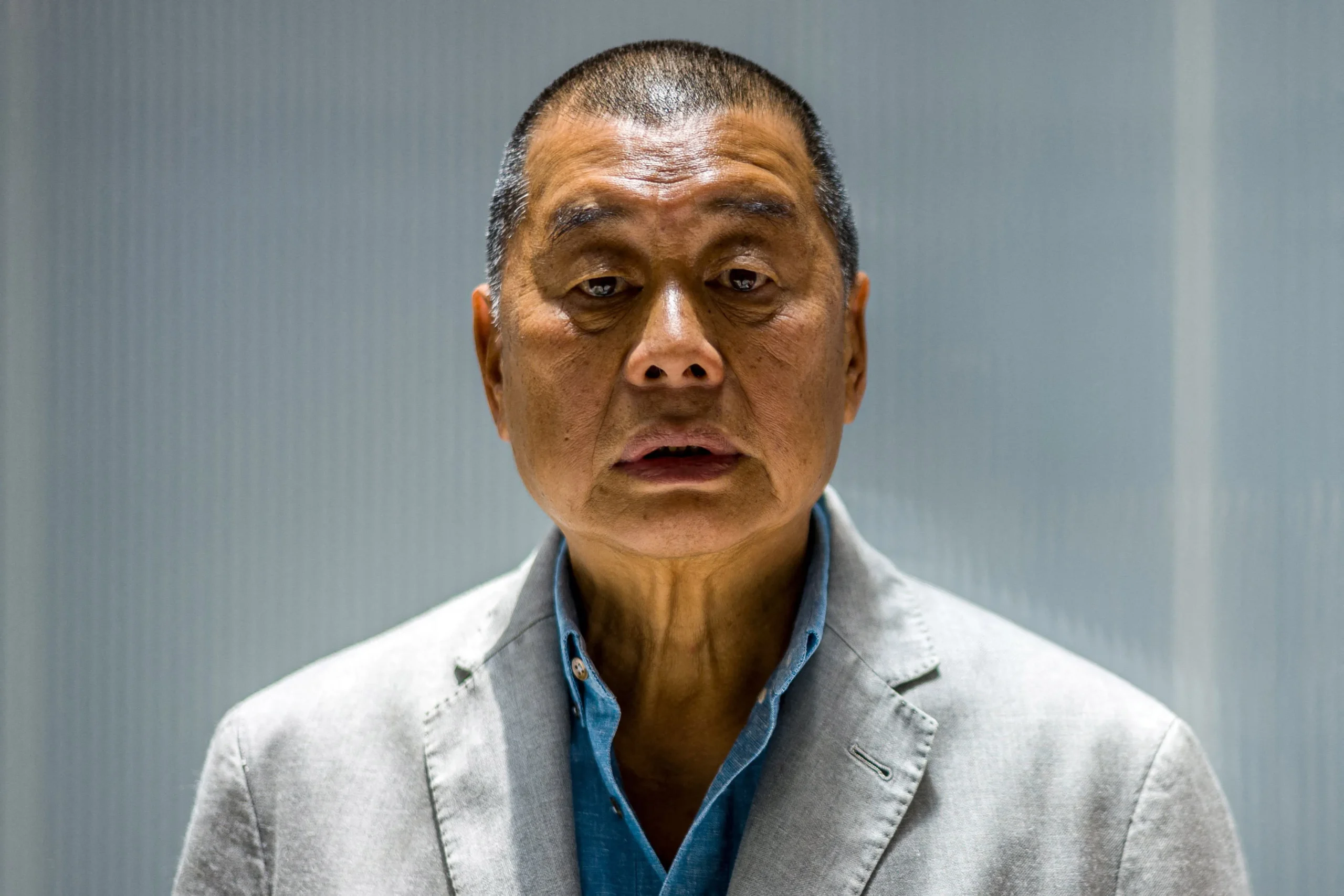
In a decision that has reverberated across the global journalistic community, a Hong Kong court on Monday sentenced 78-year-old media tycoon Jimmy Lai to 20 years in prison, marking the conclusion of the city’s most significant national security trial to date. The sentencing, handed down on February 9, 2026, also saw six of Lai’s former colleagues from the now-shuttered Apple Daily newspaper receive prison terms ranging from six to 10 years. The ruling is widely viewed by international human rights organizations and press freedom advocates as the definitive end of the era of independent media in the Hong Kong Special Administrative Region (HKSAR).
Jimmy Lai, the founder of the pro-democracy publication Apple Daily and a prominent critic of the Chinese Communist Party, was convicted on multiple counts, including conspiracy to collude with foreign forces and conspiracy to publish seditious material. Given Lai’s advanced age and reports of his declining health, the 20-year term is effectively a life sentence. The Committee to Protect Journalists (CPJ) and other international bodies have condemned the proceedings as a politically motivated effort to silence dissent and dismantle the "One Country, Two Systems" framework that once guaranteed Hong Kong’s civil liberties.
The Sentencing of the Apple Daily Leadership
The court’s decision targeted not only Lai but also the executive core of Apple Daily, which was once the city’s most popular tabloid known for its staunchly pro-democracy stance. The six former editors and executives sentenced alongside Lai had previously pleaded guilty to conspiracy to collude with foreign forces in 2022. While some of these individuals cooperated with the prosecution and testified against Lai during the trial, they nonetheless received substantial custodial sentences.
The individuals sentenced include:
- Cheung Kim-hung: Former CEO of Next Digital (the parent company of Apple Daily).
- Chan Pui-man: Former associate publisher.
- Ryan Law: Former editor-in-chief.
- Lam Wun-kwong: Former executive editor-in-chief.
- Fung Wai-kong: Former editor-in-chief of the English-language edition.
- Yeung Ching-kee: Former editorial writer.
The prosecution argued that these individuals used the newspaper as a platform to incite hatred against the Hong Kong and Chinese governments and to solicit foreign sanctions against local officials. The defense, conversely, maintained that the defendants were merely exercising their professional duties as journalists in a city that, at the time, claimed to uphold the principle of press freedom.
Historical Context: The Rise and Fall of Apple Daily
To understand the gravity of these sentences, one must look at the history of Jimmy Lai and the publication he built. Founded in 1995, Apple Daily became a symbol of Hong Kong’s vibrant, often raucous, media landscape. It combined sensationalist tabloid reporting with serious political investigation and a fierce editorial line that challenged Beijing’s increasing influence over the territory.
For over two decades, Apple Daily was a fixture of Hong Kong life. However, the tide turned following the 2019 anti-government protests. The newspaper’s vocal support for the protest movement made it a primary target for authorities after the enactment of the National Security Law (NSL) in June 2020. The NSL, imposed directly by Beijing, bypassed the local legislature and introduced broad categories of crimes—secession, subversion, terrorism, and collusion with foreign forces—with maximum penalties of life imprisonment.
The downfall of the publication was swift. In June 2021, hundreds of police officers raided the Apple Daily newsroom, seizing journalistic materials and arresting top executives. Shortly thereafter, the government froze the company’s bank accounts, making it impossible for the paper to pay its staff or vendors. On June 24, 2021, Apple Daily printed its final edition, with a million copies selling out within hours as residents sought to preserve a piece of the city’s history.
A Chronology of the Jimmy Lai Case
The legal saga leading to today’s sentencing has spanned over five years, involving multiple charges and a protracted trial process:
- August 2020: Jimmy Lai is first arrested under the National Security Law during a high-profile raid on the Apple Daily offices. He is later granted bail but it is eventually revoked.
- December 2020: Lai is denied bail and returned to custody, where he has remained ever since.
- June 2021: Apple Daily is forced to close after its assets are frozen.
- 2021-2023: Lai is convicted in several smaller cases related to his participation in unauthorized assemblies and a lease dispute involving Next Digital’s headquarters, receiving various shorter prison sentences.
- December 2023: The main national security trial begins after several delays. The trial is heard by three hand-picked national security judges without a jury, a departure from Hong Kong’s common law tradition.
- December 15, 2025: The court finds Lai guilty of conspiracy to collude with foreign forces and conspiracy to publish seditious material.
- February 9, 2026: The court delivers the final 20-year sentence.
Humanitarian Concerns and Prison Conditions
The international community has expressed grave concern regarding Jimmy Lai’s well-being. At 78, Lai suffers from chronic health conditions, including hypertension and diabetes. Reports from his legal team and family indicate that he has spent the majority of his detention in solitary confinement at the maximum-security Stanley Prison.
His son, Sebastien Lai, has led an international campaign for his father’s release, highlighting that the elderly publisher is kept in isolation for 23 hours a day with limited access to natural light or physical exercise. "My father is being punished for his beliefs and for his refusal to stay silent," Sebastien Lai stated in a recent appeal to the United Nations. "This 20-year sentence is an attempt to ensure he never leaves prison alive."
International Reactions and Diplomatic Friction
The sentencing has drawn immediate and sharp condemnation from Western governments. The United Kingdom, of which Lai is a citizen, has repeatedly called for his release. British Foreign Secretary David Lammy described the sentence as a "politically motivated prosecution" designed to stifle freedom of expression. Similarly, the United States State Department issued a statement condemning the "unjust sentencing" and calling on Beijing to uphold its international obligations under the Sino-British Joint Declaration.
The European Union and the governments of Australia and Canada also issued statements of concern, suggesting that the ruling further damages Hong Kong’s reputation as an international business hub governed by the rule of law.
In contrast, the Hong Kong government and Beijing have defended the ruling as a necessary step to restore stability. Hong Kong Chief Executive John Lee praised the court’s decision, stating that the sentence demonstrated that "the rule of law is upheld and justice is done." Lee emphasized that no individual, regardless of their profession, is above the law, and that the national security of the state remains the government’s highest priority.
Broader Implications for Press Freedom
The sentencing of Jimmy Lai and the Apple Daily staff is a watershed moment for the global state of journalism. According to the Committee to Protect Journalists’ 2025 prison census, China remains the world’s worst jailer of journalists, with at least 51 individuals currently behind bars for their work. The inclusion of eight journalists from Hong Kong in this tally marks a stark decline for a city that was once ranked among the highest in Asia for press freedom.
The legal precedent set by this trial has created a "chilling effect" across Hong Kong’s remaining media outlets. Since the implementation of the NSL, several other independent news organizations, including Stand News and Citizen News, have ceased operations, citing the risk of prosecution.
Furthermore, the trial’s focus on "collusion with foreign forces" has redefined the boundaries of international journalistic cooperation. Routine activities, such as interviewing foreign officials or receiving awards from international organizations, were presented by the prosecution as evidence of criminal activity. This interpretation of the law poses a significant threat to international correspondents and news bureaus operating in the region.
Analysis: The End of an Era
The 20-year sentence for Jimmy Lai is more than a legal judgment; it is a symbolic closure of the chapter of Hong Kong’s history that defined it as a bridge between the East and the West. For decades, the city’s legal system and free press were the pillars that supported its status as a global financial center. By dismantling the leadership of its most prominent opposition newspaper, the authorities have sent a clear message that political loyalty to the mainland now supersedes traditional civil liberties.
Legal analysts point out that the severity of the sentences for the six Apple Daily colleagues—despite their guilty pleas and cooperation—suggests that the judiciary is taking an increasingly hardline stance on national security matters. The lack of leniency serves as a deterrent to any future dissent.
As Jimmy Lai begins what may be the final years of his life behind bars, the international community faces a difficult question: how to respond to the erosion of democratic values in a major global city. While sanctions and diplomatic protests have been the primary tools of response, they have so far failed to alter the trajectory of the Hong Kong government’s policies. The "final nail in the coffin" for press freedom, as described by CPJ CEO Jodie Ginsberg, leaves a void in the region that may not be filled for generations to come.

 Layla Zulfa
 Nana Muazin