
 Dwi Wanna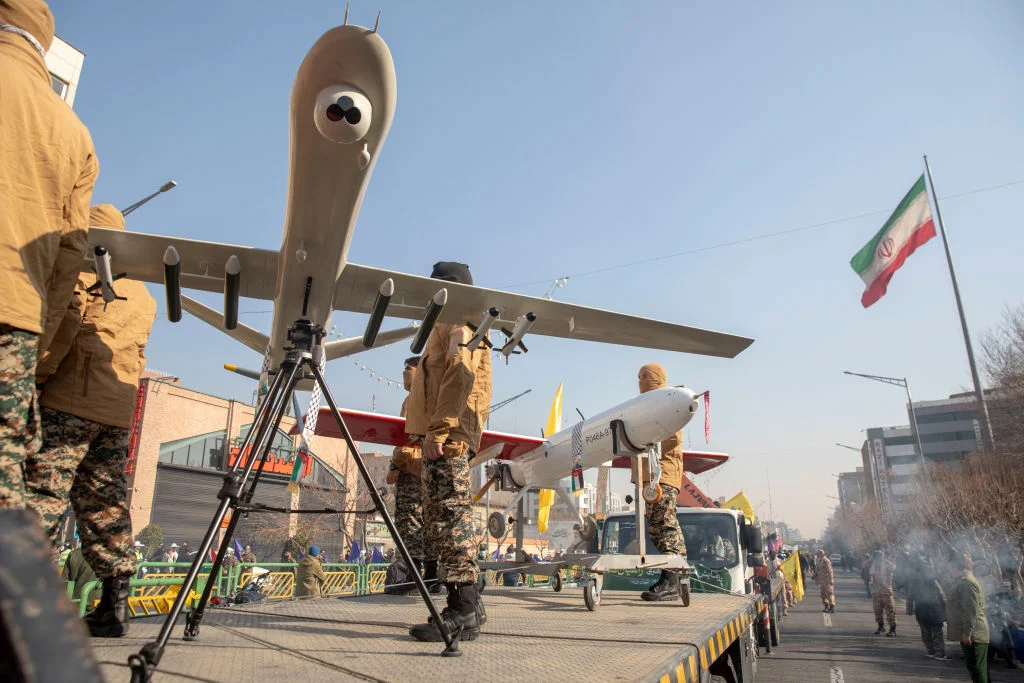
The ongoing conflict in the Persian Gulf has been significantly shaped by extensive Iranian drone deployments, raising profound concerns internationally. When pressed on these strikes in mid-March, the Ministry of Foreign Affairs (MFA) of the People’s Republic of China (PRC) issued a statement expressing concern, condemning indiscriminate attacks, and advocating for a return to dialogue (MFA, March 13). However, beneath this carefully crafted diplomatic posture lies a complex and structurally embedded role played by the PRC in sustaining Iran’s drone supply chain. This involvement transcends mere commercial transactions, encompassing the transfer of critical technologies, advanced manufacturing equipment, and essential components. These transfers have been facilitated through a combination of private capital acquisitions, the systematic reverse engineering of foreign technologies, and the deliberate exploitation of ambiguities within dual-use trade regulations. Beijing’s consistent non-enforcement against known proliferators of these technologies effectively constitutes a form of strategic permissiveness, a deliberate policy choice that underpins the resilience of Iran’s drone program.
The "Manufacturing Plain": A New Paradigm in Proliferation
The traditional mechanisms of international sanctions and export controls, designed to target identifiable state-owned defense contractors or large, monolithic entities, are increasingly proving inadequate against a new, more elusive threat: the "manufacturing plain." This term describes a complex, decentralized ecosystem of Chinese enterprises actively supporting Iran’s war efforts against regional adversaries, including the United States and Israel. This network operates not through a few vulnerable choke points but via a vast landscape of interchangeable micro-enterprises, making it profoundly difficult for conventional enforcement mechanisms to detect and disrupt.
Using open-source enterprise registration data from platforms like Tianyancha (天眼查) and cross-referencing it with U.S. Office of Foreign Assets Control (OFAC) designation documents, researchers have been able to profile sanctioned PRC entities and uncover their functional roles within this illicit supply chain. These entities are characterized by their small scale, often minimal registered capital, and commercially camouflaged business scopes, which frequently bear no overt relation to military or aerospace manufacturing. This topographical analogy of a "manufacturing plain" is critical because it highlights a fundamental vulnerability in current Western export control enforcement. Just as radar struggles to detect objects operating below its line of sight, these decentralized PRC networks largely evade regulatory scrutiny, rendering traditional sanctions akin to aiming at highly visible targets while the true threat operates unseen.
Chronology of Iranian Drone Development and Chinese Support
Iran’s journey to becoming a significant drone power has been a protracted one, marked by strategic acquisitions and reverse engineering, heavily bolstered by Chinese industrial capacity.
- Early 2000s: Iran begins to develop its indigenous drone capabilities, often through reverse-engineering foreign designs acquired through various channels. Initial programs focused on surveillance UAVs, but over time, the focus shifted towards weaponized platforms.
- 2011: A pivotal moment occurs with the acquisition of the financially troubled German company Limbach Flugmotoren GmbH by Chinese businessmen. This acquisition, ostensibly a private capital venture, would prove instrumental in securing propulsion technology for Iran’s burgeoning drone program. Limbach engines were civilian ultralight aircraft engines, perfect candidates for reverse engineering into military drone propulsion.
- 2012: Xiamen Limbach Aviation Engine (厦门利巴赫航空发动机) is established in Fujian Province, China, following the German acquisition. This entity would later become a critical node for drone engine production, effectively transferring Western engine technology into Chinese hands.
- Around 2013: Beijing MicroPilot UAV Control System (北京微盘航空无人机控制系统) begins openly marketing MD550 engines internationally. Simultaneously, Mado, an Iranian company linked to the Iranian Revolutionary Guard Corps (IRGC), establishes trading companies in Hong Kong and the PRC to procure engine-related goods, laying the groundwork for a robust supply network. The MD550 engine is a reverse-engineered copy of the German Limbach L550E, highlighting Iran’s early reliance on covert acquisition and replication (Iran Watch, December 17, 2025). This period marks the formalization of Chinese commercial channels being leveraged for Iranian military ends.
- 2017: Fujian Delong Aviation Technology (福建德龙航空科技有限公司) completes a full buyout of the German Limbach parent company (Tianyancha, March 26; Iran Watch, December 17, 2025). This consolidated Chinese control over the original engine design and manufacturing know-how. This period solidifies the PRC’s role in providing the foundational propulsion technology for Iran’s expanding drone arsenal, notably the Shahed-136, which would later become infamous in conflicts like Ukraine.
- 2023-2024: Reports emerge of newer Iranian drone models, such as the Shahed-107, utilizing the DLE 111 engine, manufactured by the PRC firm Mile Hao Xiang Technology (米乐豪翔科技有限公司) (Defense Express, November 27, 2025; Mile Hao Xiang Technology, March 26). This indicates a continued and evolving reliance on Chinese propulsion systems, moving beyond reverse-engineered Western designs to directly supplied Chinese alternatives, showcasing China’s increasing indigenous capability.
- Throughout 2024-2025: OFAC and the U.S. Department of Commerce’s Bureau of Industry and Security (BIS) repeatedly expand sanctions and Entity List designations targeting Iranian and Russian unmanned aerial vehicle (UAV) procurement networks across various jurisdictions, including the PRC, Hong Kong, Turkey, and the UAE (U.S. Department of the Treasury, October 17, 2024, February 26, 2025, April 1, 2025, July 31, 2025, November 12, 2025; Federal Register, April 11, 2024, August 27, 2024, October 23, 2024, March 28, 2025). These actions, however, largely fail to curb the proliferation, as Russian production of the Garpiya UAV (assembled with PRC-supplied L550E engines) paradoxically rises from approximately 2,000 units in 2024 to a contracted 6,000 in 2025 (Reuters, July 24, 2025). This stark increase highlights the ineffectiveness of reactive sanctions against a highly adaptive network.
- February 2024: OFAC dismantles the Hong Kong-based procurement infrastructure of Iran’s Pishtazan Kavosh Gostar Boshra (PKGB) and its subsidiary Narin Sepehr Mobin Isatis (NSMI). The network immediately reconstitutes, showcasing its regenerative capacity (U.S. Department of the Treasury, February 26, 2025). This rapid re-establishment of supply channels underscores the challenge.
- February 2025: Beijing Microelectronics Technology Institute (北京微电子技术研究所), affiliated with China Aerospace Science and Technology Corporation (CASC), is identified as supplying integrated circuits that functionally replace U.S.-manufactured Xilinx Kintex-7 programmable logic devices previously found in Shahed platforms (Defense Express, February 19, 2025). This marks a significant shift towards direct technological substitution by Chinese manufacturers, further insulating Iran from Western export controls.
This timeline illustrates a persistent pattern: as Western pressure mounts, Chinese suppliers adapt, innovate, and continue to provide crucial support, effectively bypassing or mitigating the impact of sanctions.
Critical Chinese Suppliers and Their Functional Roles
Iran’s ambition to mass-produce expendable drone platforms necessitates a robust and stable manufacturing base, a role the PRC has demonstrably excelled at filling. The dependence extends beyond propulsion to critical manufacturing equipment and a vast array of components.
1. Propulsion Technology:
The initial critical breakthrough for Iran’s drone program, particularly for the widely deployed Shahed-136, was securing reliable engine technology. The MD550 engine, a reverse-engineered variant of the German Limbach L550E, became central. The Chinese acquisition of Limbach Flugmotoren GmbH and the subsequent establishment of Xiamen Limbach Aviation Engine provided a crucial, ostensibly civilian, conduit for this technology. While Iran developed its Mado engine, scaling its production for expendable platforms relied on the stable manufacturing capabilities nurtured by Xiamen Limbach. The subsequent buyout by Fujian Delong Aviation Technology further entrenched Chinese control over this vital component. For newer models like the Shahed-107, direct sourcing of engines like the DLE 111 from PRC firms such as Mile Hao Xiang Technology demonstrates a continuing, and perhaps deepening, reliance on Chinese indigenous designs, bypassing Western intellectual property entirely. These engines are compact, relatively powerful for their size, and crucially, mass-producible, making them ideal for the "one-way attack" drone concept.
2. Manufacturing Equipment:
Iran lacks the comprehensive industrial chain required for large-scale, high-precision drone production. This gap is filled by a diffuse network of Chinese micro-enterprises providing essential manufacturing equipment. A prime example is Changzhou Joemars Industrial Automation (常州乔玛斯工业自动化). Though established as a subsidiary of Taiwan’s Joemars Machinery and Electric Industrial, it operated as a wholly foreign-owned enterprise in mainland China with minimal capital ($150,000) and only four employees, a typical profile for an evasion shell company. Its registered business scope vaguely references "electrical discharge machining computer numerical control [CNC] machine tools," carefully omitting the "high-precision" aerospace applications. Despite this camouflage, evidence shows that Iran-based Control Afzar Tabriz procured high-precision CNC machine tools for the state-owned Iran Aircraft Manufacturing Industrial Company (HESA) through Joemars Machinery and another Taiwanese firm, Mecatron Machinery (美嘉创机械), using Hong Kong-based Clifton Trading Limited as an alternative consignee to obscure the Iranian end-user. This intricate network knowingly circumvented sanctions and export controls, channeling advanced foreign tooling into sanctioned proliferation networks (U.S. Department of the Treasury, July 31, 2025). These CNC machines are vital for precision milling and fabrication of drone airframes and internal components, enabling Iran to produce complex parts domestically, thereby enhancing its self-sufficiency.
3. Core Components:
Iranian drone platforms also rely heavily on a wide array of core components supplied by PRC firms. Shenzhen Caspro Technology (深圳凯斯普科技有限公司) exemplifies this. Registered with a mere RMB 100,000 ($14,500) in capital and maintaining a civilian facade of selling e-cigarettes and chewing gum, it was in reality exporting thousands of aerospace components for Iranian UAV and military applications (Iran Watch, February 26, 2024; Tianyancha, March 26). Other small PRC firms, ostensibly engaged in unrelated civilian businesses like Guilin Alpha Rubber and Plastics Technology (桂林阿尔法橡塑科技有限公司) and Hangzhou Fuyang Koto Machinery (杭州富阳科拓机械), also supplied precision aviation components to HESA via Hong Kong-based front companies (Tianyancha, March 26; U.S. Department of the Treasury, March 9, 2023; September 19, 2023). These entities are designed to be commercially camouflaged, small, and agile, making them exceptionally difficult for conventional risk screening systems to detect. The components range from electronic circuitry, sensors, navigation modules, and various mechanical parts essential for drone functionality, including gyroscopes, accelerometers, GPS modules, and communication transceivers.
**Evasion Strategies: Rendering


 Nana Muazin