
 Lina Hope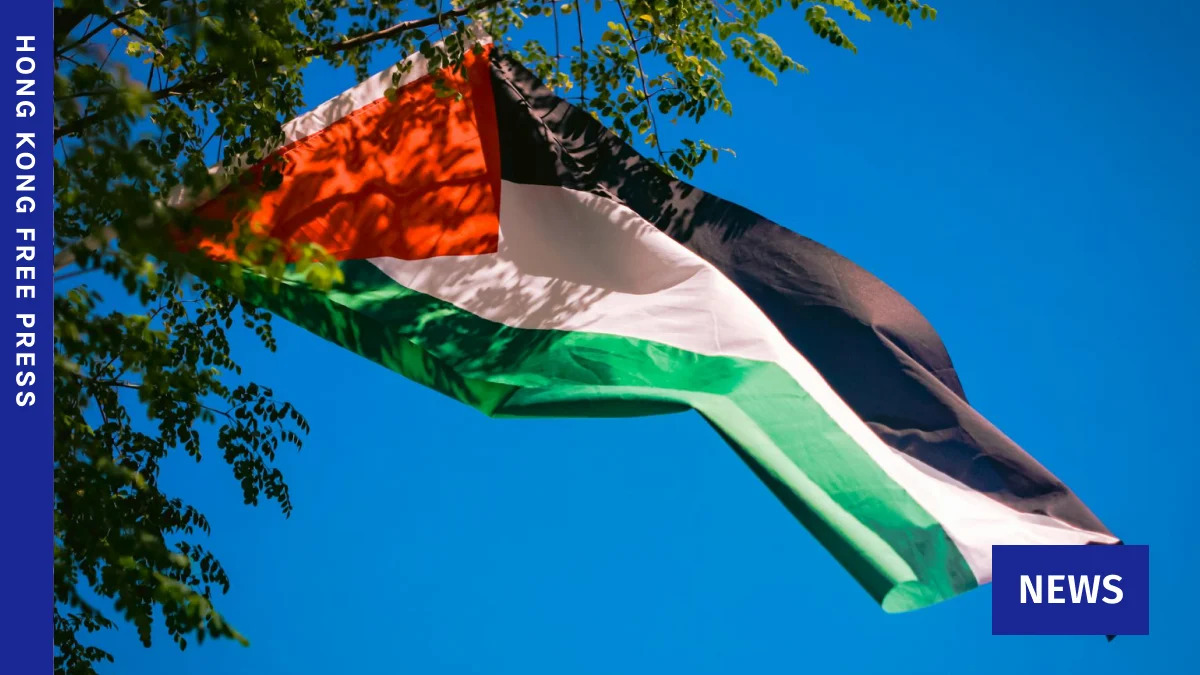
China has officially called for the protection of Palestinian rights, issuing a significant statement on Friday following Israel’s recent approval of a controversial bill that allows for the execution of Palestinians convicted of deadly terror attacks. The move by Beijing adds to a growing chorus of international criticism directed at the Israeli legislation, which has sparked widespread concern over its human rights implications and potential to escalate regional tensions.
The Genesis of the Controversial Israeli Bill
The bill, formally passed by Israel’s parliament, the Knesset, on Monday, introduces a mechanism for military courts to impose the death penalty as a default sentence for Palestinians in the occupied West Bank found guilty of carrying out deadly attacks classified as "terrorism." This legislative action marks a substantial shift in Israel’s judicial landscape, where the death penalty has been historically reserved for only the most extreme circumstances, most notably the execution of Nazi war criminal Adolf Eichmann in 1962. While capital punishment technically exists in Israeli law for certain offenses, its application has been exceedingly rare, making this new bill a stark departure from established practice.

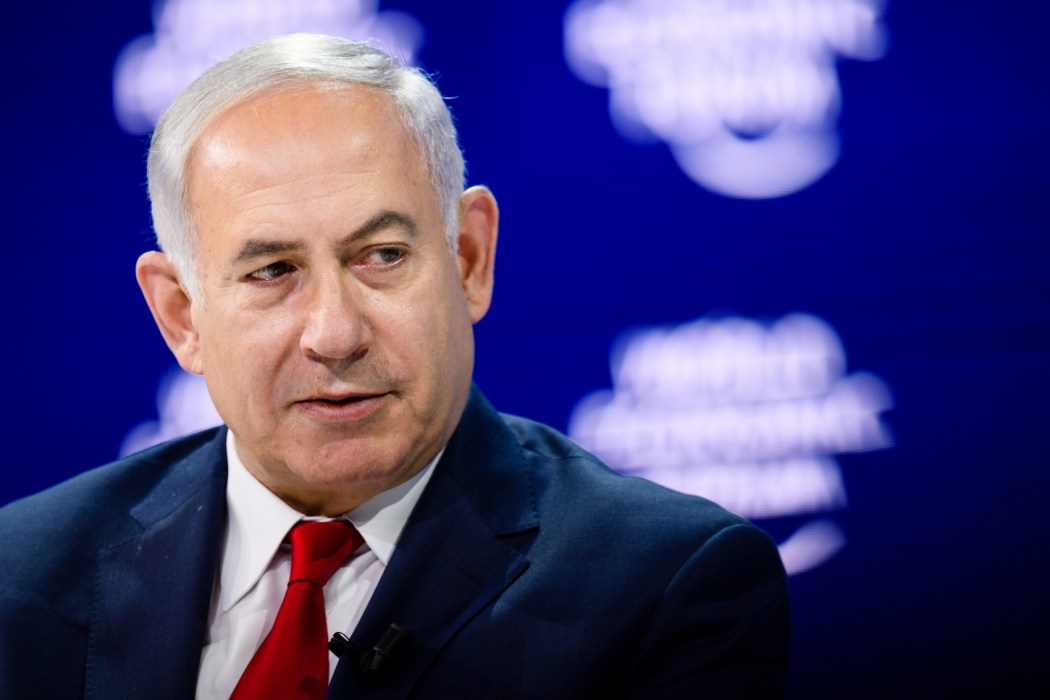
Proponents of the bill, including Israeli Prime Minister Benjamin Netanyahu, have articulated its necessity as a deterrent against terrorism and a measure to ensure justice for victims and their families. They argue that the severity of terror attacks warrants the ultimate penalty. The bill specifically targets individuals convicted by military courts operating in the West Bank, an area under Israeli military occupation since 1967. This geographic and jurisdictional specificity immediately raises questions regarding international law and the rights of individuals living under occupation. The language "default sentence" suggests that while not mandatory, it would be the standard penalty unless specific mitigating circumstances are presented and accepted by the court, effectively lowering the bar for capital punishment in these specific cases.
China’s Diplomatic Intervention
During a regular press briefing on Friday, Chinese Foreign Ministry spokeswoman Mao Ning conveyed Beijing’s position with a measured yet firm tone. "The legal rights of the Palestinian people should be respected and protected," Mao stated, directly addressing the implications of the new Israeli law. She further urged "relevant parties" – an indirect but clear reference to Israel – to "cease actions that escalate tensions and exacerbate conflict." This appeal underscores China’s consistent stance on de-escalation in the Israeli-Palestinian conflict, a region where Beijing has sought to expand its diplomatic influence and promote stability.
Mao Ning elaborated on China’s broader legal philosophy, asserting that "China believes that any law should fulfil legal principles such as equality and justice and should not discriminate on the basis of ethnicity, religion or nationality or political views." This statement highlights concerns that the bill’s specific application to Palestinians in the West Bank, tried by military courts, could be seen as discriminatory and lacking the universal legal principles China champions in its international discourse. While China itself is known for its extensive use of the death penalty, with human rights organizations like Amnesty International estimating thousands of executions annually without public statistics, its criticism of Israel’s bill is framed within the context of international human rights and the specific circumstances of the Israeli-Palestinian conflict. This seemingly contradictory stance is characteristic of China’s foreign policy, which often balances state sovereignty with calls for international justice, particularly when it pertains to perceived injustices against developing nations or occupied peoples.

A Global Wave of Condemnation
The Israeli bill has not only drawn the attention of China but has also ignited a broad spectrum of international criticism, highlighting deep concerns across various geopolitical blocs.
United Nations’ Grave Warning: On Tuesday, just a day after the bill’s parliamentary approval, the United Nations Office of the High Commissioner for Human Rights (OHCHR) issued a stark warning. The UN stated that applying the new bill in the occupied Palestinian territory would constitute a "war crime." This severe legal assessment is rooted in international humanitarian law, particularly the Fourth Geneva Convention, which prohibits an occupying power from making significant changes to the laws of the occupied territory and underscores the rights of protected persons. The UN emphasized that such actions could lead to further violations of human rights and exacerbate the already fragile situation in the region.
Collective Outcry from Arab and Islamic Nations: In a powerful display of regional solidarity, the foreign ministers of eight key Arab and Islamic nations – Saudi Arabia, Egypt, Jordan, Indonesia, Pakistan, Qatar, Turkey, and the United Arab Emirates – released a joint statement on Thursday. Their unified message lambasted the bill as a "dangerous escalation," particularly condemning its "discriminatory application against Palestinian prisoners." The statement warned that such measures "risk further exacerbating tensions and undermining regional stability," reflecting widespread apprehension that the law could ignite further unrest and complicate efforts towards a peaceful resolution. This collective condemnation from diverse nations across the Middle East and Asia underscores the deep resonance of the Palestinian cause within the Islamic world.
European Union’s Disapproval: The European Union, a significant diplomatic and economic partner for both Israel and the Palestinian Authority, also voiced its criticism of the bill. While the EU’s statements often maintain a nuanced diplomatic approach, its disapproval reflects consistent concerns regarding human rights, international law, and the prospects for a two-state solution. The EU has historically opposed the death penalty in all circumstances and views any expansion of its application, especially in occupied territories, as a step backward for human rights and regional peace.
United States’ Stance: A Counterpoint: In contrast to the widespread condemnation, the United States offered a more supportive, albeit carefully worded, response. The US government affirmed its support for "Israel’s sovereign right to determine its own laws." This statement reflects the enduring strategic alliance between the two nations and the US policy of generally not interfering in the domestic legislative processes of its allies. However, this position stands in tension with the US’s broader advocacy for human rights globally and its occasional expressions of concern regarding Israeli actions in the occupied territories. The US stance highlights the complex diplomatic balancing act it performs in the Israeli-Palestinian conflict.
Chronology of Events Leading to China’s Statement:
- Earlier Debates: The concept of expanding the death penalty for terror offenses has been a recurring theme in Israeli political discourse, particularly among right-wing factions, gaining renewed traction following periods of increased violence.
- Monday, [Date of bill passage, inferred from text as recent]: The Israeli Knesset approves the bill, allowing military courts to impose the death penalty on Palestinians convicted of deadly terror attacks in the West Bank. This marks the formal legislative enactment.
- Tuesday, [Day after bill passage]: The United Nations Office of the High Commissioner for Human Rights (OHCHR) issues a statement, cautioning that applying the bill in occupied Palestinian territory could amount to a war crime under international law.
- Thursday, [Two days after bill passage]: Foreign ministers from Saudi Arabia, Egypt, Jordan, Indonesia, Pakistan, Qatar, Turkey, and the United Arab Emirates release a joint statement, strongly condemning the Israeli bill as a "dangerous escalation" and discriminatory.
- Friday, [Three days after bill passage]: China’s Foreign Ministry spokeswoman, Mao Ning, publicly calls for the protection of Palestinian rights and urges "relevant parties" to cease actions that exacerbate tensions, expressing concerns over the discriminatory nature of the law.
Broader Implications and Future Trajectories

The approval of this death penalty bill and the subsequent international reactions carry significant implications for the already volatile Israeli-Palestinian conflict and regional stability.
Escalation of Tensions: The immediate consequence is a likely surge in tensions in the West Bank. Palestinian leaders and civil society groups have consistently condemned such measures, viewing them as punitive and discriminatory. The prospect of capital punishment could further radicalize segments of the Palestinian population and complicate efforts by moderate voices to de-escalate violence.
Challenges to International Law: The UN’s assertion that the bill’s application in occupied territory could constitute a war crime underscores a fundamental challenge to international humanitarian law. If implemented, the law could set a dangerous precedent for occupying powers and further erode the international legal framework designed to protect civilians in conflict zones. It also opens Israel to further scrutiny and potential legal challenges in international forums.
Stalled Peace Process: The Israeli-Palestinian peace process has been moribund for years, with little prospect for revival. Measures such as the death penalty bill are widely seen as further entrenching positions, increasing mistrust, and making future negotiations even more difficult. The bill reinforces the narrative of occupation and exacerbates the feeling of injustice among Palestinians, making a two-state solution seem even more distant.

Israel’s International Standing: While the bill enjoys strong domestic support among certain political factions in Israel, particularly those advocating a hardline approach to security, it risks further isolating the country on the international stage. The widespread condemnation from the UN, EU, and a coalition of Arab and Islamic states indicates a significant diplomatic cost. The US support, while appreciated by Israel, does not fully offset the global criticism.
Legal and Practical Hurdles: Even with parliamentary approval, the implementation of the bill faces potential legal and practical challenges. Israeli courts, including the Supreme Court, could face petitions challenging its constitutionality or its application under international law. There could also be appeals processes for any death sentences handed down by military courts, leading to protracted legal battles. Furthermore, the very act of carrying out an execution under this law would be an unprecedented event in modern Israeli history, with profound moral and diplomatic ramifications.
China’s entry into this diplomatic fray, emphasizing legal principles of equality and non-discrimination, highlights its evolving role as a global player seeking to shape international norms. While navigating its own complex human rights record, Beijing continues to position itself as a proponent of multilateralism and justice on issues perceived to involve the rights of peoples under occupation. The Israeli death penalty bill thus becomes not just a matter of Israeli-Palestinian relations but a touchstone for broader debates on international law, human rights, and the future of conflict resolution in a multipolar world. The global community will undoubtedly continue to watch closely how this controversial legislation unfolds and what impact it will ultimately have on the prospects for peace and justice in the Middle East.


 Dwi Wanna
 Layla Zulfa