Iffa Jayyana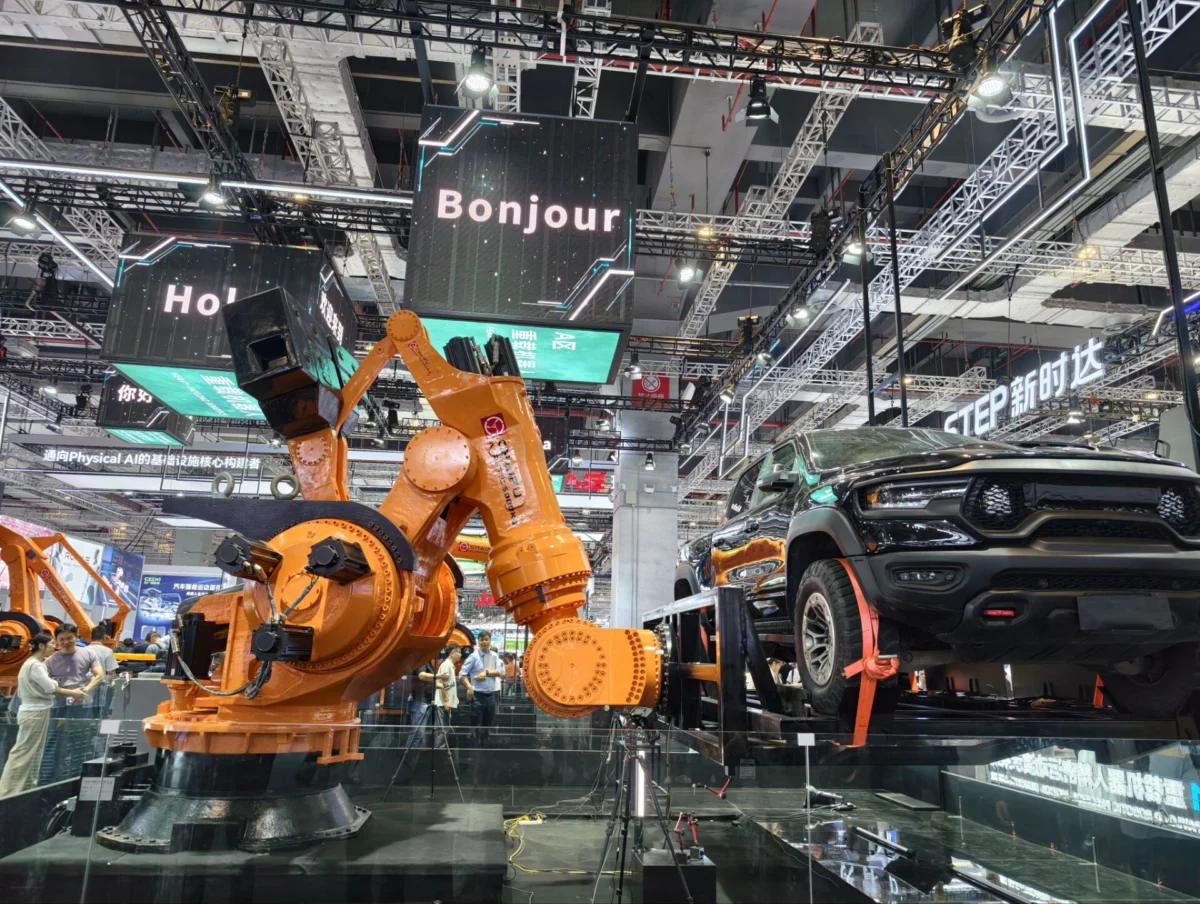
Industrial robots have long been judged by their precision, speed, and repeatability, attributes critical for intricate manufacturing processes. However, as the demands of modern heavy industry escalate, a new frontier in robotics is emerging: the capacity to reliably and consistently handle and process exceptionally large industrial components. This challenge intensifies significantly when the rated payload of a single robot surpasses the five-ton mark, pushing the boundaries of mechanical engineering, motion control, and safety protocols.
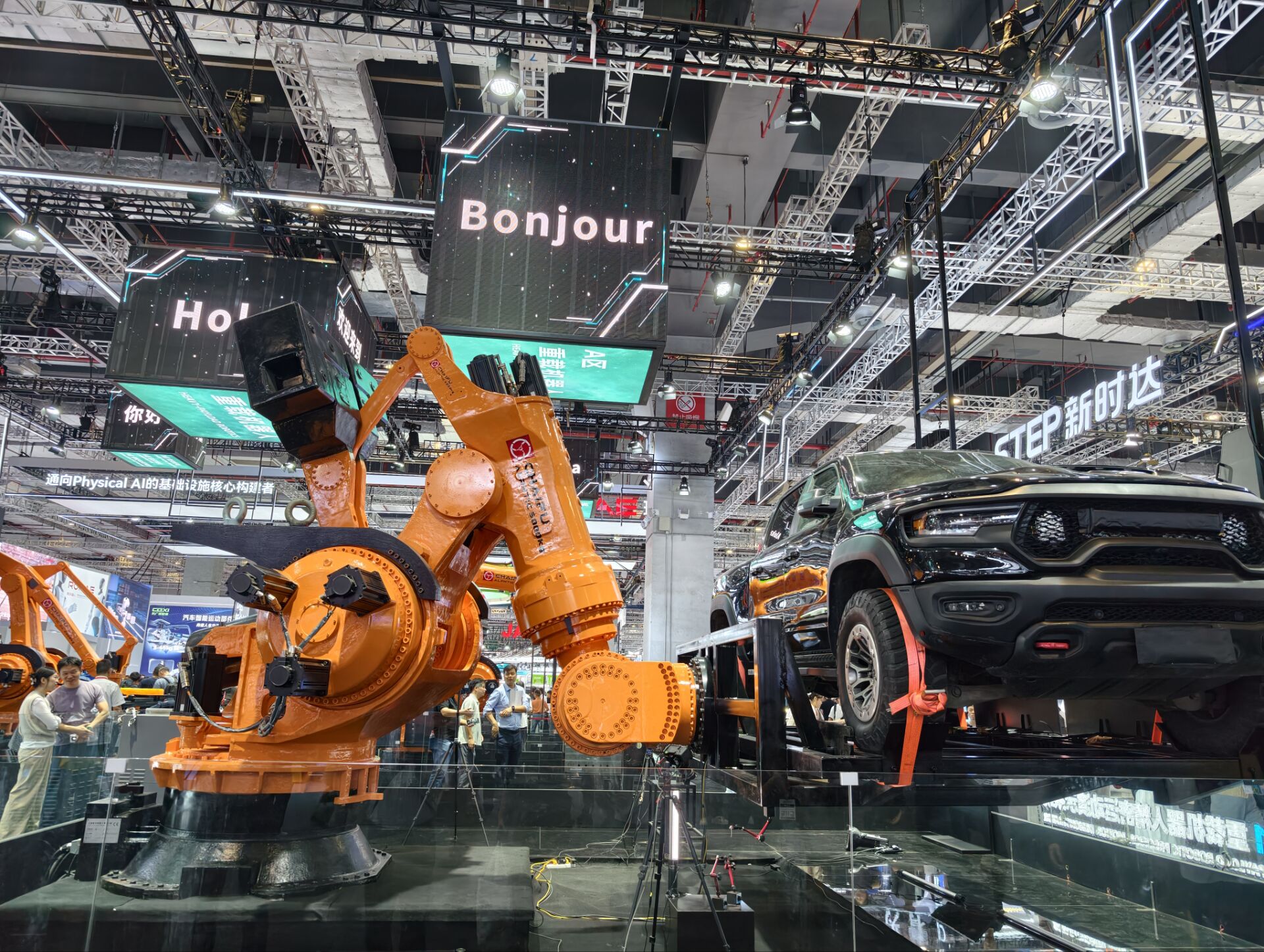
The 26th China International Industry Fair (CIIF), a prominent annual showcase for industrial innovation across Asia, convened in Shanghai on Monday, drawing global attention to the latest advancements in manufacturing technology. Amidst a sprawling array of exhibits, Shanghai Chaifu Robotics made a significant announcement that reverberated through the industry: the unveiling of their CR5000-3700 heavy-duty industrial robot. This groundbreaking machine boasts a rated payload capacity of 5,000.36 kilograms, equivalent to just over five metric tons. This figure represents a monumental leap, decisively surpassing the previous industry record of 2,300 kilograms held by Japanese robotics giant FANUC. To underscore this remarkable achievement, Chaifu Robotics conducted a live demonstration at the fair, showcasing the CR5000-3700 effortlessly lifting an entire vehicle, a visual testament to its raw power and engineering prowess.
While the spectacle of a robot hoisting a car is undeniably eye-catching and serves as a powerful marketing tool, the more profound question for industrial stakeholders and engineers lies in the practical utility of such immense payload capacity. Can this unprecedented level of strength be seamlessly translated into reliable, efficient, and cost-effective industrial applications on a continuous production line, or is it primarily a technical showpiece? The answer to this question will dictate the true impact of this innovation on the global manufacturing landscape.
The Dawn of Ultra-Heavy Robotics: Applications and Challenges
The CR5000-3700, with its impressive 3,700-millimeter reach, has been meticulously engineered to address critical automation gaps in sectors that grapple with extremely heavy components. Its primary target applications include the demanding environments of nuclear power generation, where precision handling of large reactor components is paramount; the rail transit industry, involving the assembly and maintenance of massive train carriages and infrastructure; large-scale equipment manufacturing, encompassing everything from aerospace components to heavy machinery; and the rapidly expanding new energy sector, particularly in the handling of colossal wind turbine blades, generator parts, or large-format battery modules.
In these industries, the traditional methods of moving and positioning large workpieces often involve a complex orchestration of overhead cranes, specialized lifting equipment, custom fixtures, and a significant amount of manual coordination. This approach is not only labor-intensive and time-consuming but also inherently hazardous, exposing human workers to substantial risks. The introduction of heavy-duty robots like the CR5000-3700 holds the promise of automating many of these arduous handling, positioning, and assembly tasks, thereby substantially reducing the need for human operators to perform dangerous operations directly. This shift could lead to significant improvements in workplace safety, operational efficiency, and overall manufacturing throughput.
However, the pursuit of higher payloads introduces a cascading series of engineering challenges that extend far beyond simply increasing motor power. The mechanical structures must withstand unprecedented stresses and vibrations, demanding advanced material science and structural rigidity. The joint torque requirements escalate dramatically, necessitating not only more powerful motors but also exceptionally robust and precise gearboxes. Motion control becomes an even more intricate dance, as maintaining high positioning accuracy and smooth movement under immense loads is exponentially more difficult, with the risk of oscillation and instability becoming a critical concern. Furthermore, safety systems must be exceptionally robust, designed to manage the kinetic energy of a multi-ton load and ensure the protection of personnel and surrounding equipment.
A general manager of mechanical design at Chaifu Robotics emphasized that the five-ton payload was not conceived as a one-time demonstration feat but as a fundamental capability designed for continuous, reliable operation on industrial production lines. This distinction is paramount when evaluating heavy-duty robots for real-world deployment. Beyond the headline-grabbing rated payload, industrial users must consider a comprehensive set of performance metrics. These include long-term operating stability, which ensures consistent performance over thousands of hours; repeatable positioning accuracy, critical for complex assembly tasks; overall productivity, measured by cycle times and throughput; and, crucially, the maintenance costs and ease of serviceability over the robot’s operational lifespan. Without robust performance across all these criteria, even the most powerful robot remains an academic curiosity rather than a practical industrial solution.
Engineering the Behemoth: The Core Components Behind Chaifu’s Innovation
The CR5000-3700’s extraordinary capabilities are rooted in several proprietary design elements and advanced engineering solutions developed by Chaifu Robotics. Key among these are a self-developed large RV (Rotary Vector) reducer, a sophisticated three-motor drive and follow-up mechanism for a single axis, and a robust cast-steel body. These technologies represent a concerted effort to meet the extreme demands of heavy-duty operations in terms of power transmission, drive performance, and structural rigidity.
RV reducers are, without exaggeration, the linchpin of modern industrial robot joints. These precision gearboxes are responsible for reducing rotational speed while simultaneously transmitting immense torque with minimal backlash, directly influencing a robot’s motion accuracy, its ultimate load capacity, and its long-term operational performance. The development and manufacturing of large-scale RV reducers capable of handling multi-ton loads while maintaining micron-level precision is an extremely complex undertaking. It requires considerable expertise in advanced metallurgy for durable gearing, intricate structural design to manage stress distribution, and ultra-high-precision machining techniques to ensure the exact tolerances necessary for smooth, accurate, and backlash-free operation. Historically, this segment of the robotics supply chain has been dominated by a handful of global specialists, such as Nabtesco and Sumitomo, making Chaifu’s self-developed solution a significant achievement for a Chinese manufacturer. Scaling these components for heavy-duty applications while preserving performance is a major engineering hurdle.

The implementation of a three-motor drive and follow-up mechanism for a single axis is another critical innovation. In conventional robots, a single motor typically drives each joint. For the CR5000-3700, this multi-motor approach on a single axis serves several vital functions. It allows for the distribution of immense torque requirements across multiple power sources, reducing the load on any single motor and enhancing overall system reliability and longevity. It also provides a degree of redundancy, improving fault tolerance, and can contribute to finer motion control and greater rigidity under dynamic loads. This sophisticated drive system is essential for precisely controlling the movement of five tons while ensuring stability and accuracy.
Furthermore, the CR5000-3700’s cast-steel body is a deliberate design choice that prioritizes structural integrity and rigidity. Unlike smaller robots that might utilize lighter aluminum alloys, cast steel provides exceptional strength and inherent vibration damping properties, which are crucial when manipulating heavy masses. This robust construction forms the foundation upon which the robot’s power and precision are built, ensuring that the mechanical structure itself can withstand the forces generated during heavy-duty operations without excessive deflection or fatigue.
A notable aspect of Chaifu Robotics’ strategy is its commitment to independently developing and manufacturing its three core components: RV reducers, servo motors, and controllers. This vertical integration offers several potential advantages. By controlling the design and production of these critical elements in-house, Chaifu gains greater command over product design, enabling tighter system integration and optimized performance. It also provides more flexibility for future upgrades and greater resilience in supply chain management, reducing reliance on external, potentially foreign, suppliers. This strategy aligns with broader national efforts in China to achieve technological self-sufficiency in key industrial sectors.
However, in-house development and manufacturing, while strategically important, do not automatically confer an overall technological advantage. The true test lies in the real-world performance of these components, their ability to be mass-produced efficiently and consistently, their long-term reliability in demanding industrial environments, and their total cost of ownership. For Chinese robotics manufacturers like Chaifu, the enduring challenge remains transforming impressive technical capabilities into reliable, cost-competitive products that can compete effectively with established global leaders on a grand scale.
The Brains of the Operation: Advanced Control Systems for Comprehensive Automation
Beyond its mechanical strength and innovative core components, Chaifu Robotics also showcased its independently developed robot control system, a critical element that dictates the robot’s intelligence and operational versatility. The company’s product portfolio, which ranges from compact 7-kilogram desktop robots to heavy-duty industrial robots capable of handling payloads up to 6,000 kilograms (a capacity that exceeds the CR5000-3700’s current rating, indicating future expansion), is unified under this proprietary control platform.

This control system supports a suite of advanced features essential for modern industrial automation. It incorporates EtherCAT real-time communication, a high-performance, deterministic Ethernet-based fieldbus system crucial for synchronized multi-axis control and high-speed data exchange between the robot and other factory equipment. This ensures that the robot can respond with microsecond precision, vital for complex and safety-critical operations. The system also integrates PLC (Programmable Logic Controller) logic control, allowing for seamless communication and coordination with broader factory automation systems, production lines, and safety interlocking mechanisms.
Furthermore, for specialized applications, the control system offers advanced welding functionalities such as laser seam tracking, arc tracking, and multi-layer, multi-pass welding capabilities. These features are indispensable in heavy fabrication industries like shipbuilding, construction, and pipeline manufacturing, where large, complex welds are common. Automated seam tracking ensures consistent weld quality by compensating for part variations, while multi-pass welding capabilities allow the robot to execute intricate welding sequences that traditionally required highly skilled human welders.
This comprehensive approach to control systems reflects a broader and increasingly important trend in industrial robotics. Competition is no longer solely focused on individual machine performance metrics like payload or speed. Instead, the battleground has expanded to encompass the intelligence and flexibility of control systems and the robot’s ability to integrate seamlessly into complex manufacturing processes. Once deployed on a production line, robots must operate in precise coordination with a multitude of peripheral devices, including sensors, vision systems, manufacturing equipment (e.g., CNC machines, presses), and overarching safety systems, all working in harmony to perform specific tasks.
The development of a relatively unified control platform across such a diverse range of payload classes – from 7 kg to 6,000 kg – offers significant advantages. It can potentially reduce duplicated development and maintenance work, streamline programming efforts, simplify operator training, and facilitate easier scalability of automation solutions. However, the actual benefits ultimately depend on the compatibility and interoperability across different robot models, the efficiency of commissioning and programming new tasks, and the ease with which the system can be integrated with existing and future production lines. A powerful robot is only as effective as the intelligence that guides it.
From Technical Milestone to Commercial Imperative: The Path Ahead
As Chinese industrial robot manufacturers continue their rapid ascent, pushing toward higher payloads and more complex operating conditions, the heavy manufacturing sector is emerging as a crucial battleground for innovation and market penetration. The CR5000-3700 from Shanghai Chaifu Robotics offers a compelling example of how domestic manufacturers are approaching the challenges and opportunities presented by heavy-duty robotics. However, its practical value and long-term impact cannot be judged solely by the impressive payload records it has shattered.

For industrial end-users, the key considerations transcend mere specifications. The paramount questions revolve around whether the equipment can operate reliably and consistently over extended periods, meeting stringent process accuracy requirements under continuous heavy loads. They also assess the robot’s ability to genuinely reduce human exposure to hazardous manual work, thereby improving safety and ergonomic conditions. Ultimately, the decision to invest in such advanced machinery hinges on its ability to deliver an acceptable return on investment (ROI), factoring in upfront costs, operational efficiency gains, maintenance requirements, and the potential for increased production quality and output.
The five-ton payload achieved by Chaifu Robotics is undoubtedly a notable technical specification and a significant milestone in the evolution of industrial robotics. Yet, it represents only the starting point of a more extensive competition. The true measure of this robot’s success, and indeed the broader competitiveness of Chinese industrial robots in the advanced manufacturing landscape, will be determined by its sustained performance in real-world production environments, the rate and breadth of its customer adoption, and the manufacturer’s ability to scale its deployment across diverse heavy industries. The journey from a groundbreaking technical capability to widespread practical use is often long and arduous, marked by rigorous validation, continuous refinement, and relentless market execution. Chaifu Robotics has fired a powerful shot, and the industry will now watch closely to see how this new era of ultra-heavy robotics unfolds.


 Lina Irawan
 Ammar Sabilarrohman