Lina Hope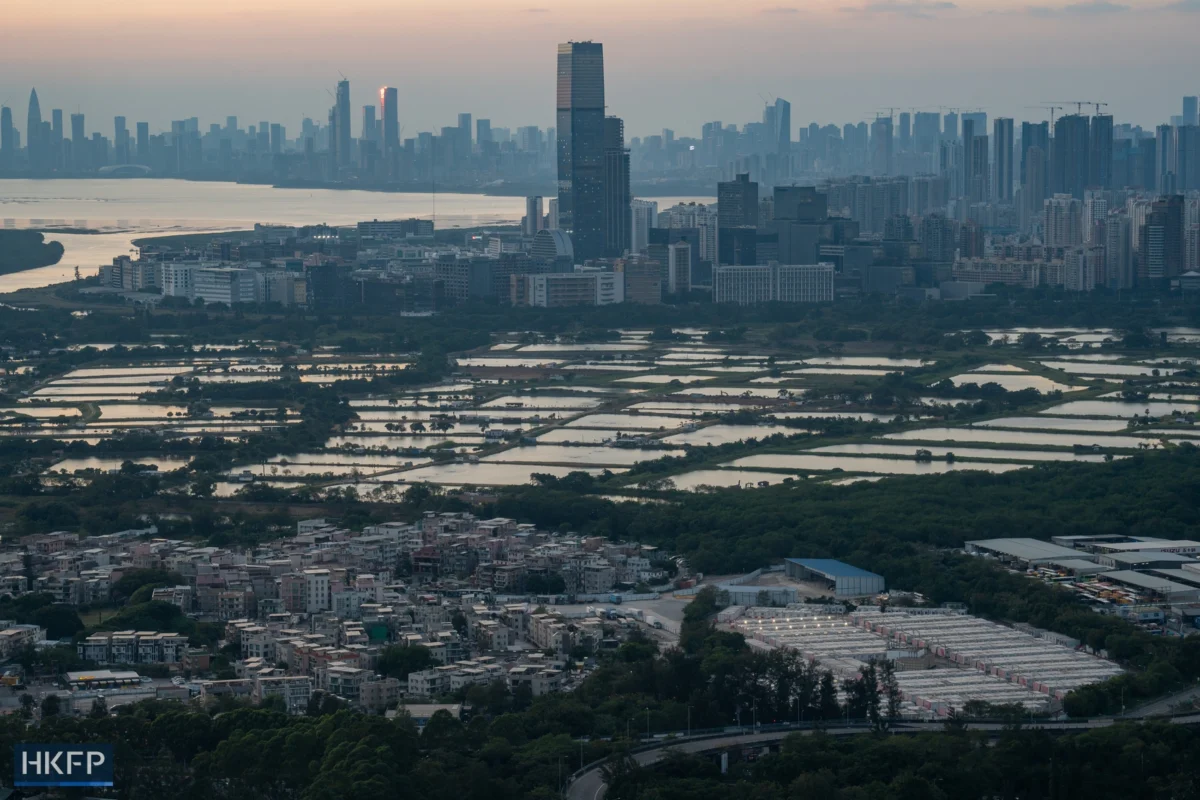
Greenpeace Hong Kong has issued a stern critique of the proposed Northern Metropolis development project, arguing that its current blueprint critically lacks robust protections for the ecologically sensitive wetlands situated along the city’s border with mainland China. The environmental watchdog’s concerns were amplified by the recent unveiling of Hong Kong’s inaugural Five-Year Plan (FYP) and Chief Executive John Lee’s accompanying Policy Address, which detailed ambitious plans for the sprawling tech hub.
The Northern Metropolis, a project conceived in 2021, envisions the transformation of approximately 30,000 hectares of land near the rural northern frontier into a major economic and residential zone. Touted as a catalyst for job creation, housing solutions, and deeper integration with neighbouring Shenzhen, the HK$224 billion development has also drawn significant criticism regarding its immense scale, potential impact on crucial wetland habitats, and the displacement of existing homes and farmland.

Greenpeace’s primary contention lies in the perceived inadequacy of the ecological protection goals outlined in the FYP, which they argue fall significantly short of China’s own national standards for preserving vital wetland ecosystems. The organization pointed to Shenzhen’s latest five-year plan, which commits to protecting 50 percent of its wetlands by 2030, a figure that starkly contrasts with Hong Kong’s more modest targets. Furthermore, China’s implementation of a dedicated wetland protection law in 2022 underscores a growing national commitment to ecological preservation that Greenpeace believes Hong Kong’s plan fails to mirror.
A Tale of Two Plans: Environmental Targets Under Scrutiny
Chief Executive John Lee, in his Policy Address on Wednesday, articulated Hong Kong’s strategic direction for the next five years, emphasizing alignment with China’s national development trajectory. Regarding environmental conservation, Lee stated the government’s commitment to maintaining 40 percent of the city’s land area and 20 percent of its marine territory as protected zones by 2030. While these figures represent a stated ambition for conservation, Greenpeace argues they are insufficient, particularly concerning the specific vulnerabilities of the Northern Metropolis’s wetland areas.

The environmental group’s statement highlighted that while both the FYP and the Policy Address dedicated substantial attention to accelerating the Northern Metropolis project, the environmental conservation policies for the region were conspicuously underdeveloped. "Greenpeace urges the Hong Kong government to catch up with national standards in establishing binding wetland protection targets," the NGO stated in a Chinese-language release.
This criticism comes on the heels of a previous Greenpeace report in July, which documented the damage inflicted upon protected wetlands within the Northern Metropolis by "industrial-scale" shrimp farms. The report underscored the existing ecological pressures on these sensitive areas, suggesting that development plans must incorporate stronger safeguards to prevent further degradation.
The Northern Metropolis: Ambition Meets Environmental Concerns

The Northern Metropolis project represents one of Hong Kong’s most significant urban development initiatives in decades. The plan aims to create a vibrant, high-tech hub that will not only expand the city’s economic base but also address its pressing housing shortage. Proponents envision a future where the Northern Metropolis acts as a bridge between Hong Kong and mainland China, fostering innovation and economic growth through enhanced connectivity and integrated development.
However, the scale of the undertaking, with an estimated cost of HK$224 billion, has raised eyebrows among various stakeholders. Critics have pointed to the potential environmental consequences, particularly the impact on the ecologically rich wetlands that serve as critical habitats for migratory birds and other wildlife. The Ramsar Convention, an international treaty for the conservation and sustainable use of wetlands, recognizes the global importance of such ecosystems. Hong Kong’s proximity to the Mai Po Marshes and Inner Deep Bay Ramsar site, a globally significant wetland, amplifies the need for stringent protection measures in its northern territories.
The lack of specific, legally binding targets for wetland protection within the Northern Metropolis framework is a major point of contention for Greenpeace. They argue that the government’s current approach risks jeopardizing biodiversity and ecological services that these wetlands provide, including flood control and water purification.
-Copy-edited-1050x700.jpg)
Divergent Views on Environmental Progress
While Greenpeace Hong Kong has voiced strong reservations, another environmental organization, Friends of the Earth Hong Kong, offered a more positive reception to the policy documents. They specifically applauded the government’s intention to leverage the Hong Kong Exchanges and Clearing (HKEX) to advance cross-boundary carbon trading.
Anthony Cheung, vice-chair of Friends of the Earth Hong Kong, described this initiative as a significant step forward. "Robust and credible carbon accounting and carbon pricing can support emissions reduction and technological innovation, accelerate decarbonisation investment, reinforce the integrity of the carbon market, and strengthen Hong Kong’s international position and leadership in this field," Cheung stated in a release. This market-based mechanism, which allows for the trading of greenhouse gas emission quotas, is seen by some as a vital tool in achieving broader climate goals.

However, Friends of the Earth also echoed Greenpeace’s concern about the slow pace of transitioning to green energy, noting the absence of a clear timeline for this crucial shift within the presented policy blueprints.
Broader Implications and Future Outlook
The debate surrounding the Northern Metropolis development highlights a fundamental tension between economic development imperatives and environmental stewardship. As Hong Kong seeks to solidify its position as a global financial center and integrate further with mainland China, the challenge lies in balancing ambitious growth plans with the imperative to protect its natural heritage.

The Greenpeace critique serves as a crucial reminder of the ecological value of the Northern Metropolis’s wetlands. These areas are not merely undeveloped land but vital ecosystems that contribute to the region’s biodiversity and resilience. The organization’s call for alignment with national standards suggests a need for a more comprehensive and ambitious approach to conservation, one that prioritizes long-term ecological sustainability over short-term development gains.
The success of the Northern Metropolis project, therefore, may hinge not only on its economic viability and infrastructural prowess but also on its ability to demonstrate a genuine commitment to environmental protection. The coming years will likely see continued scrutiny from environmental groups and the public, demanding greater transparency and more robust measures to safeguard Hong Kong’s precious natural resources. The government’s response to these concerns, and its willingness to adapt its plans to incorporate stronger environmental safeguards, will be critical in shaping the long-term legacy of this transformative development. The comparison with mainland China’s escalating environmental commitments provides a clear benchmark against which Hong Kong’s own efforts will be measured.

 Asep Darmawan
 Neng Nana