Muslim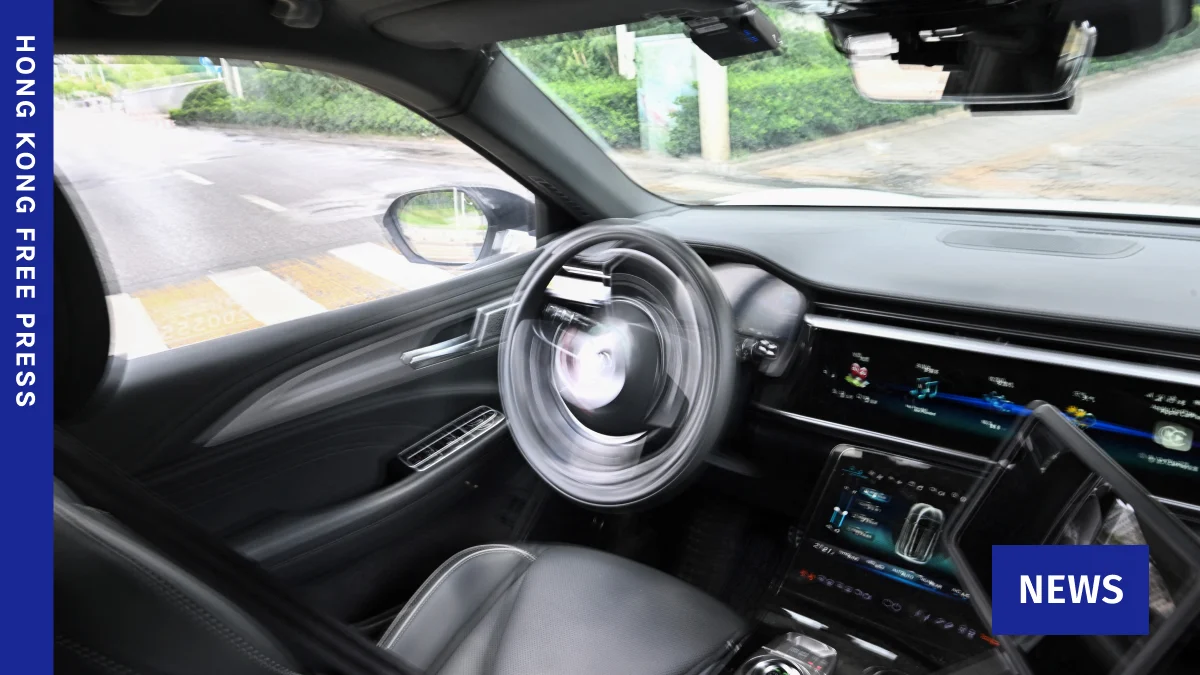
China has formally unveiled a new set of stringent safety regulations for the rapidly expanding sector of autonomous vehicles (AVs) operating on its roads, a pivotal move that includes the mandatory integration of a deactivation override mechanism. The announcement, made by the government on Tuesday, signals a proactive approach to ensuring public safety amidst the rapid technological advancements in driverless technology. These comprehensive standards are slated to take effect on July 1, 2027, and are poised to reshape the development and deployment landscape for both semi-autonomous systems requiring human oversight and fully independently operating robotaxis.
The new regulatory framework, spearheaded by China’s Ministry of Industry and Information Technology (MIIT), addresses a critical need for standardized safety protocols as autonomous driving technology moves from experimental phases to broader public integration. Manufacturers will be held accountable for guaranteeing that their autonomous systems achieve a safety level equivalent to, or surpassing, that of human drivers. This benchmark sets a high bar, pushing companies to invest significantly in robust testing, validation, and continuous improvement of their AI-driven driving systems. Furthermore, a key provision mandates that buyers must be explicitly informed of any inherent limitations within these autonomous systems, fostering transparency and managing consumer expectations.
China’s Ambitious Drive in Autonomous Vehicle Technology
China has long positioned itself as a global leader in artificial intelligence and advanced manufacturing, with autonomous vehicles being a cornerstone of its "Made in China 2025" strategic plan. The nation views AV technology not merely as a convenience but as a crucial component for future urban planning, logistics efficiency, and enhancing public transportation networks. Major domestic tech giants and automakers, including Baidu (with its Apollo platform), Pony.ai, WeRide, and Didi, have made substantial investments, establishing extensive testing and operational zones across various cities. Wuhan, Beijing, Shenzhen, and Guangzhou are just a few examples where robotaxis are already a familiar sight, ferrying passengers in designated areas, often with safety drivers initially, moving towards fully driverless operations.

The economic incentives are immense. Projections indicate that China’s autonomous vehicle market could reach hundreds of billions of dollars within the next decade, driven by consumer demand, logistical applications, and smart city initiatives. This rapid expansion, however, brings with it inherent challenges, particularly concerning public safety and regulatory clarity. Globally, the introduction of autonomous vehicles has been complicated by a patchwork of regulations, varying levels of public trust, and the complex technical hurdles involved in replicating human driving intuition and reaction times across an infinite array of real-world scenarios.
Key Provisions of the New Regulatory Framework
The MIIT’s new rules are meticulously designed to cover a broad spectrum of autonomous driving scenarios and vehicle types. They categorize AVs into those that require a human backup driver (typically SAE Level 3 and some Level 4 systems) and those that operate independently (Level 4 and Level 5 robotaxis, such as those produced by Waymo in the US and various Chinese counterparts).
-
Mandatory Deactivation Override: This is arguably the most critical provision. It ensures that in any situation, a human occupant or a remote operator retains the ability to immediately disengage the autonomous driving system and take manual control. This feature is crucial for mitigating risks during system malfunctions, unforeseen road conditions, or emergency situations where human judgment might still be superior. It serves as a vital safety net, bolstering public confidence in the technology.
-
Safety Parity with Human Drivers: Manufacturers must demonstrate through rigorous testing and data analysis that their AVs can perform safely under a wide range of conditions, matching or exceeding the safety record of an average human driver. This involves sophisticated simulation environments, extensive real-world road testing, and continuous data collection to identify and address potential vulnerabilities.

-
Transparency in System Limitations: To prevent misuse or over-reliance, AV manufacturers are now required to clearly communicate the operational limitations of their autonomous systems to buyers. This includes scenarios where the system may not perform optimally (e.g., severe weather, unmarked roads, complex construction zones) and the responsibilities of the human driver when operating a vehicle with assisted driving features.
-
Standardized Human-Machine Interactions (HMI): The regulations aim to standardize how humans interact with autonomous systems, encompassing everything from the user interface and alerts to the procedures for activating and deactivating automated driving modes. The goal is to make these interactions intuitive and foolproof, thereby "preventing risks of misuse or abuse" by ensuring drivers clearly understand the system’s status and capabilities.
-
Safe Activation and Deactivation Procedures: The rules specify that autonomous vehicles must incorporate safe and clear procedures for engaging and disengaging automated driving. This is vital to prevent accidental activation or abrupt disengagement that could lead to dangerous situations.
-
Driver Readiness Monitoring for Human Backup Systems: For vehicles that still require a human backup driver, the autonomous system must continuously monitor the driver’s readiness to take over control. This can involve eye-tracking, steering wheel input monitoring, and other biometric or behavioral sensors to ensure the human driver is attentive and prepared to intervene if the system issues a handover request. This directly addresses the "mode confusion" problem, where drivers in semi-autonomous vehicles become disengaged and are slow to react when intervention is needed.
A Deeper Look at the "Mandatory Deactivation Override"

The inclusion of a mandatory deactivation override underscores a fundamental principle in safety engineering: human oversight remains paramount, especially in emerging technologies. This feature provides a crucial layer of redundancy and control, addressing concerns about potential software glitches, sensor failures, or unforeseen circumstances that even the most advanced AI might struggle to interpret correctly. For instance, in a scenario where an autonomous vehicle encounters an anomalous situation not covered by its programming, the ability for a human to immediately take control can avert a potential accident. This regulation aligns with broader ethical considerations in AI development, ensuring that ultimate control and accountability can be traced back to human decision-making.
Timeline of Regulatory Development and Catalysts
The journey towards these stringent regulations has been influenced by both international collaboration and domestic incidents.
- June [Year]: A significant precursor to China’s new rules was the adoption by a United Nations agency of the first global regulations for fully autonomous vehicles. China actively backed these international standards, demonstrating its commitment to a globally harmonized approach to AV safety. This UN framework provides a baseline, and China’s new rules build upon it, tailoring specifics to its unique road conditions and technological landscape.
- 2025: The Xiaomi Crash as a Catalyst: Beijing had previously issued warnings to leading automakers about the impending tightening of safety rules, a sentiment that gained considerable urgency after a fatal crash in 2025 involving a Xiaomi car operating in assisted driving mode. While details of the crash are not fully public, such incidents inevitably highlight the critical distinction between "assisted driving" (like advanced cruise control or lane-keeping) and fully "autonomous driving." The former requires constant human supervision, while the latter aims for self-sufficiency. The Xiaomi incident likely served as a stark reminder of the potential for misuse, over-reliance, or system failures in complex, real-world conditions, thus accelerating the regulatory push.
- July 1, 2027: Implementation Date: The chosen effective date provides manufacturers with a substantial lead time to adapt their designs, software, and testing protocols to meet the new requirements. This phased implementation acknowledges the complexity of re-engineering sophisticated systems while ensuring a clear deadline for compliance.
The Global Regulatory Landscape and China’s Role
The global autonomous vehicle industry has been grappling with diverse regulatory approaches. The United States, for instance, has a more fragmented regulatory environment, with federal guidelines often clashing or overlapping with state-specific laws, leading to a patchwork of rules for testing and deployment. Europe is also developing its own comprehensive framework, often focusing on data privacy, cybersecurity, and liability.

China’s decisive move to establish a clear, national standard, particularly one that emphasizes human override and transparency, positions it as a significant player in shaping global AV governance. By aligning with and then building upon UN regulations, China not only sets a high standard domestically but also contributes to the potential for greater international harmonization, which is crucial for global automakers and technology providers. This proactive stance could encourage other nations to adopt similar rigorous standards, fostering a safer global ecosystem for autonomous vehicles.
Industry Reactions and Challenges
While the implementation of strict regulations might initially be perceived as a hurdle for manufacturers, many industry players often welcome clear guidelines. Ambiguity in regulation can stifle innovation and investment due to uncertainty regarding future compliance costs and market access. Inferred reactions from major Chinese AV developers like Baidu and Pony.ai would likely be a mix of cautious optimism and a renewed focus on R&D. While these rules will undoubtedly increase the cost and complexity of developing and deploying AVs, they also provide a clear roadmap for achieving public trust and widespread adoption.
The challenges for manufacturers are substantial. Meeting the "safety parity with human drivers" standard requires massive data collection, advanced AI algorithms capable of handling edge cases, and robust fail-safe mechanisms. The development of sophisticated driver monitoring systems for human backup scenarios also demands significant engineering effort. These investments will likely consolidate the market, favoring well-resourced companies capable of meeting the stringent new benchmarks. Smaller startups might find it more challenging to compete without substantial backing.
Implications for Manufacturers and Consumers

For manufacturers, the implications are profound. Product development cycles will need to incorporate these safety standards from the outset, moving beyond simply demonstrating technical capability to proving absolute reliability. Companies that prioritize safety and transparency in their designs will gain a competitive edge. It also means a shift in focus from merely achieving autonomy to ensuring responsible autonomy.
For consumers, the new rules are overwhelmingly positive. The mandatory deactivation override provides a crucial sense of security and control. Clear information on system limitations will help users understand what their AVs can and cannot do, preventing dangerous over-reliance. Ultimately, increased safety and transparency are expected to boost public confidence, which is a critical factor for the widespread adoption of autonomous vehicles. If consumers trust the technology, they are more likely to embrace it, accelerating the societal benefits that AVs promise, such as reduced traffic congestion, lower accident rates, and increased accessibility.
The Path Forward: Balancing Innovation and Safety
China’s new safety regulations represent a critical step in establishing a robust and trustworthy ecosystem for autonomous vehicles. By mandating a deactivation override, emphasizing safety parity with human drivers, and enhancing transparency, the government is striking a delicate balance between fostering technological innovation and safeguarding public welfare. The 2027 implementation date provides a clear runway for the industry to adapt and evolve. As autonomous technology continues its rapid progression, ongoing regulatory adjustments will undoubtedly be necessary. However, this foundational framework signals China’s commitment to ensuring that the future of mobility is not only intelligent and efficient but, above all, safe for everyone on its roads. The move could also serve as a blueprint for other nations grappling with how to effectively regulate this transformative technology, solidifying China’s role as a leader in both AV development and governance.


 Nana Wu
 Iffa Jayyana