Sagoh
Sagoh
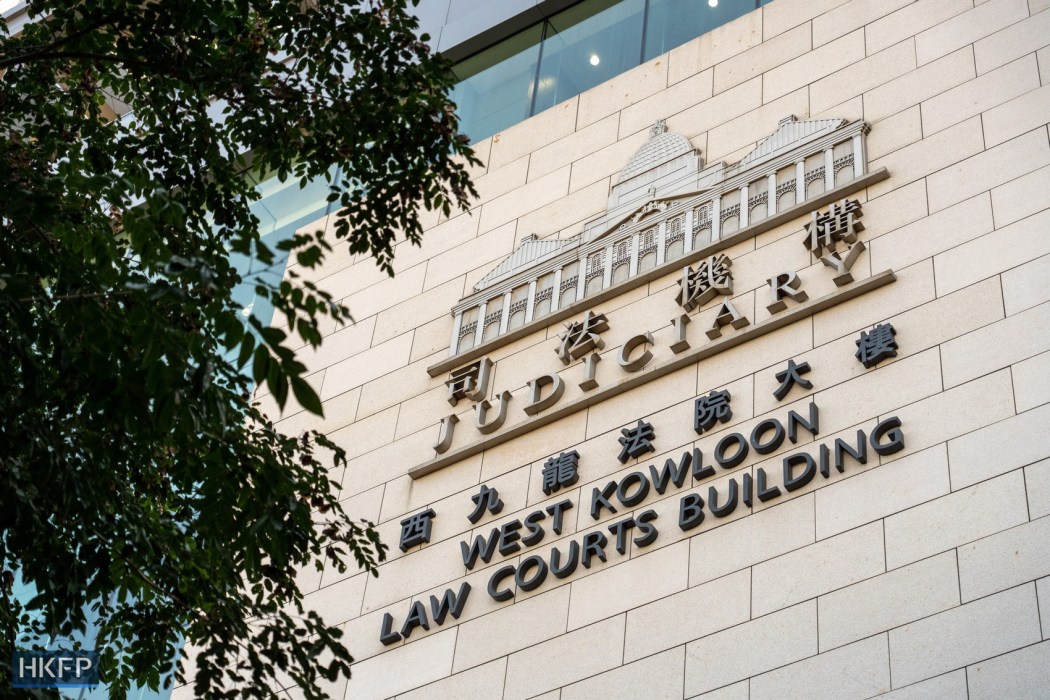
A 19-year-old man, Leung Kai-lok, has been handed an 18-month probation order for writing "seditious words" in a Tsim Sha Tsui public restroom, a decision that marks a significant departure from the typical custodial sentences handed down for national security offenses in Hong Kong. The rare non-custodial outcome was delivered at the West Kowloon Magistrates’ Courts on Wednesday morning, following Leung’s conviction last month for sedition.
The case centers on graffiti found in a male bathroom at China Hong Kong City, a commercial complex in the bustling Tsim Sha Tsui district. According to the prosecution, Leung scrawled the offending messages on the cubicle wall on three separate occasions between July 17 and July 21 of the previous year. He faced a single count of sedition and three counts of criminal damage, to which he pleaded guilty.

Among the messages deemed seditious was a phrase in Chinese that translates to "Bomb Lee Ka-chiu to death," a direct reference to the current Chief Executive of Hong Kong, John Lee. Another inscription utilized abbreviated Chinese characters representing the now-proscribed protest slogan, "Liberate Hong Kong, the Revolution of Our Times." This particular phrase has been consistently ruled by the courts to carry seditious intent, a stance that has drawn considerable attention and debate regarding freedom of expression in the city.
Presiding Magistrate Victor So, in delivering the sentence, acknowledged that the impact of Leung’s actions was limited due to the clandestine nature of the location. He contrasted this with messages posted online or in more public spaces, suggesting that the confined environment of a bathroom mitigated the potential reach and influence of the seditious content. This consideration appears to have been a pivotal factor in the court’s decision to opt for a non-custodial sentence.
Magistrate So also noted that there was no evidence to suggest Leung possessed "deep-rooted anti-social traits." The four weeks Leung spent in remand prior to his sentencing were deemed sufficient for him to comprehend the gravity of his actions and the legal repercussions of his transgressions. In addition to the probation order, Leung was also mandated to pay HK$1,500 in damages to China Hong Kong City for the defacement of its property.
Background of Sedition Laws in Hong Kong
The offense of sedition falls under the Safeguarding National Security Ordinance, colloquially known as Article 23. This homegrown legislation, enacted in March 2024, complements the Beijing-imposed national security law of 2020. The Safeguarding National Security Ordinance covers a range of offenses including treason, insurrection, sabotage, external interference, sedition, theft of state secrets, and espionage. The maximum penalty for sedition under this ordinance is seven years imprisonment, escalating to ten years if the offender is found to have colluded with an "external force."
Historically, national security-related offenses in Hong Kong have predominantly resulted in custodial sentences. Non-custodial dispositions for such serious charges are exceptionally rare, making Leung’s case a notable outlier. Reports suggest this may be the first instance of a non-custodial sentence being handed down under the newly enacted Article 23 legislation, underscoring the unusual nature of the outcome.
Chronology of the Case
The events leading to Leung’s sentencing unfolded over several months:

- July 17-21, 2023: Leung Kai-lok allegedly scrawls seditious messages and engages in criminal damage within a public restroom at China Hong Kong City.
- July 21, 2023: A police officer, acting on suspicion, enters the 11th-floor bathroom where Leung reportedly works. The officer hears sounds consistent with a marker being used and subsequently discovers the graffiti. Leung is arrested by a colleague shortly thereafter.
- April 2024 (specific date not provided in source): Leung’s trial takes place. The defense presents psychiatric evidence suggesting Leung has autism and a dissociative disorder, arguing these conditions influenced his actions. A prosecution psychiatrist disputes these diagnoses.
- August 12, 2024: Leung Kai-lok receives an 18-month probation order and is ordered to pay damages, marking the conclusion of his sedition and criminal damage case.
Defense Arguments and Psychiatric Evidence
During the trial, Leung’s legal team presented a defense that focused on his alleged mental health conditions. They argued that Leung suffers from autism and a dissociative disorder, which they contended played a significant role in his actions. Dr. Wong Chung-kwong, a psychiatrist who testified for the defense, stated that he had conducted four meetings with Leung and observed "extremely clear" symptoms of autism.
Dr. Wong elaborated on Leung’s alleged mental state, describing him as experiencing "obsessive ruminations." The psychiatrist suggested that Leung was haunted by recurring disturbing images and thoughts, including past experiences of being bullied, the widespread protests and unrest of 2019, and a disturbing encounter with a mentally disturbed individual. Furthermore, Dr. Wong indicated that Leung was under considerable pressure at the time of the offense due to poor academic performance in his examinations.
A key piece of evidence presented by the defense to support the claim of a dissociative episode was the inscription of "Carrie Lam, step down." As Carrie Lam had already stepped down as Chief Executive by the time of the alleged offense, the defense argued that this indicated Leung was not acting with current political awareness but was rather experiencing a dissociative state, reacting to past events.

However, the prosecution countered this by suggesting that Leung might have written about Carrie Lam simply because he was unaware of who the current Chief Executive was. Dr. Wong, in his testimony, dismissed this possibility as "very low."
Conversely, a psychiatric expert called by the prosecution testified that, in their professional opinion, Leung did not exhibit symptoms of autism or any dissociative disorder. This divergence in expert opinion likely contributed to the complexity of the case and the magistrate’s considerations during sentencing.
Broader Context and Implications
The Safeguarding National Security Ordinance, enacted swiftly and unanimously by Hong Kong’s legislature, has been a subject of intense international scrutiny. Critics, including human rights NGOs, Western governments, and the United Nations, have expressed concerns over its broad and potentially vague language, warning of a "regressive" impact on fundamental freedoms. Authorities, however, have justified the law by citing a constitutional duty to enhance national security, particularly in light of perceived foreign interference and the unrest of 2019.
The ordinance grants authorities expanded powers, including pre-charge detention for up to 16 days and potential restrictions on a suspect’s access to legal counsel. The penalties for offenses under the law are severe, with potential sentences up to life imprisonment for certain crimes. The rapid enactment of Article 23 followed its predecessor, the 2003 attempt to implement a similar law, which was shelved due to massive public protests.
Leung’s case, therefore, occurs within a highly sensitive political and legal climate. The fact that a national security offense, particularly one involving sedition, resulted in a non-custodial sentence is a significant development. It suggests that while the legal framework for prosecuting such offenses is robust, judicial discretion can still lead to varied outcomes, potentially influenced by factors such as the perceived impact of the act, the defendant’s mental state, and the specific circumstances of the offense.
The outcome may also be interpreted in various ways. For some, it might signal a degree of leniency within the judicial system, even under stringent national security laws. For others, it could be seen as a testament to the court’s careful consideration of individual circumstances, particularly when mental health is a factor. However, given the overall trend of custodial sentences for national security offenses, this case remains an anomaly, and its long-term implications for how similar offenses will be treated in the future remain to be seen. The focus on the limited reach of the seditious words, confined to a bathroom, and the magistrate’s assessment of Leung’s personal traits, suggests a nuanced approach was taken in this particular instance. The probation order, coupled with the damages awarded, aims to balance accountability with rehabilitation, a strategy rarely employed in the context of Hong Kong’s national security landscape.

 Nana
Nana
 Reynand Wu