Nana Wu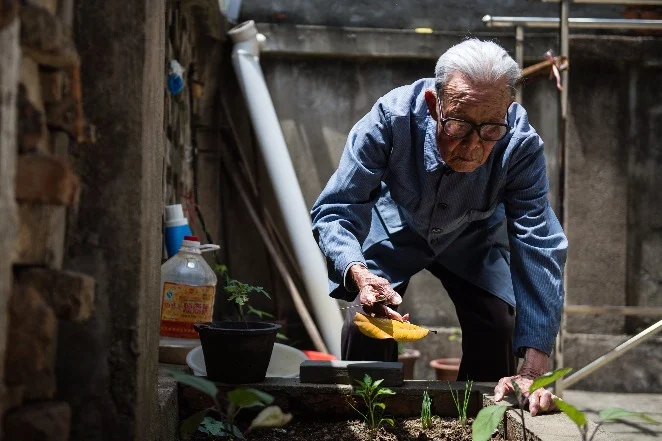
Nanjing, China – Guan Guangjing, who held the somber distinction of being the oldest living survivor of the Nanjing Massacre, passed away on Sunday at the age of 100, just three days shy of China’s National Memorial Day for Nanjing Massacre Victims. His death leaves fewer than 100 direct witnesses remaining to the horrific events of 1937, underscoring the critical urgency of preserving their testimonies as a vital link to a pivotal, yet painful, chapter of human history. The passing of Guan Guangjing, a man who carried the weight of unspeakable memories for eight decades, casts a poignant shadow over the upcoming 80th anniversary of the massacre, scheduled for solemn commemoration on Wednesday, December 13th, where state leaders are expected to attend a public memorial ceremony at the Memorial Hall of the Victims in the Nanjing Massacre by Japanese Invaders.
Guan Guangjing succumbed at his home to multiple organ failure, having been bedridden for six months due to heart disease, according to his 76-year-old son-in-law, who wished to be identified only by his surname, Liu. Born in 1917, Guan was a century old when he died, a testament to a life marked by both profound suffering and quiet resilience. His departure signifies more than just the loss of an individual; it represents the fading of a direct, living connection to one of the 20th century’s most brutal wartime atrocities.
Guan Guangjing: A Life Bearing Witness
Guan Guangjing’s personal account was a crucial contribution to the historical record. He provided verbal testimony for Irrefutable Evidences, A Memoir of the Lishui Bombing Caused by Japanese Invaders, a significant book published by Nanjing Press in November 2016. This volume meticulously compiled the oral accounts of 31 survivors of the Lishui bombing, an aerial attack that occurred in Nanjing’s Lishui county on November 29, 1937, and tragically claimed more than 1,200 lives. Guan recounted in vivid detail how he survived this particular onslaught by hiding under a large rock, a desperate act that allowed him to witness the devastating loss of life, including the complete annihilation of four generations of a neighboring family surnamed Sun.
His survival during the subsequent Nanjing Massacre itself was a harrowing tale of evasion and resourcefulness. As Japanese forces occupied Nanjing, then the capital of China, in December 1937, Guan managed to stay alive by hiding wherever he could, navigating a city plunged into unimaginable terror. Officials from the Memorial Hall of the Victims in the Nanjing Massacre corroborated his accounts, stating that Guan repeatedly narrated his eyewitness observations of Japanese invaders committing multiple acts of murder.
Beyond his role as a witness to history, Guan Guangjing was remembered as a respected member of his community. An orphan before 1937, he had no siblings and his wife passed away five years prior at the age of 84. He worked as a barrel maker in Lishui county, living a frugal life, yet known for his willingness to help others. The announcement of his death on Sina Weibo by the memorial hall prompted an outpouring of grief and respect from internet users across China. In a gesture of profound historical significance, his family donated several of his personal articles, including a paper fan, a watch, and a teapot, to the memorial hall, ensuring that a tangible piece of his life and experience will forever reside within the institution dedicated to preserving the memory of the victims.
The Dwindling Voice: A Race Against Time
The passing of Guan Guangjing brings the total number of verified Nanjing Massacre survivors to fewer than 100, a stark reminder of the relentless march of time. At the beginning of 2017, the number stood at just over 100, down from approximately 107 at the end of 2016, and a significantly larger pool of around 1,000 identified survivors in the early 1980s. This rapid decline presents a formidable challenge for historians and memorial institutions worldwide: the urgent need to document and preserve the testimonies of the last direct witnesses before their voices are permanently silenced.
The task of collecting these oral histories is fraught with difficulties. As Zhang Sheng, a history professor at Nanjing University, points out, only about half of the remaining survivors can express themselves clearly, with most being over 85 years old. The physical and cognitive challenges associated with advanced age complicate the process, but perhaps even more profound are the deep-seated psychological scars that remain. Wu Lisong, a history lecturer at Nanjing University who has led a project collecting oral accounts since September 2016, emphasizes that the pain endured by survivors is not something that simply fades with time; it is a trauma that lasts a lifetime.
"Some of them are stricken with fright when people wearing Japanese military uniforms appear on the TV screen, and some become irritable whenever people mention those years to them," Wu observed, highlighting the enduring psychological impact of the atrocities. This profound, lingering trauma underscores the immense courage it takes for survivors to revisit their past and share their stories, often at great personal cost. Their willingness to speak, despite the pain, is an invaluable gift to history.
Background: The Nanjing Massacre – A Historical Atrocity
The Nanjing Massacre, also known as the Rape of Nanjing, stands as one of the darkest chapters of World War II in Asia and a stark reminder of the barbarity that can accompany armed conflict.
Context of the Sino-Japanese War
The massacre occurred within the broader context of the Second Sino-Japanese War, which officially began in July 1937 with the Marco Polo Bridge Incident. Japan, driven by imperial ambitions and a desire to establish dominance in East Asia, launched a full-scale invasion of China. After fierce fighting in Shanghai, Japanese forces advanced rapidly inland towards Nanjing, then the capital of the Republic of China and a symbol of Chinese sovereignty.
The Fall of Nanjing
In early December 1937, Japanese troops laid siege to Nanjing. Despite a valiant but ultimately futile defense by Chinese forces, the city fell on December 13, 1937. What followed was a six-week period of unimaginable horror that shocked the world and remains a source of profound anguish and historical contention.
The Atrocities Unfold
Upon entering the city, Japanese soldiers unleashed an orgy of violence against both disarmed combatants and the civilian population. The atrocities included widespread mass executions, systematic rape, looting, arson, and torture. Estimates of the death toll vary, but the Chinese government and most historians outside Japan maintain that over 300,000 Chinese civilians and disarmed soldiers were killed. This figure is based on the findings of the Nanjing War Crimes Tribunal, which concluded its investigations after the war. The exact number remains a point of academic debate in some circles, but the scale of the atrocity and its undeniable brutality are widely acknowledged.
During this period, a small group of Westerners, including missionaries, doctors, and businessmen, established the Nanjing Safety Zone. Led by John Rabe, a German Nazi Party member who used his political connections to protect Chinese civilians, this zone provided a precarious sanctuary for tens of thousands. These international witnesses documented the atrocities extensively, their diaries, letters, and photographs providing crucial independent corroboration of the events. Their harrowing accounts were among the first to reach the outside world, bringing attention to the unfolding tragedy.
Chronology of Remembrance and Documentation
The efforts to remember, document, and commemorate the Nanjing Massacre have evolved significantly over the decades, moving from post-war tribunals to national memorial days and international recognition.
Post-War Trials
Immediately following World War II, justice was sought through international and national tribunals. The International Military Tribunal for the Far East (Tokyo Trials) prosecuted Japanese wartime leaders for war crimes and crimes against humanity, including those committed in Nanjing. Concurrently, the Nanjing War Crimes Tribunal, established by the Chinese Nationalist government, tried and convicted Japanese officers directly responsible for the massacre. General Iwane Matsui, commander of the Japanese forces during the Nanjing invasion, was among those executed for his role.
Early Efforts to Document
In the immediate post-war period, initial efforts to collect survivor testimonies and document the massacre were undertaken, often by local authorities and private individuals. However, the subsequent Chinese Civil War and political upheavals limited extensive, systematic collection for many years.
Establishment of the Memorial Hall
A significant turning point came in 1985 with the establishment of the Memorial Hall of the Victims in the Nanjing Massacre by Japanese Invaders. Located at a site where thousands of victims were buried, the memorial hall serves as the primary institution for research, exhibition, and remembrance of the massacre. Its establishment marked a renewed, organized commitment to preserving historical memory and educating the public.
National Memorial Day
In a move to elevate the historical significance of the event and ensure national remembrance, China’s top legislature officially designated December 13 as the National Memorial Day for Nanjing Massacre Victims in February 2014. This annual observance, marked by solemn ceremonies, flags flown at half-mast, and public education initiatives, solidified the massacre’s place in China’s national consciousness.
UNESCO Recognition
International recognition for the historical documentation of the Nanjing Massacre arrived in October 2015, when the documents relating to the massacre were inscribed in UNESCO’s Memory of the World Register. This recognition underscored the global importance of the historical records and the need for their preservation for future generations, affirming their authenticity and significance as part of humanity’s shared heritage.
Ongoing Oral History Projects
Today, with the number of survivors dwindling, oral history projects like the one led by Wu Lisong at Nanjing University have become paramount. These projects meticulously record the experiences of the remaining survivors, using modern techniques to capture their testimonies, which often include harrowing details of their experiences. These accounts are digitized, archived, and cross-referenced with other historical materials, forming an invaluable resource for researchers and educators. The goal is to ensure that even as the living voices fade, their stories will continue to resonate, providing firsthand accounts for generations to come.
Official Responses and Commemoration
The upcoming National Memorial Day for Nanjing Massacre Victims on December 13, marking the 80th anniversary, is expected to be a profoundly somber and significant occasion. The attendance of state leaders at the public memorial ceremony underscores the Chinese government’s unwavering commitment to commemorating the victims and remembering this historical tragedy. This annual observance is not merely a ritual; it is a reaffirmation of China’s consistent stance on remembering history, cherishing peace, and educating future generations about the atrocities of war.
The Memorial Hall of the Victims in the Nanjing Massacre plays a central role in these commemorations, serving as a beacon of historical truth and a place for national mourning. Its officials consistently advocate for the preservation of survivor testimonies and the promotion of historical research to counter any attempts at historical revisionism or denial.
Wu Lisong, reflecting on the profound impact of the massacre, articulated a critical perspective on the path forward. "Neither an apology nor compensation can reverse the traumas to the victims and survivors, but we still must make clear the history, which may be a starting point of reconciliation," he stated. This sentiment highlights that while the suffering cannot be undone, a clear and honest acknowledgment of history is essential for any genuine move towards understanding and reconciliation between nations. It emphasizes the importance of factual historical narratives as a foundation for building a more peaceful future, even when dealing with deeply painful past events.
The Enduring Legacy: Memory, Education, and Reconciliation
The passing of Guan Guangjing and the rapidly dwindling number of Nanjing Massacre survivors amplify the critical importance of memory, education, and the pursuit of reconciliation. Survivor testimony, like Guan Guangjing’s, forms the bedrock of historical understanding. These firsthand accounts provide an indispensable human dimension to historical facts, making the atrocities tangible and preventing them from becoming mere statistics. As the direct witnesses leave us, the responsibility falls increasingly on institutions, educators, and society at large to ensure their stories are never forgotten.
Memorial halls, museums, educational curricula, and digital archives play a crucial role in carrying forward this legacy. They serve as guardians of historical truth, providing platforms for public education and scholarly research. Efforts to translate and disseminate these testimonies globally are also vital in fostering international understanding and preventing the resurgence of historical denialism.
The ongoing challenges of ensuring historical accuracy and confronting attempts to whitewash or deny past atrocities underscore the continuous need for vigilance and robust historical scholarship. The goal is not to perpetuate hatred, but to understand the past to avoid repeating its darkest chapters. As Wu Lisong articulated, "making clear the history" is not an act of vengeance, but a necessary prerequisite for genuine reconciliation. It is about acknowledging truth, fostering empathy, and learning lessons that can contribute to a more just and peaceful world.
The universal message emanating from the Nanjing Massacre survivors is one of peace and the imperative to prevent similar atrocities from ever occurring again. Their lives, marked by unimaginable trauma, yet enduring with dignity, serve as a powerful reminder of humanity’s capacity for both cruelty and resilience. As the final voices fade, their collective story must resonate louder than ever, ensuring that the lessons of Nanjing are etched into the global consciousness, a permanent testament to the cost of war and the enduring value of human life. The 80th anniversary of the Nanjing Massacre, solemnized by the recent loss of its oldest survivor, serves as a poignant reminder of this profound and continuing responsibility.


 Rifan Muazin
 Basiran