Lina Irawan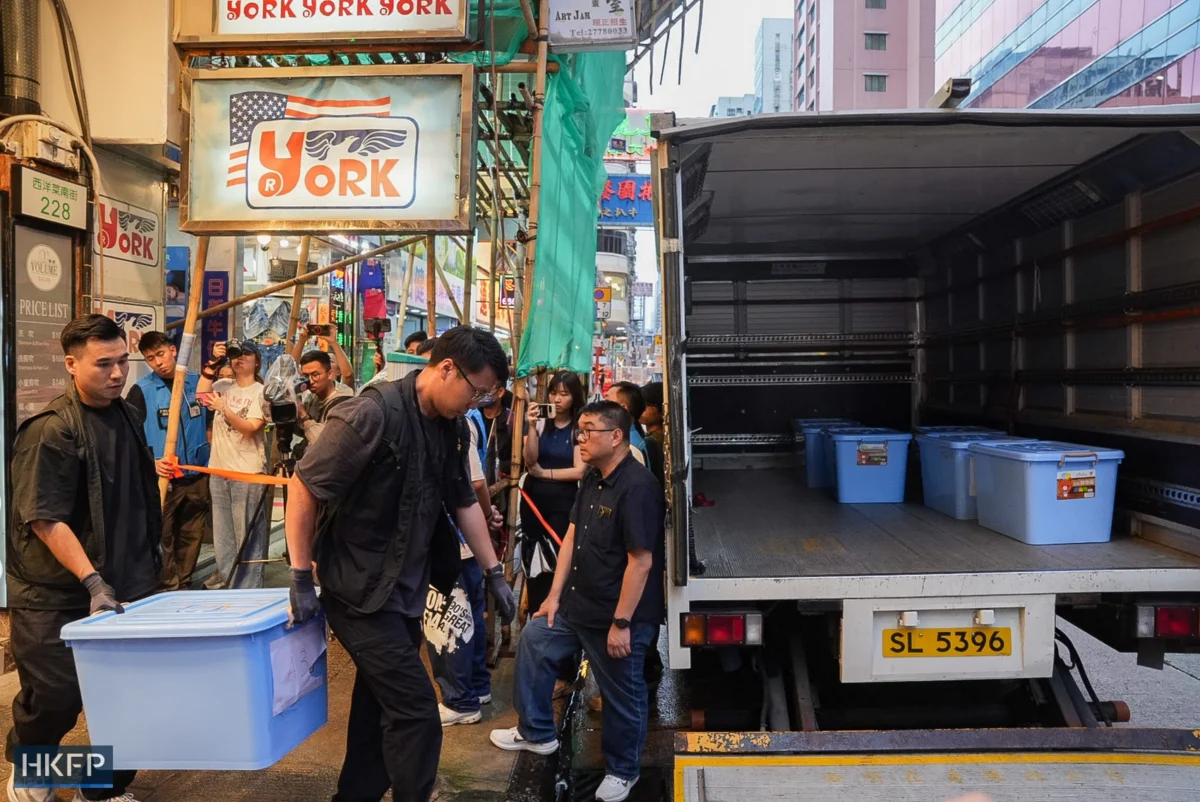
The Hong Kong government’s steadfast refusal to publish a list of banned books has been sharply criticized by a conservative Christian non-governmental organization (NGO), which labelled the action an “abuse of power” that erodes the rule of law. This condemnation follows a series of raids on independent bookstores and the subsequent arrests of their staff last month, actions that have cast a long shadow over freedom of expression in the city.
The Society for Truth and Light, a group founded in 1997 with a stated aim of promoting Christian values, articulated its concerns in a public statement released on Friday. Choi Chi-sum, the organization’s secretary general, asserted that the bedrock of Hong Kong’s “one country, two systems” constitutional framework is fundamentally the freedom of speech. He emphasized that citizens should not live in fear for expressing personal opinions or for possessing publications that have not been legally adjudicated as unlawful by the courts.

This critical stance from a religious organization is noteworthy, particularly in the current climate where many of the city’s once vocal civil society groups have disbanded in the wake of the Beijing-imposed National Security Law (NSL) in 2020. The Society for Truth and Light’s statement represents a rare public rebuke of the government’s ongoing crackdown on independent literary and cultural spaces.
Chronology of Recent Events
The controversy gained significant traction approximately two weeks prior to the Society for Truth and Light’s statement, when national security police raided two independent bookshops: Have a Nice Stay and Greenfield Bookstore. Staff members at both establishments were subsequently arrested. The arrests were reportedly based on suspicions of “doing with a seditious intention an act or acts that had a seditious intention,” an offense stipulated under Article 23 of the city’s homegrown security law, which was enacted earlier this year.

The arrests and raids triggered a wave of concern among those who champion freedom of expression and the preservation of Hong Kong’s unique cultural landscape. Images from the scene showed police meticulously loading boxes of books and other materials onto trucks, underscoring the tangible impact of these enforcement actions on the city’s independent bookstores.
The Issue of Transparency and the Rule of Law
Central to the NGO’s critique is the government’s deliberate opacity regarding the specific content deemed seditious or illegal. While authorities have maintained that police discovered books containing content that could provoke hatred against the government at the raided stores, no official, comprehensive list of prohibited publications has been made public. Secretary for Security Chris Tang has explicitly stated that the government does not intend to release such a list.

This lack of transparency, according to Choi Chi-sum, is precisely what constitutes an “abuse of power and an act that undermines the spirit of the rule of law.” He argued that businesses, and indeed all citizens, require clear legal frameworks upon which to rely. The current approach, where the legality of actions and speech is subject to the “subjective views of individual officials or law enforcement officers,” creates an environment of uncertainty and fear, he contended. This subjective interpretation of laws, rather than clear judicial pronouncements, poses a significant challenge to predictable legal operations and personal liberties.
Impact on Independent Bookstores
The raids and arrests have had a direct and devastating impact on the targeted bookstores. Both Greenfield Bookstore and Have a Nice Stay have announced their impending closures. Greenfield Bookstore, a venerable establishment that had been operating for 50 years, stated that it would cease operations upon the expiration of its lease, though a specific date has not been publicly disclosed. Have a Nice Stay, in a poignant announcement made in mid-July, just a day before the police raids, cited financial difficulties and the increasingly restrictive "red lines" in the city as reasons for its closure. The premature closure of such spaces signifies a palpable loss to the intellectual and cultural diversity of Hong Kong.

Government Response and Defense of National Security Legislation
In response to growing concerns, Secretary for Security Chris Tang held a press conference on Friday where he defended the application of Hong Kong’s national security legislation. He asserted that the laws are not targeted at specific establishments or types of businesses. “Whether you are an individual, a company, or whatever type of company you are, if you break the law, I will arrest you… and prosecute you if there is sufficient evidence,” Tang stated.
Earlier, Tang had placed the onus squarely on booksellers, emphasizing that it is their responsibility to ensure that the titles they stock do not pose a threat to national security. This position suggests a preventative enforcement approach, where the burden of proof and interpretation of potential threats lies with the business owner, rather than requiring a prior judicial determination of illegality. This stance has been met with criticism from legal scholars and rights advocates who argue it stifles legitimate commerce and expression.

Broader Implications for Freedom of Expression in Hong Kong
The recent events and the government’s response highlight a significant erosion of freedoms that were once considered hallmarks of Hong Kong’s identity. The NSL, enacted in 2020, has fundamentally reshaped the city’s legal and social landscape. While the government maintains that these measures are necessary for maintaining stability and national security, critics argue that they are being used to suppress dissent and curtail fundamental rights, including freedom of speech and the press.
The closure of independent bookstores, which often serve as vital hubs for diverse ideas and critical discourse, represents a tangible loss to the city’s vibrant cultural ecosystem. The reluctance of the government to provide clear guidelines on what constitutes prohibited content creates a chilling effect, forcing individuals and businesses to self-censor to avoid potential legal repercussions. This atmosphere of apprehension is antithetical to the open society that Hong Kong once prided itself on.

The Society for Truth and Light’s intervention, despite its conservative Christian affiliation, underscores the broad-based unease regarding the trajectory of free expression in Hong Kong. The organization’s call for transparency and adherence to the rule of law resonates with a wider segment of the population concerned about the arbitrary application of laws and the diminishing space for open dialogue.
As the city navigates this complex legal and social terrain, the ongoing debate over banned books and the government’s opaque approach to enforcing national security laws will continue to be a critical indicator of the future of freedom of expression in Hong Kong. The lack of a public list of banned books leaves individuals and businesses in a state of perpetual uncertainty, where the line between protected speech and sedition can be arbitrarily drawn by those in power. This environment is not conducive to a thriving intellectual or cultural scene, nor does it uphold the principles of a free and open society governed by clear, accessible laws. The international community continues to monitor these developments closely, with many expressing concern over the diminishing democratic freedoms in the former British colony.

 Asep Darmawan
 Lina Hope