Nila Kartika Wati
The Confucius Institute Headquarters in Beijing orchestrates a series of prestigious annual competitions, collectively known as the Chinese Bridge Chinese-Proficiency Contests. These events serve as a vital platform for non-native Chinese speakers worldwide, encompassing foreign college students, secondary school students, and a broader category of international Chinese language learners. This year’s iteration marked a significant milestone, celebrating the 10th anniversary of the Chinese Bridge Chinese Proficiency Competition for Foreign Secondary School Students, underscoring a decade of dedicated effort in fostering global understanding and linguistic proficiency in Mandarin.
Evolution and Growth of the Chinese Bridge Contests
The genesis of the Chinese Bridge initiative can be traced back to 2002, with the inaugural competition specifically designed for foreign college students. This initial endeavor proved successful, laying the groundwork for future expansion. Recognizing the burgeoning interest in Chinese language learning among younger demographics, the competition was strategically broadened in 2008 to include foreign high school students. This expansion marked a pivotal moment, significantly increasing the reach and impact of the contests. The evolution continued in 2014, when the scope was further widened to encompass a wider array of foreign Chinese language speakers, solidifying its position as a truly global phenomenon.
Over the past decade, the Chinese Bridge Chinese Proficiency Competition for Foreign Secondary School Students alone has witnessed an impressive surge in participation. Approximately 3,000 contestants hailing from 107 countries have had the opportunity to showcase their linguistic prowess and cultural acumen. This growth is particularly evident in the expanding geographical representation. The number of participating countries has dramatically increased from a modest 24 in 2008 to an impressive 96 in the current year. Furthermore, the inclusion of 14 countries participating for the very first time signifies the ever-expanding global appeal and the growing accessibility of Chinese language education. In total, this year’s competition saw 320 teachers and students from 110 overseas preliminary rounds converge to demonstrate their capabilities.
Competition Structure and Assessment Criteria
The Chinese Bridge contests are meticulously structured to assess a comprehensive range of skills and knowledge. Awards are presented to both individual contestants and groups, recognizing diverse talents and collaborative efforts. The core of the competition revolves around evaluating participants’ Chinese proficiency, their knowledge about China, and their understanding of Chinese culture. These aspects are tested through a variety of engaging and challenging formats, ensuring a holistic assessment of their engagement with the language and the nation it represents.
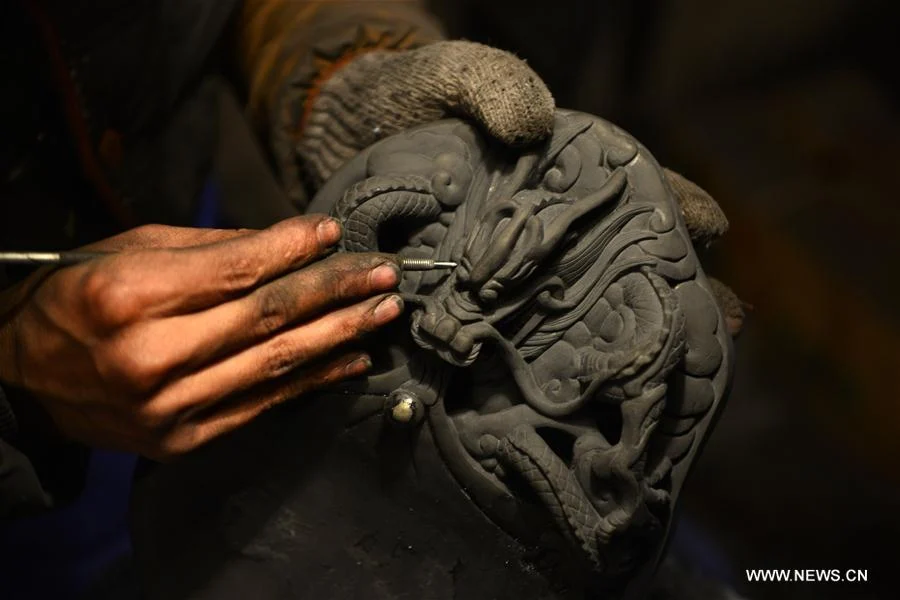
Beyond theoretical knowledge and linguistic accuracy, the contests are designed to offer contestants an immersive cultural experience. Participants are often invited to engage with various facets of Chinese society. This can include visits to prominent Chinese enterprises, fostering an understanding of the country’s economic landscape. Community engagements provide insights into the social fabric, while homestays with local families offer invaluable personal connections and a deeper appreciation for daily life. A significant component of the experience involves active participation in traditional Chinese customs and folk arts. Activities such as intricate paper cutting and the tactile art of pottery making allow contestants to directly interact with and appreciate China’s rich artistic heritage.
Illustrative Examples of Contest Activities
This year’s competition, held in October in the picturesque Yunnan province of Southwest China, provided a particularly innovative challenge for the secondary school students. Contestants were tasked with performing a theater piece centered on the theme of entrepreneurship. The creative adaptation of this theme from "Romance of the Three Kingdoms," one of China’s most revered classical novels, demanded not only linguistic fluency but also a sophisticated understanding of historical narratives and their modern-day relevance. This unique blend of historical literature, contemporary themes, and dramatic performance tested the contestants’ creativity, teamwork, and ability to convey complex ideas in Mandarin.
The breadth of talent showcased in the Chinese Bridge competitions extends far beyond spoken and written language. Many contestants have astounded judges and audiences with their mastery of various traditional Chinese arts. This includes elegant calligraphy, vibrant painting, daring acrobatics, the disciplined movements of kung fu, and the melodic tones of traditional Chinese musical instruments. These demonstrations highlight the multifaceted nature of cultural engagement that the competitions actively promote, allowing participants to express their connection to China through diverse artistic mediums.
Historical Context and Objectives of the Chinese Bridge
The establishment of the Confucius Institute Headquarters and its subsequent organization of the Chinese Bridge contests can be understood within the broader context of China’s growing global influence and its strategic emphasis on cultural diplomacy. As China’s economic and political stature on the world stage has risen, so too has the international interest in its language and culture. The Confucius Institutes, operating under the auspices of Hanban (now the Center for Language Education and Cooperation), were established to promote Chinese language and culture abroad, and the Chinese Bridge contests serve as a flagship initiative within this framework.
The primary objectives of these competitions are manifold. Firstly, they aim to stimulate and encourage foreign individuals to learn the Chinese language, fostering a generation of global citizens with proficiency in Mandarin. Secondly, they serve as a powerful vehicle for promoting Chinese culture, helping to bridge cultural divides and foster mutual understanding between China and the rest of the world. Thirdly, by providing a platform for international exchange, the contests contribute to building a more interconnected and harmonious global community. The increasing number of participating countries and the growing diversity of contestants underscore the success of these objectives.
Supporting Data and Trends
The evolution of the Chinese Bridge contests reflects a clear upward trend in global interest in Chinese language learning. The expansion from a single competition for college students to three distinct categories catering to different age groups and learning levels demonstrates a strategic response to increasing demand. The raw numbers speak for themselves: a decade of the secondary school competition has seen participation grow from 24 countries to 96, a more than threefold increase. The addition of 14 new participating countries this year alone indicates that the appeal of the Chinese Bridge continues to broaden, reaching new regions and student populations.
The significant number of teachers and students (320 from 110 overseas preliminaries) participating this year further illustrates the robust infrastructure supporting Chinese language education globally. These preliminary rounds, often organized by local Confucius Institutes, universities, and cultural organizations, are crucial in identifying and nurturing talent, acting as feeders for the main international competitions. The success of these preliminary events is a testament to the dedication of educators and institutions worldwide committed to promoting the Chinese language.
Inferred Statements and Reactions
While specific quotes from organizers or participants are not provided in the source material, it is reasonable to infer a sense of pride and accomplishment from the Confucius Institute Headquarters. The sustained growth and global reach of the Chinese Bridge contests are likely viewed as a significant success in their mission to promote Chinese language and culture. One might imagine statements emphasizing the role of the contests in fostering future diplomatic ties, economic collaborations, and cross-cultural friendships.
From the perspective of participants and their educators, the experience is undoubtedly transformative. For students, winning or even participating in the Chinese Bridge offers a unique opportunity to showcase their hard work, gain international exposure, and experience China firsthand. Teachers involved in preparing contestants would likely express immense satisfaction in seeing their students excel on a global stage, recognizing the value of the competition in motivating learners and validating their educational efforts. The ability to interact with peers from diverse backgrounds, share cultural experiences, and engage with China in such a dynamic way would be a highlight for many.
Broader Impact and Implications
The Chinese Bridge Chinese-Proficiency Contests have far-reaching implications beyond mere language acquisition. They serve as a powerful engine for cultural exchange, fostering a deeper appreciation for Chinese traditions, arts, and history among young people worldwide. By encouraging foreign learners to engage with China on multiple levels – linguistic, cultural, and even experiential – the contests contribute to building bridges of understanding and dispelling potential misconceptions.
In an increasingly interconnected world, the ability to communicate effectively across linguistic and cultural barriers is paramount. The Chinese Bridge initiative actively cultivates this ability, producing a cadre of individuals who are not only proficient in Mandarin but also possess a nuanced understanding of Chinese society. These individuals are poised to become future leaders, diplomats, business professionals, and cultural ambassadors, playing a crucial role in facilitating international cooperation and fostering positive relationships between China and other nations. The sustained success and continuous expansion of the Chinese Bridge contests suggest a long-term commitment to this vision, promising a future where cross-cultural dialogue and mutual respect are further enhanced through the power of language and shared experiences. The competitions, therefore, represent more than just a test of linguistic skill; they are a testament to the enduring power of education and cultural diplomacy in shaping a more connected and understanding global landscape.

 Asep Darmawan
 Rifan Muazin