Jia Lissa
China’s increasing annual imports of liquefied natural gas (LNG) from the resource-rich Yamal natural gas project in the Russian Arctic are set to profoundly enhance the nation’s energy security, particularly in light of severe natural gas shortages gripping northern China. This strategic collaboration, highlighted by an executive from China National Petroleum Corp. (CNPC), underscores a critical pivot in China’s energy acquisition strategy, aiming to ensure a steady, long-term supply of crucial hydrocarbons. The Yamal initiative is not merely a commercial transaction but a multi-faceted endeavor that bolsters China’s oil and gas reserves, facilitates advanced technological transfer, and significantly promotes the development of Arctic maritime routes, thereby reshaping global energy logistics and geopolitical dynamics.
Jiang Qi, general manager of CNPC Russia, a key subsidiary of China’s largest oil and gas producer by annual output, affirmed the project’s substantial role in augmenting China’s energy resilience. China has committed to receiving over 4 million metric tons (MMT) of LNG annually from Russia’s Yamal project once it achieves full operational capacity. This commitment reflects a deeper strategic partnership, solidified by CNPC’s significant investment in the venture. In September 2013, CNPC acquired a 20 percent stake in OAO Novatek’s colossal $27 billion Yamal project for an estimated $5.4 billion, cementing its position as a vital international partner in one of the world’s most ambitious energy undertakings.
The Imperative for Energy Security in China
China’s relentless economic expansion over the past decades has propelled it to become the world’s largest energy consumer. This growth has come with an increasing reliance on imported fossil fuels, creating vulnerabilities related to supply chain stability and geopolitical tensions. Beijing’s ambitious "Blue Sky" campaign, initiated to combat severe air pollution by transitioning from coal to cleaner natural gas for heating and industrial use, has dramatically accelerated domestic gas demand. This policy, while environmentally laudable, has inadvertently led to acute gas shortages, especially during peak winter months in northern provinces, stressing the existing infrastructure and supply chains.
In 2017, the year the Yamal project began operations, China surpassed South Korea to become the world’s second-largest LNG importer, a clear indicator of its burgeoning appetite for natural gas. Projections from various energy agencies, including the International Energy Agency (IEA), consistently forecast China’s natural gas demand to continue its robust growth trajectory, potentially reaching 400 billion cubic meters (bcm) annually by 2030, a significant portion of which will need to be met through imports. This escalating demand underscores the strategic importance of diversified, reliable sources like Yamal, which offers large volumes from a geographically advantageous, politically stable partner.
A Chronology of Sino-Russian Energy Cooperation and the Yamal Project
The partnership between China and Russia on the Yamal LNG project is a testament to a deepening strategic alignment that has evolved over two decades. While initial discussions regarding significant energy cooperation date back to the early 2000s, concrete steps gathered pace in the 2010s:
- 2006: Russia’s Novatek, a major independent gas producer, begins exploration activities in the Yamal Peninsula, identifying vast gas reserves suitable for LNG production.
- 2011: Novatek officially launches the Yamal LNG project, outlining plans for a multi-train liquefaction plant and an Arctic port.
- September 2013: A landmark agreement sees CNPC acquire a 20% stake in the Yamal LNG project from Novatek. This investment not only provided crucial capital but also signaled China’s long-term commitment to the project.
- May 2014: Following Western sanctions on Russia after the annexation of Crimea, financing for Yamal LNG became a significant challenge. However, Chinese financial institutions, including the China Development Bank and the Export-Import Bank of China, stepped in with substantial loans, demonstrating the strategic depth of Sino-Russian cooperation and China’s role as a reliable financial partner. The Silk Road Fund, established by China to support Belt and Road Initiative projects, also became a shareholder in 2015, acquiring a 9.9% stake from Novatek.
- December 2017: The first train of the Yamal LNG plant commences operations, and its inaugural cargo of 173,000 cubic meters of super-chilled fuel is loaded onto the Arc7 ice-class LNG carrier "Christophe de Margerie." This event marked a pivotal moment, demonstrating the feasibility of year-round Arctic LNG transportation.
- July 2018: The second liquefaction train comes online ahead of schedule, further boosting the project’s capacity.
- November 2018: The third and final train of the Yamal LNG project begins operations, bringing the plant to its full design capacity of 16.5 MMTPA (million metric tons per annum).
This timeline illustrates a complex project executed under challenging conditions, underpinned by robust Sino-Russian collaboration that extended beyond mere commercial interests into strategic financial and logistical support.
The Strategic Nexus: Energy, Geopolitics, and the Arctic
Jiang Qi highlighted the natural complementarities in energy cooperation between China and Russia. Beyond Yamal, a long-term oil and gas cooperation framework has been established, exemplified by the Sino-Russia crude oil transmission pipeline (Eastern Siberia-Pacific Ocean pipeline spur) and the Power of Siberia natural gas pipeline, currently in construction and expected to significantly boost gas supplies to China’s northeastern regions. These projects collectively form an extensive energy infrastructure network, reducing both nations’ reliance on traditional routes and partners.
The Yamal project, however, carries additional geopolitical weight due to its location in the Arctic. Jiang noted that the project actively promotes the construction and utilization of the Northeast Passage (also known as the Northern Sea Route) in the Arctic Ocean. This sea route directly links China and Europe, offering a significantly shorter transit time compared to the traditional Suez Canal route. While traditionally ice-bound for much of the year, climate change and advanced ice-breaking technology are making the passage increasingly viable. As many as 54 freight vessels had already navigated parts of this passage, and with the expansion of LNG transport from Yamal, the route is set to see a substantial increase in traffic. This will not only facilitate LNG deliveries to Asian and European markets but also significantly lower freight costs, potentially cutting transit times by up to 10-15 days for shipments between East Asia and Western Europe.
China’s involvement in the Arctic is not limited to energy imports. Beijing views itself as a "near-Arctic state" and has actively sought observer status on the Arctic Council. The promotion of the Northeast Passage aligns perfectly with China’s "Polar Silk Road" initiative, a component of its broader Belt and Road Initiative, aiming to develop infrastructure and trade routes in the Arctic. This strategic engagement positions China as a significant player in the future governance and economic development of the Arctic region, a move that has drawn both interest and scrutiny from other Arctic and near-Arctic nations.
Technological Advancements and Industrial Benefits for China
The Yamal LNG project has served as an invaluable crucible for Chinese enterprises, enabling them to accumulate critical technology and experience in oil and gas exploration and development in the extreme conditions of the Arctic region. This goes beyond mere investment; it represents a significant transfer of know-how and capabilities.
Chinese enterprises have been instrumental in various aspects of the project’s execution:
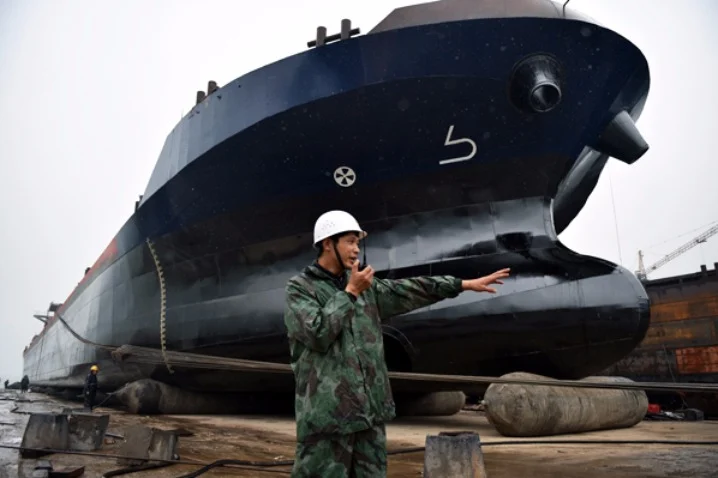
- Module Construction: They were responsible for an impressive 85 percent of the project’s module construction, demonstrating their advanced manufacturing capabilities and ability to handle large-scale, complex industrial fabrication. These modules, often weighing thousands of tons, were constructed in Chinese shipyards and then transported to the Yamal Peninsula for assembly, minimizing on-site construction time in the harsh Arctic environment.
- Shipping Infrastructure: Chinese shipyards have built seven specialized Arc7 ice-class LNG transport ships, essential for navigating the frozen waters of the Arctic. Furthermore, Chinese enterprises are in charge of the operation of 14 out of the 15 LNG carriers dedicated to the Yamal project. This deep involvement in the logistics and operation of a cutting-edge Arctic fleet provides unparalleled experience in extreme-weather maritime transport and reinforces China’s growing prowess in specialized shipbuilding.
- Financial Commitments: The scale of Chinese involvement is further underscored by the financial figures: the contract amount for the project’s construction totaled $7.8 billion, while the shipping contract amounted to a staggering $8.5 billion. These figures highlight the economic magnitude of China’s participation and the significant boost it provides to its heavy industry and shipping sectors.
This hands-on experience in one of the world’s most challenging industrial environments positions Chinese firms for future Arctic resource development projects, not only within Russia but potentially in other Arctic nations as well.
Addressing China’s Winter Gas Shortage
The immediate impetus for securing additional gas supplies, such as those from Yamal, stems from China’s urgent need to alleviate its domestic natural gas shortages. The "coal-to-gas" switch has been highly effective in reducing air pollution, particularly in major urban centers. However, the speed and scale of this transition have outpaced the development of domestic gas production, import infrastructure, and storage capacity. This imbalance has led to dramatic price spikes and supply curtailments for some industrial users and even residential areas during peak winter demand.
Qu Guangxue, a CNPC spokesman, emphasized the company’s proactive measures to address these challenges. CNPC plans to continue negotiating with Central Asian nations for additional natural gas stocks to ensure adequate domestic supplies. While pipeline gas from Central Asia and Russia via the Power of Siberia pipeline forms a crucial part of China’s energy mix, LNG imports, especially from projects like Yamal, offer greater flexibility and diversification, allowing China to tap into global markets and respond more dynamically to fluctuating domestic demand.
Broader Implications and Future Outlook
The Yamal LNG project represents far more than just a commercial energy deal. For China, it is a critical component of its multi-pronged strategy to ensure long-term energy security, diversify its import sources, and gain strategic leverage in the burgeoning Arctic region. For Russia, it underscores its pivot towards Asian energy markets, reducing its traditional reliance on Europe and developing its vast Arctic hydrocarbon resources with critical foreign investment and technological partnership.
The project’s success also sends a clear signal about the increasing viability of Arctic energy development and the Northern Sea Route. While environmental concerns regarding increased shipping and resource extraction in a fragile Arctic ecosystem remain significant and require careful management, the economic and strategic incentives are powerful. International energy analysts widely acknowledge Yamal’s impact on global LNG markets, adding significant supply and potentially influencing pricing dynamics, especially in Asia.
As China continues its ambitious journey towards cleaner energy and sustainable development, the role of natural gas will only grow. Projects like Yamal, backed by substantial investment, technological collaboration, and strategic foresight, will be instrumental in powering this transition, while simultaneously shaping the geopolitical landscape of global energy and Arctic development for decades to come. The long-term implications of this endeavor extend beyond mere energy supply, touching upon international trade routes, technological innovation, and the delicate balance of power in an increasingly interconnected world.

 Evan Lee Salim
 Suro Senen