
 Nana Wu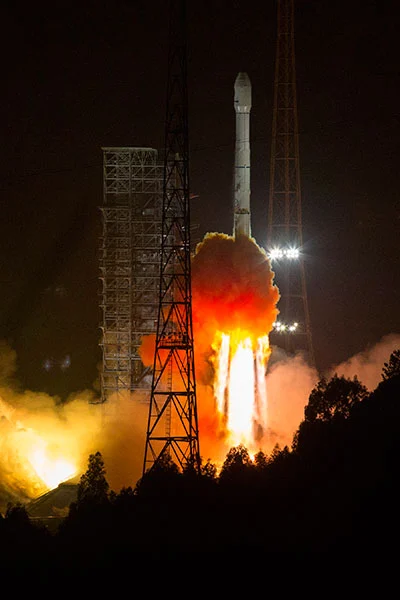
China’s burgeoning space capabilities have reached a significant milestone with the successful launch of Algeria’s first communications satellite, Alcomsat-1, on Monday. This landmark mission, conducted from the Xichang Satellite Launch Center in Sichuan province, not only signifies China’s growing prowess as a provider of advanced space technology but also heralds a new chapter in space cooperation between China and Arab nations. The launch, executed by a powerful Long March 3B carrier rocket, places Alcomsat-1 into a geostationary transfer orbit, paving the way for its deployment and subsequent service to Algeria. This achievement underscores the deepening strategic partnership between the two nations and positions China as a key player in the global satellite export market.
A Historic Launch and Bilateral Endorsement
The launch occurred precisely at 12:40 am on Monday, with the Long March 3B rocket ascending for approximately 26 minutes before successfully deploying the Alcomsat-1 satellite. The mission was overseen by China Great Wall Industry Corp (CGWIC), the designated project contractor, underscoring China’s comprehensive approach to satellite development and deployment.
The significance of this event was further amplified by the exchange of congratulatory messages between the heads of state of both nations. President Xi Jinping of China and Algerian President Abdelaziz Bouteflika acknowledged the successful mission, highlighting its importance in strengthening bilateral ties. President Xi emphasized that the Alcomsat-1 project is a "manifestation of the China-Algeria comprehensive strategic partnership" and serves as an exemplary model for space cooperation between China and Arab countries. He further articulated Beijing’s commitment to deepening exchanges and cooperation across various sectors, aiming to foster mutual benefit for both nations and their peoples.
President Bouteflika echoed these sentiments, describing Alcomsat-1 as a "remarkable achievement in space cooperation" that reflects the "deep traditional friendship" between Algeria and China. He expressed Algeria’s eagerness to further enhance collaborative efforts with China. This high-level endorsement signals a strong political will to leverage this space venture for broader economic and social development in Algeria and to solidify the growing Sino-Algerian relationship.
Genesis of a Collaborative Project: A Timeline of Development
The Alcomsat-1 project represents a culmination of several years of planning and execution, reflecting a structured and methodical approach to international space collaboration. The foundational agreement for the satellite was signed in December 2013 between the Algerian Space Agency (ASAL) and China Great Wall Industry Corp. This marked the official commencement of a partnership that would see China design, manufacture, and launch Algeria’s inaugural communications satellite.
The design and manufacturing of Alcomsat-1 were undertaken by the China Academy of Space Technology (CAST), a prominent entity within the China Aerospace Science and Technology Corporation (CASC). The satellite is built upon the robust DFH-4 satellite platform, a testament to China’s indigenous satellite technology development. This platform is known for its reliability and adaptability, suitable for a range of mission requirements.
The subsequent years involved meticulous development, testing, and integration processes, culminating in the successful launch on Monday. The entire lifecycle of the project, from initial contract signing to orbital insertion, demonstrates a commitment to delivering a sophisticated and functional satellite system within a defined timeframe.
Technical Specifications and Operational Capabilities
Alcomsat-1 is a significant piece of engineering, boasting a liftoff weight of 5.2 metric tons. It has been designed with a projected operational lifespan of 15 years, ensuring sustained service for Algeria. The satellite’s primary mission will be to provide a wide array of public services, significantly enhancing Algeria’s national infrastructure.
Key applications for Alcomsat-1 include:
- Television Broadcasting: Enabling wider reach and improved quality of television signals across Algeria, potentially including remote and underserved regions.
- Emergency Communications: Providing a reliable communication channel during natural disasters or other emergency situations, crucial for disaster response and public safety.
- Remote Education: Facilitating the expansion of educational programs to areas with limited access to traditional schooling, thereby promoting digital inclusion and lifelong learning.
- Satellite-Based Signal Augmentation: Enhancing the accuracy and reliability of navigation and positioning systems, which has implications for transportation, logistics, and surveying.
Fu Zhiheng, vice-president of China Great Wall Industry Corp, expressed confidence in Alcomsat-1’s technological parity with Western-made communications satellites. He asserted that in terms of technology and capacity, the Alcomsat-1 is on par with its international counterparts. This statement is particularly noteworthy, as it underscores China’s competitive edge in the global satellite market and its ability to meet stringent international standards. While declining to elaborate, Mr. Fu also hinted at existing and potential future contracts with other Arab nations, suggesting that Alcomsat-1 may be the first of many such collaborations.
Strategic Implications and the Future of Space Diplomacy
The successful launch of Alcomsat-1 carries profound strategic implications, extending beyond the immediate technical achievement. For Algeria, this marks a critical step towards digital sovereignty and self-sufficiency in crucial communication infrastructure. By owning and operating its own satellite, Algeria can tailor its telecommunications services to its specific national needs, reduce reliance on foreign providers, and foster its burgeoning digital economy. The satellite’s capabilities in education and emergency services are particularly vital for a nation with diverse geographical challenges and a commitment to improving the quality of life for its citizens.
For China, this launch solidifies its position as a leading exporter of space technology. It demonstrates the reliability and advanced nature of its Long March rocket family and its satellite platforms, such as the DFH-4. This success is a key component of China’s broader Belt and Road Initiative, which aims to foster economic cooperation and infrastructure development across a wide network of countries. Space cooperation, as exemplified by the Alcomsat-1 project, serves as a powerful tool for building trust, enhancing diplomatic ties, and opening new avenues for economic engagement.
The collaboration with Algeria also signifies a growing trend of cooperation between China and Arab nations in the space sector. The Middle East and North Africa (MENA) region has been increasingly investing in space technologies, driven by a desire to diversify economies, enhance national security, and leverage space for societal development. China’s offering of advanced, cost-effective solutions makes it an attractive partner for these nations.
A Growing Global Space Market and China’s Role
The global satellite market is a dynamic and expanding sector. According to various industry reports, the market is projected to grow significantly in the coming years, driven by demand for broadband internet, Earth observation, and telecommunications services. China’s entry and expansion into this market, particularly with its indigenous technologies, presents a compelling alternative to established players from the United States and Europe.
The DFH-4 platform, upon which Alcomsat-1 is based, is a testament to China’s evolving space engineering capabilities. Its development represents a strategic move to offer a competitive and reliable satellite bus for a variety of missions. The success of Alcomsat-1 validates this platform and is likely to attract further interest from international clients.
Furthermore, the Alcomsat-1 project highlights the geopolitical dimensions of space exploration and utilization. As nations increasingly recognize the strategic importance of space-based assets, collaborations that offer technological transfer and capacity building become highly valuable. China’s approach, which often includes partnerships that foster local expertise and industrial development, can be particularly appealing to developing nations.
Looking Ahead: Deepening Sino-Algerian Partnership
The successful launch of Alcomsat-1 is not merely an end point but a foundational step for an even more robust Sino-Algerian partnership in space and beyond. The shared experience of developing and launching a complex satellite system fosters deep trust and understanding between the two nations. This can pave the way for future joint ventures, such as the development of more advanced satellites, joint research initiatives, and even training programs for Algerian space professionals in China.
The implications for Algeria’s long-term development are substantial. A robust satellite communications network can underpin advancements in a multitude of sectors, from agriculture and environmental monitoring to financial services and e-governance. The ability to independently manage these critical services can foster greater national resilience and economic growth.
As China continues to assert its presence on the global space stage, projects like Alcomsat-1 serve as powerful ambassadors for its technological prowess and its commitment to international cooperation. The successful deployment of Algeria’s first communications satellite is a clear indicator that China is not just a participant but a leading force shaping the future of space exploration and utilization for the benefit of nations worldwide. The story of Alcomsat-1 is a narrative of ambition, technological achievement, and the dawning of a new era in global space diplomacy.



 Suro Senen