Layla Zulfa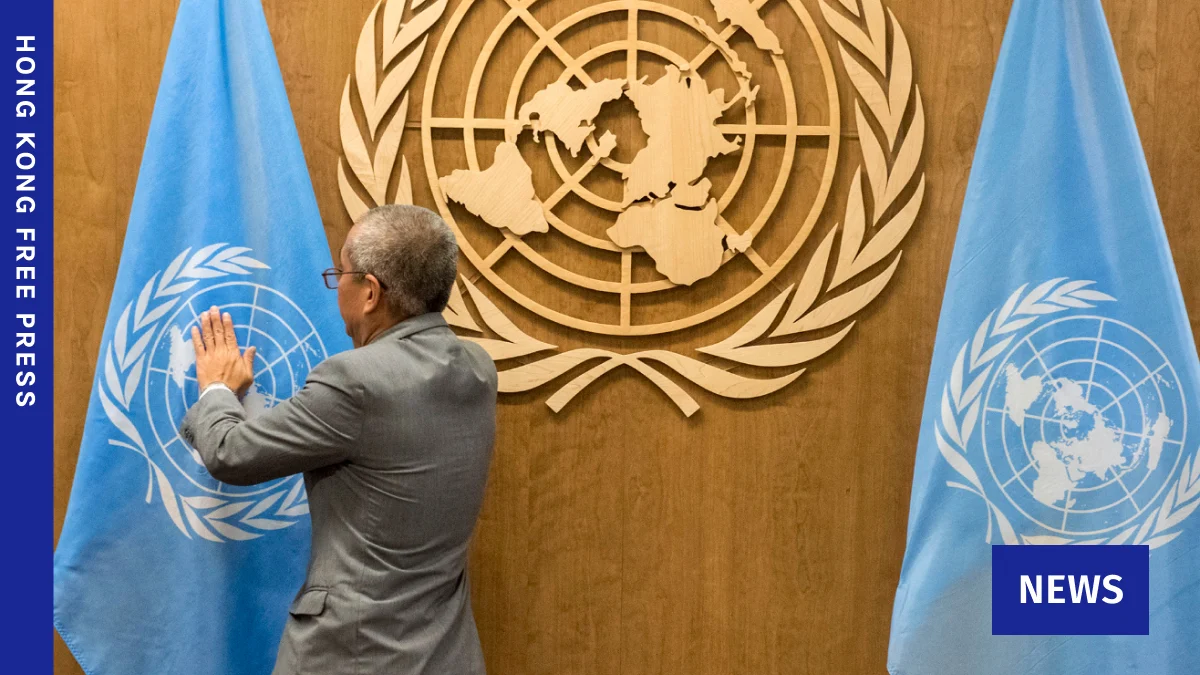
China on Friday urged countries to cease "spreading falsehoods" regarding its recently enacted ethnic unity law, a response to mounting criticism from US lawmakers, the United Nations, and human rights organizations who warn the legislation threatens the fundamental freedoms of minority groups within the nation and potentially abroad. The Law on Promoting Ethnic Unity and Progress, which officially came into effect on Wednesday, September 2, 2020, aims to cultivate a "shared national identity" among China’s diverse ethnic populations, notably by bolstering the status of Mandarin as the official language and discouraging what Beijing perceives as separatism or disunity.
The passage and implementation of this law have ignited a firestorm of international condemnation, with critics arguing that it serves as a legal framework to intensify the suppression of ethnic minorities, particularly Tibetans and Uyghurs, in regions like Tibet and Xinjiang. Concerns are amplified by a controversial clause within the law that asserts extraterritorial jurisdiction, stating that individuals can be held liable for violating the law even when outside China’s borders. This provision has been widely interpreted by international observers as a mechanism to extend Beijing’s control and target dissidents or critics living abroad.
At a press conference on Friday, September 4, 2020, Chinese foreign ministry spokesman Guo Jiakun vehemently rejected the international outcry. Without specifically naming any nations, Guo accused "certain countries" of engaging in "sweeping generalisations and maliciously smearing China’s ethnic policies." He asserted, "We urge the countries concerned to respect the basic facts, stop spreading falsehoods, and stop exploiting the so-called ethnic issues as a pretext for interfering in China’s internal affairs." Beijing has consistently denied any engagement in rights abuses against ethnic groups, maintaining instead that its policies of internal security and economic development universally benefit all its citizens.

The Law on Promoting Ethnic Unity and Progress: Aims and Controversial Provisions
The "Law on Promoting Ethnic Unity and Progress" is a comprehensive piece of legislation designed to solidify the Chinese Communist Party’s vision of a unified Chinese nation, or "Zhonghua Minzu." Its stated purpose is to strengthen national cohesion, foster a sense of shared identity, and promote harmonious relations among China’s 56 officially recognized ethnic groups. Key tenets of the law include the promotion of standard spoken and written Chinese (Mandarin), encouraging inter-ethnic exchanges, and explicitly prohibiting acts that "undermine ethnic unity."
While the law’s proponents in Beijing emphasize its role in fostering social stability and economic development across diverse regions, international critics point to several provisions that raise serious human rights concerns. Foremost among these is the emphasis on "shared national identity," which many interpret as a thinly veiled policy of forced assimilation. Human rights groups argue that this focus risks eroding distinct ethnic cultures, languages, and religious practices in favor of a dominant Han Chinese identity. For instance, the promotion of Mandarin is seen by some as a direct threat to the survival of minority languages such as Uyghur and Tibetan, which are integral to their respective cultural heritage.
The most contentious aspect of the law, however, is its assertion of extraterritorial reach. The clause stipulating that individuals can be held accountable for violations even when outside China has sent a chilling message to diaspora communities, academics, and activists globally. This provision grants the Chinese government a potentially far-reaching legal basis to pursue and prosecute individuals abroad for actions or speech deemed to violate the law, effectively extending Beijing’s legal authority beyond its national borders. Critics fear this will be used to silence dissent, intimidate overseas Chinese communities, and crack down on those advocating for greater autonomy or human rights in minority regions.
International Outcry: A Chorus of Condemnation
The international response to China’s new ethnic unity law has been swift and largely critical, reflecting a broader global concern over Beijing’s human rights record, particularly concerning its ethnic minorities.

United States Lawmakers’ Opposition: Nine United States lawmakers, representing a bipartisan coalition, issued a stern statement condemning the law. They pledged to continue speaking out against Beijing’s efforts to "legitimise its transnational repression." Their concerns echo broader US policy positions that have increasingly challenged China on human rights issues. US officials have frequently highlighted the plight of Uyghurs in Xinjiang and Tibetans, often linking these concerns to broader geopolitical rivalries and advocating for greater respect for universal human rights. The extraterritorial clause is particularly alarming to US lawmakers, as it could potentially impact US citizens or residents engaged in free speech activities related to China.
United Nations’ Call for Repeal: Volker Turk, the UN High Commissioner for Human Rights, has publicly called for the repeal of the law. Turk and his office have long expressed alarm over China’s treatment of ethnic minorities, especially in Xinjiang, where credible reports detail the existence of "re-education camps" (which Beijing calls vocational training centers), forced labor, and widespread surveillance. The UN’s position underscores a fundamental disagreement between China’s assertion of national sovereignty over its internal affairs and the international community’s commitment to universal human rights standards, which apply irrespective of national borders.
Human Rights Organizations’ Warnings: Leading international human rights organizations have been vocal in their condemnation. Amnesty International, for instance, warned that the law would "further institutionalise policies of forced assimilation." This assessment aligns with extensive reports from groups like Human Rights Watch and the World Uyghur Congress, which document systematic campaigns to suppress ethnic identity, religious freedom, and cultural expression. These organizations provide detailed accounts of restrictions on religious practices, the destruction of mosques and cultural sites, and the imposition of Mandarin-only education in minority regions, all of which they argue are facilitated and legitimized by such laws.
Taiwan’s Geopolitical Concerns: The self-ruled island of Taiwan, which Beijing claims as its own territory, also weighed in, stating that the law would expand "threats and intimidation against the people of our country and other nations." Taiwan’s government views the law through the prism of Beijing’s broader assertive posture in the region. They perceive it as another tool in China’s legal arsenal, potentially used to exert pressure or justify actions against Taiwanese individuals abroad who express views contrary to Beijing’s "One China" principle. This adds a layer of geopolitical tension, linking the ethnic unity law to broader issues of sovereignty and regional stability.

Beijing’s Firm Stance: Defending "Internal Affairs"
Despite the chorus of international criticism, Beijing has remained unyielding, consistently framing the issue as an interference in its sovereign internal affairs. Foreign Ministry spokesman Guo Jiakun’s remarks encapsulate this official position, portraying the international concerns as baseless "falsehoods" and "malicious smears." This stance is deeply rooted in China’s long-standing diplomatic principle of non-interference, which it frequently invokes to deflect criticism regarding human rights, Tibet, Xinjiang, and Hong Kong.
The Chinese government maintains that its policies in minority regions are aimed at promoting social stability, economic development, and combating extremism and terrorism. It highlights significant investments in infrastructure, education, and poverty alleviation in areas like Xinjiang and Tibet, presenting these as evidence of its commitment to improving the lives of all citizens, including ethnic minorities. Beijing argues that external critics fail to appreciate the complexities of China’s ethnic relations and the imperative of national unity for its continued stability and prosperity. From Beijing’s perspective, the "ethnic unity law" is a necessary legislative measure to ensure social harmony and prevent separatist tendencies, which it views as a grave threat to national security.
Historical Context and Evolving Ethnic Policies
China’s approach to ethnic minorities has a complex history, evolving significantly since the founding of the People’s Republic in 1949. Initially, the Communist Party recognized and granted certain autonomies to ethnic groups, establishing "autonomous regions" and promoting cultural diversity, albeit within the framework of a unified socialist state. However, over time, particularly in the face of perceived separatist movements in Tibet and Xinjiang, and under the leadership of President Xi Jinping, the emphasis has shifted dramatically towards greater integration and a stronger "shared national identity."
This shift is rooted in the concept of "Zhonghua Minzu Gongtongti Yishi" (consciousness of the community of the Chinese nation), a phrase that has gained prominence in official discourse. It signifies a move away from celebrating distinct ethnic identities towards fostering a singular national identity that transcends individual ethnic affiliations. Critics argue this represents a deliberate policy of cultural assimilation, aiming to dilute minority cultures and languages into a dominant Han Chinese framework.

Xinjiang and Tibet serve as critical case studies for understanding these evolving policies. In Xinjiang, home to the predominantly Muslim Uyghur minority, the government has implemented what it describes as a counter-terrorism and de-radicalization campaign. This has involved the establishment of vast internment camps, extensive surveillance, and coercive labor programs, leading to widespread accusations of human rights abuses, cultural genocide, and forced assimilation. Similarly, in Tibet, the Tibetan Buddhist culture and language have faced severe restrictions, with policies aimed at suppressing religious practices, controlling monasteries, and promoting Mandarin education. These regions, rich in natural resources and strategically important, are viewed by Beijing as integral to national security and territorial integrity, justifying stringent control measures.
The Extraterritorial Reach: A New Legal Frontier
The extraterritorial clause within the Law on Promoting Ethnic Unity and Progress is a particularly concerning development, marking a significant expansion of Beijing’s legal reach. This provision suggests that individuals, regardless of their nationality or location, could face legal repercussions under Chinese law if their actions are deemed to undermine ethnic unity. Such clauses are not entirely unprecedented in international law, with some nations asserting jurisdiction over specific crimes committed abroad by their citizens or against their national interests (e.g., terrorism, severe human rights abuses). However, the broad and somewhat ambiguous nature of "undermining ethnic unity" raises fears of arbitrary application.
For diaspora communities, particularly Uyghurs, Tibetans, and Hong Kongers living overseas, this clause represents a direct threat to their freedom of expression and political advocacy. Activists and scholars who publicly criticize China’s ethnic policies, organize protests, or publish research could theoretically be targeted. While direct enforcement in Western democracies would be challenging without extradition treaties, the provision could lead to travel restrictions, asset freezes, or the harassment of family members still in China, creating a chilling effect on legitimate advocacy. It also sets a dangerous precedent for other authoritarian regimes seeking to silence critics abroad.
Analysis: The Clash of Sovereignty and Human Rights
The controversy surrounding China’s ethnic unity law encapsulates a fundamental tension between two often-conflicting principles: state sovereignty and universal human rights. Beijing staunchly defends its right to govern its internal affairs without external interference, viewing its ethnic policies and associated legislation as matters of national security and unity. This perspective is deeply embedded in China’s diplomatic doctrine and its historical experiences.

However, the international community, guided by post-World War II human rights conventions, asserts that human rights are universal and transcend national borders. When a state’s actions are perceived to violate fundamental human rights on a systematic scale, the principle of non-interference is often challenged. Critics argue that the concept of "ethnic unity" as defined and enforced by Beijing amounts to forced assimilation, which undermines the rights of minorities to maintain their distinct cultural, linguistic, and religious identities. The promotion of a single, dominant national identity, coupled with repressive measures in minority regions, is seen as a direct assault on cultural diversity and individual freedoms.
The long-term implications of this law are significant. Domestically, it is likely to further entrench state control over ethnic minorities, potentially exacerbating grievances and fueling resentment rather than fostering genuine unity. The erosion of distinct cultures could lead to a loss of valuable heritage and identity. Internationally, the law is poised to further strain China’s relations with Western democracies and human rights advocates, potentially leading to increased diplomatic pressure, sanctions, and a further deterioration of China’s global image. The extraterritorial clause, in particular, challenges established norms of international law and could lead to complex legal and diplomatic disputes, as well as a more cautious approach by overseas individuals and organizations engaging with China. The debate over China’s ethnic unity law is, therefore, not merely about a piece of legislation but about competing visions of national identity, human rights, and the acceptable limits of state power in an interconnected world.

 Sagoh
Sagoh
 Asro
Asro