Sagoh
Sagoh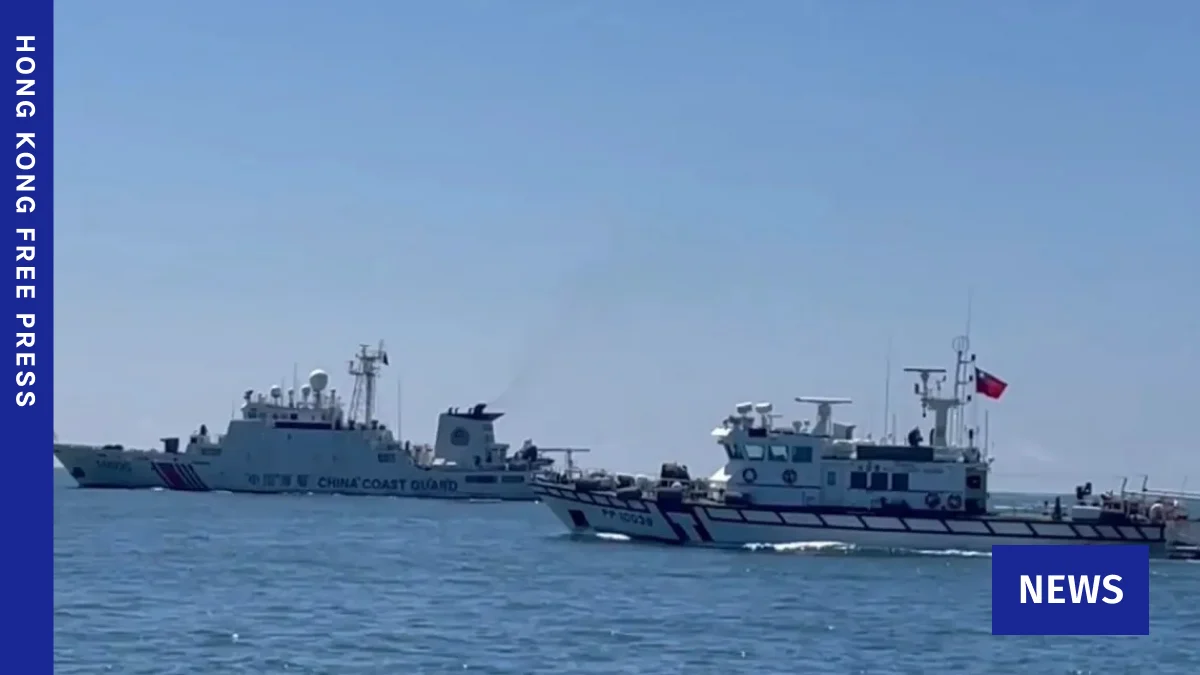
Analysts interpret China’s sustained deployment of its coast guard east of Taiwan as a strategic shift, signaling Beijing’s intent to normalize increased pressure on the self-ruled island it claims as its territory. This development follows a significant escalation in maritime activities in June, where the China Coast Guard (CCG) conducted its first-ever "law enforcement operation" in these waters, a move widely seen as a deliberate assertion of sovereignty and a precursor to more assertive actions.
The operation, which involved CCG vessels radioing cargo ships for information on their crew and destinations, marks a departure from previous Chinese maritime maneuvers around Taiwan. While Beijing cited talks between Japan and the Philippines regarding maritime boundaries in the region as a justification, Taipei condemned the action as "expansionism in disguise," a sentiment echoed by several Western governments who expressed concern over the "novel" nature of the activity.
A New Normal Emerges in the Taiwan Strait
The establishment of a continuous coast guard presence east of Taiwan, with one group of vessels being replaced by another, signifies Beijing’s intention to create a "new normal" in the region, according to Ray Powell, director of SeaLight, an organization that monitors China’s maritime activities. This sustained patrol, operating between 74 and 124 nautical miles from Taiwan’s shores—an area generally considered within Taiwan’s exclusive economic zone (EEZ)—represents a significant escalation beyond previous "blockade-style military exercises," as described by William Yang, a senior analyst for the International Crisis Group.

Until June, China’s maritime activities east of Taiwan were largely confined to large-scale military drills. However, the CCG’s recent patrols suggest a strategic recalibration, moving beyond mere political signaling to assert de facto control and gather intelligence on maritime traffic. Gregory Poling, director of the Asia Maritime Transparency Initiative at the Center for Strategic and International Studies, views these actions as Beijing’s attempt to "claim vast law enforcement rights across its claimed exclusive economic zone that go far beyond what is allowed by international law."
The "Sashimi Strategy": Incremental Assertions of Control
This sustained coast guard presence is interpreted by experts as a component of China’s broader strategy to gradually alter the status quo in the Indo-Pacific. Su Tzu-yun, a military expert at Taiwan’s Institute for National Defense and Security Research, describes this approach as a "sashimi strategy," where China makes "extremely thin, almost imperceptible slices that individually appear insignificant but collectively produce substantial changes to the strategic status quo."
The radio verification procedures employed by the CCG during the June operation are particularly concerning to Taipei. Su suggests that this is a rehearsal for mechanisms required for a future blockade or quarantine, aimed at establishing a precedent where the international shipping community feels compelled to report to Chinese authorities. While one Singapore-flagged container ship reportedly complied with the CCG’s demands during the June operation, Taiwan’s Ocean Affairs Deputy Minister Sung Chen-en stated that China ultimately "failed" to establish such a model, emphasizing the need to halt these actions "at the early stage" to prevent them from becoming permanent.
Escalating Maritime Presence and International Concerns

The patrols east of Taiwan are part of a wider pattern of increased Chinese maritime assertiveness. Beijing routinely deploys fighter jets and navy ships around Taiwan, and CCG vessels frequently enter waters near Taiwan’s outer islands. Taiwan’s National Security Bureau director-general Tsai Ming-yen noted an "upward trend" in Chinese maritime mobilization, particularly during the peak season for maritime exercises.
Taiwanese officials have reported a record high of over 110 PLAN (People’s Liberation Army Navy) and CCG vessels operating along the First Island Chain, a significant increase that underscores the heightened regional tension. In response to the CCG’s patrols, Taiwan has deployed its own coast guard vessels to monitor the Chinese ships, maintaining a vigilant presence to document and deter further incursions.
The international community has also voiced concerns. The "novel" nature of the CCG’s activities has drawn attention, with several Western governments expressing apprehension about Beijing’s expanding maritime claims and assertive actions. These concerns are amplified by China’s existing maritime disputes, including its extensive claims in the South China Sea and its territorial disputes with Japan over the Senkaku/Diaoyu Islands, where CCG vessels regularly patrol.
Background and Chronology of Escalation
The current situation is a culmination of years of steadily increasing Chinese military and coast guard activities in the waters surrounding Taiwan and the broader Indo-Pacific region.

- Pre-2016: While China’s military presence around Taiwan was consistent, CCG operations east of the island were limited, primarily focusing on so-called "blockade-style military exercises" rather than sustained law enforcement patrols.
- June 2026: The China Coast Guard, along with other Chinese vessels, conducted its first significant "law enforcement operation" east of Taiwan. During this operation, CCG ships for the first time radioed cargo vessels passing through the area, requesting information on their crew and destinations. Chinese state media attributed this operation to recent talks between Japan and the Philippines regarding maritime boundaries.
- July 2026 (Early): Following the June operation, the CCG announced that a second group of vessels would replace the initial contingent, signaling an intention to maintain continuous patrols in the region. Analysts interpret this as the establishment of a "new normal" for Chinese maritime presence east of Taiwan.
- July 2026 (Mid-month): Taiwan publicly acknowledges the sustained patrols, with officials stating that the Chinese vessels are operating within Taiwan’s EEZ. Taiwan deploys its own coast guard vessels to monitor the CCG presence.
- Ongoing: Analysts and regional security experts continue to monitor China’s maritime activities, interpreting the sustained patrols as a strategic move to incrementally assert control and normalize its presence in waters critical to regional security and trade.
Analysis of Implications
The sustained presence of Chinese coast guard vessels east of Taiwan carries significant implications for regional security, international maritime law, and the broader geopolitical landscape.
- Erosion of the Status Quo: By establishing a continuous patrol presence, Beijing is actively seeking to redefine the maritime status quo in the region. This "sashimi strategy" aims to gradually normalize Chinese assertiveness, making it increasingly difficult for other nations to challenge its claims without risking escalation.
- Testing International Law: China’s actions appear to challenge established international maritime law, particularly regarding the rights and responsibilities within a nation’s exclusive economic zone. The CCG’s "law enforcement" activities, extending beyond traditional maritime safety and environmental protection, raise questions about Beijing’s interpretation and application of UNCLOS (United Nations Convention on the Law of the Sea).
- Rehearsal for Blockade Scenarios: The radio verification procedures are a clear indication of Beijing’s intent to practice and refine tactics that could be employed in future scenarios such as a blockade or quarantine of Taiwan. This raises concerns about the potential for economic coercion and military escalation.
- Increased Risk of Miscalculation: The heightened maritime activity and the presence of multiple vessels from different nations in close proximity increase the risk of unintended encounters and miscalculations, which could inadvertently lead to conflict.
- Economic Impact: The waters east of Taiwan are a critical transit route for global shipping. Any disruption or perceived threat to this maritime traffic could have significant economic repercussions for Taiwan, its trading partners, and the global economy.
Taiwan, for its part, remains resolute in its efforts to counter China’s assertiveness. Sung Chen-en’s statement that "We will make sure that (the patrols are) not permanent because they are not supposed to be here" reflects Taipei’s determination to push back against what it views as illegitimate incursions into its maritime domain. The ongoing standoff underscores the delicate balance of power in the Indo-Pacific and the increasing strategic importance of the waters surrounding Taiwan. The international community’s response and the adherence to international norms will be crucial in shaping the future of maritime security in this volatile region.

 Layla Zulfa
 Reynand Wu