Layla Zulfa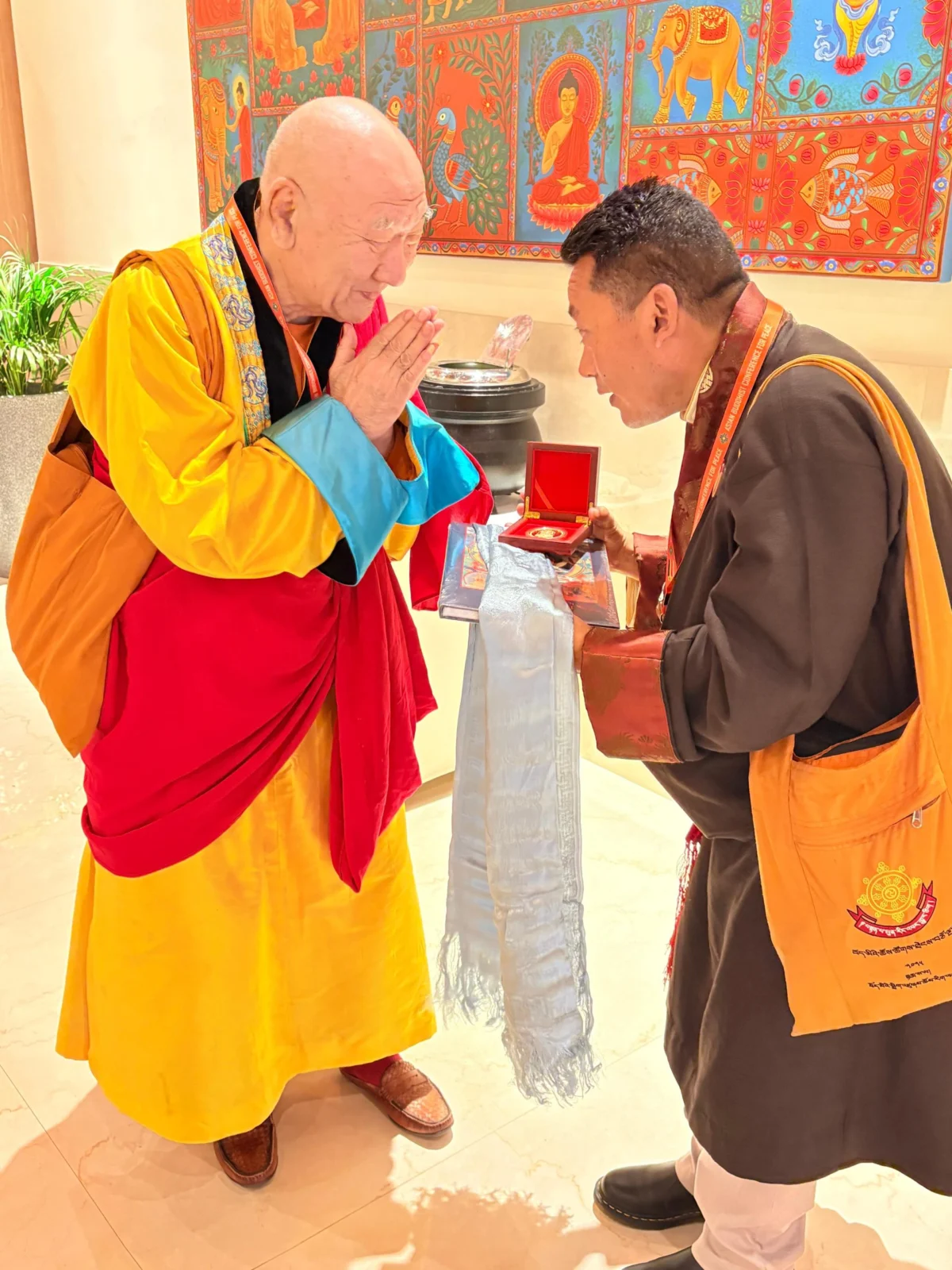
The assembly brought together a diverse range of high-ranking monastics, scholars, and political dignitaries from across Asia, emphasizing the collective voice of the Mahayana and Theravada traditions. Among the primary outcomes was the unanimous adoption of the Bodhgaya Declaration, an 11-point document that sets a definitive stance on the spiritual succession of the Dalai Lama, asserting that the authority over such matters rests solely with the Dalai Lama himself and the Gaden Phodrang Trust.

Ceremonial Inauguration and International Representation
The proceedings commenced at 9:00 a.m. with an elaborate inaugural ceremony at the meeting venue in Bodhgaya, the site where Siddhartha Gautama attained enlightenment. The Chief Guest for the occasion was Shri Vinai Kumar Saxena, the Lieutenant Governor of the Ladakh Union Territory. His presence underscored the deep cultural and spiritual ties between the Himalayan regions and the broader Buddhist world.
The atmosphere was one of profound solemnity as the Chief Guest was joined by several of the most influential figures in contemporary Tibetan Buddhism. This included Kyabje Yongzin 7th Ling Rinpoche, Kyabje Kundeling Tatsak Jedrung Rinpoche, Kyabje 20th Kushok Bakula Rinpoche, and the Nechung Kuten (the Medium of the State Oracle of Tibet). The ceremony opened with the lighting of ceremonial butter lamps, followed by chants for auspiciousness delivered in both the Mahayana and Theravada traditions, symbolizing the unity of the Buddhist faith.

ABCP Secretary Sonam Wangchuk Shakspo delivered the welcome address, setting the stage for the most Venerable Khensur Lama Gabju Demberel Choijamts, President of the ABCP, who spoke on the organization’s mission to foster peace through the application of Buddhist principles. To honor the Chief Guest, the ABCP President presented mementos reflecting the gratitude of the Buddhist community for the Indian government’s continued support of Buddhist heritage.
A Global Tribute: Messages from World Leaders
The council meeting was not merely a local affair but a global event, as evidenced by the high-level messages read during the morning session. Kyabje 19th Lochen Tulku presented a special message from His Holiness the Dalai Lama, in which the spiritual leader expressed his hopes for the conference to contribute to world peace and the alleviation of suffering.

Further messages of support were conveyed from a broad spectrum of international leaders and religious heads:
- Sri Lanka: A message from President Anura Kumara Dissanayake highlighted the historical ties between Sri Lankan Buddhism and the Tibetan tradition.
- India: Shri Kiren Rijiju, Minister of Parliamentary Affairs and Minority Affairs, emphasized the role of Buddhist values in India’s "Soft Power" and diplomatic outreach.
- Russia: Pandito Khambo Lama Damba Ayusheev, Head of the Buddhist Traditional Sangkha of Russia, sent greetings from the Buryat and Kalmyk Buddhist communities.
- Bangladesh: Most Venerable Buddhapriya Mahathero, head of the ABCP Bangladesh Center, reinforced the commitment of Bengali Buddhists to regional harmony.
- Sakya Tradition: Deputy Secretary Sonam Wangchuk Shakspo read a message from Kyabgon Sakya Gongma Rinpoche, one of the most senior leaders of the Sakya school of Tibetan Buddhism.
These communications collectively illustrated a unified front in recognizing the Dalai Lama’s 90th birthday as a milestone of global significance, rather than just a Tibetan anniversary.

The Bodhgaya Declaration: Reincarnation and Authority
The afternoon session of the 16th Executive Council Meeting focused on the administrative and policy-oriented aspects of the ABCP’s mandate. Despite the absence of representatives from Vietnam and North Korea, the council proceeded with a resounding majority to discuss the progress report for the 2024-2026 period.
A pivotal moment occurred during the discussions on the Bodhgaya Declaration. Dhondul Dorjee, Secretary of the Department of Religion and Culture of the Central Tibetan Administration (CTA), provided a comprehensive briefing on the life and achievements of the 14th Dalai Lama. He specifically referenced the 15th Tibetan Religious Conference held in Dharamshala in 2025, where the Dalai Lama had reaffirmed his intention to reincarnate.

The resulting Bodhgaya Declaration contained three points of particular importance to the international community:
- Point 5: A formal felicitation of His Holiness on his 90th birthday, acknowledging his lifelong service to peace, non-violence, and interfaith harmony.
- Point 6: The reaffirmation of July 6 (the Dalai Lama’s birthday) as the "Universal Day of Compassion," a decision originally adopted during the 12th ABCP General Assembly.
- Point 7: A unanimous endorsement of the Dalai Lama’s statement issued on July 2, 2025. This point explicitly states that the Gaden Phodrang Trust is the sole authority responsible for recognizing the future reincarnation of the Dalai Lama. Crucially, the council emphasized that no government, organization, or individual has the authority to interfere in this sacred spiritual process.
Historical Context: The ABCP and the Dalai Lama’s Legacy
The Asian Buddhists Conference for Peace was founded in 1970 in Ulaanbaatar, Mongolia, during a period of intense global conflict. Its mission has always been to bring together Buddhists from across Asia to work toward peace and nuclear disarmament. Over the decades, the ABCP has evolved into a vital organ for Buddhist diplomacy, bridging the gap between the various traditions of the East.

The endorsement of the Dalai Lama’s reincarnation process by the ABCP is a significant geopolitical and religious development. For years, the question of the Dalai Lama’s succession has been a point of contention, particularly with the Chinese government asserting its right to approve the next reincarnation based on historical precedents it interprets through a secular lens. By issuing the Bodhgaya Declaration, the ABCP has effectively signaled that the broader Asian Buddhist community recognizes the spiritual autonomy of the Tibetan tradition and the specific instructions laid out by the current Dalai Lama.
The "Year of Compassion" initiatives, as detailed by Secretary Dhondul Dorjee, include various global events aimed at promoting the Dalai Lama’s four main commitments: the promotion of human values, the fostering of inter-religious harmony, the preservation of Tibetan culture and environment, and the revival of ancient Indian wisdom.

Chronology of the 16th Executive Council Meeting
- 9:00 a.m.: Arrival of Chief Guest Shri Vinai Kumar Saxena and ceremonial lighting of butter lamps.
- 9:30 a.m. – 11:00 a.m.: Welcome addresses and reading of international messages from heads of state and religious leaders.
- 11:15 a.m.: Cultural presentation: A dance performance by Madhushree Choudhary depicting the life of the Buddha.
- 11:45 a.m.: Keynote speeches by Kyabje Yongzin Ling Choktrul Rinpoche and other delegates celebrating the Dalai Lama’s 90th year.
- 12:30 p.m.: Vote of thanks by Shri Maling Gombu and conclusion of the morning celebratory session.
- 1:00 p.m. – 3:30 p.m.: Executive Council Meeting business session; presentation of the 2024-2026 progress report and budget briefing.
- 3:30 p.m. – 4:30 p.m.: Deliberation and unanimous adoption of the 11-point Bodhgaya Declaration.
- 5:00 p.m.: Group photograph and official closing of the council meeting at the regional office.
Implications and Broader Impact
The outcomes of the Bodhgaya meeting carry weight far beyond the walls of the council chamber. By designating July 6 as the "Universal Day of Compassion," the ABCP is seeking to institutionalize the Dalai Lama’s philosophy into a secular, global observance, similar to International Day of Non-Violence.
Furthermore, the explicit mention of the Gaden Phodrang Trust as the sole authority for the 15th Dalai Lama’s recognition provides a legal and spiritual framework intended to prevent a dual-succession crisis. This collective stance by Asian Buddhist nations—including representatives from India, Sri Lanka, Russia, Bangladesh, and Mongolia—creates a formidable religious consensus that challenges any state-led attempts to co-opt the reincarnation lineage.

As the Central Tibetan Administration continues its "Year of Compassion" activities, the Bodhgaya Declaration serves as a cornerstone document. It reinforces the narrative that the institution of the Dalai Lama is not merely a political office but a sacred lineage that belongs to the followers of the faith. The meeting in Bodhgaya has thus solidified a regional alliance dedicated to preserving the integrity of Tibetan Buddhist traditions amidst the shifting sands of 21st-century geopolitics.
The successful conclusion of the 16th Executive Council Meeting marks a significant chapter for the ABCP, demonstrating its continued relevance as a guardian of Buddhist values and a unified voice for peace in Asia. The delegates departed Bodhgaya with a renewed commitment to the principles of wisdom and compassion, ensuring that the legacy of the 14th Dalai Lama remains a guiding light for future generations.

 Siti Muinah
 Nana Muazin